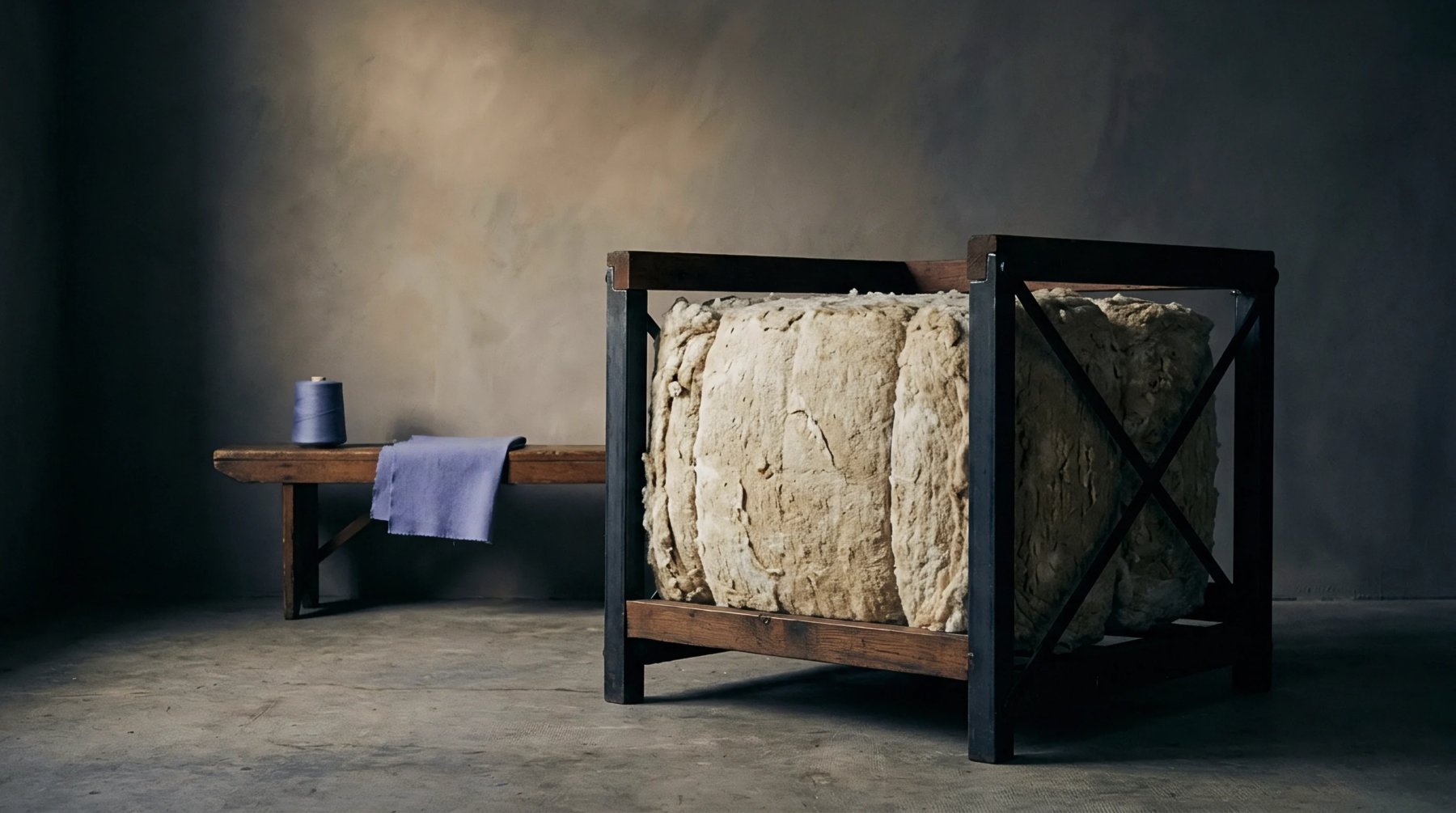
Determining Raw Cashmere Micron Profiles and Dehairing Yields
Determining raw cashmere value requires combined OFDA micron profiling and oven-dry yield mass balance testing to calculate true clean dehaired cost.
Fine animal hair categorized under hs code 5105.31 represents carded or combed wool from cashmere goats, specifically gathered in a format ready for industrial spinning. This entry identifies material that has undergone mechanical preparation to align fibers, removing impurities while maintaining the natural loft of the undercoat. Customs authorities use this classification to track international trade flows of luxury raw materials before the yarn production stage.
The designation applies solely to the processed state where fiber bundles remain unspun, distinguishing the stock from raw fleeces or finished wool top.
Exporters supply the hair in clean, carded segments where the average fiber diameter falls below a threshold defined by high end textile standards. Processing plants operate machines to remove vegetable matter and coarse guard hairs, ensuring the final batch meets stringent purity requirements for cashmere manufacturing. Mills verify the quality of the incoming stock through micron testing, which validates that the shipment matches the provided customs declarations.
Variations in the length of these fibers determine the price of the bulk cargo, as longer staples enable stronger yarn during the spinning process. Documentation must accompany the material to prove the origin of the goats, as trade agreements often hinge on the specific region where the animals reside.
Manufacturers purchase this material to produce sweaters, scarves, and soft woven garments requiring high insulation properties without excess weight. Machines convert the carded fiber into roving, which then proceeds to the spinning frame for twisting into thread. Factories track the yield of the input stock because improper carding settings cause excessive breakage or waste of the expensive fiber.
Quality control teams at the factory check for residual oil content or dust left behind by the initial processing phase. Proper storage of the inventory prevents felting or moisture absorption, as exposure to humidity alters the handling characteristics during the drafting operation.
Customs duty rates apply to these specific batches based on the net weight stated on the shipping invoice. Importers submit test reports showing the chemical composition of the fibers to confirm the shipment contains genuine cashmere rather than cheaper synthetic substitutes. Auditors reconcile the weight of the arrived goods against the bill of lading to ensure no discrepancies exist between the declared quantity and the delivered volume.
Accurate reporting of this code prevents misclassification that could lead to financial penalties or delays at the border checkpoint. Correct identification of the fiber type prevents the entry of inferior goat hair into the luxury supply chain, ensuring that market expectations regarding material purity remain consistent across international borders. The tax regime governing these imports sustains the viability of specialized textile processing sectors by controlling the entry of processed animal materials into national markets.
Determining raw cashmere value requires combined OFDA micron profiling and oven-dry yield mass balance testing to calculate true clean dehaired cost.
Expertise is a utility, not a secret. sentiention™ publishes its working knowledge as open reference: intelligence layer covering the materials it sources, the markets it enters, and the reference that serves both.