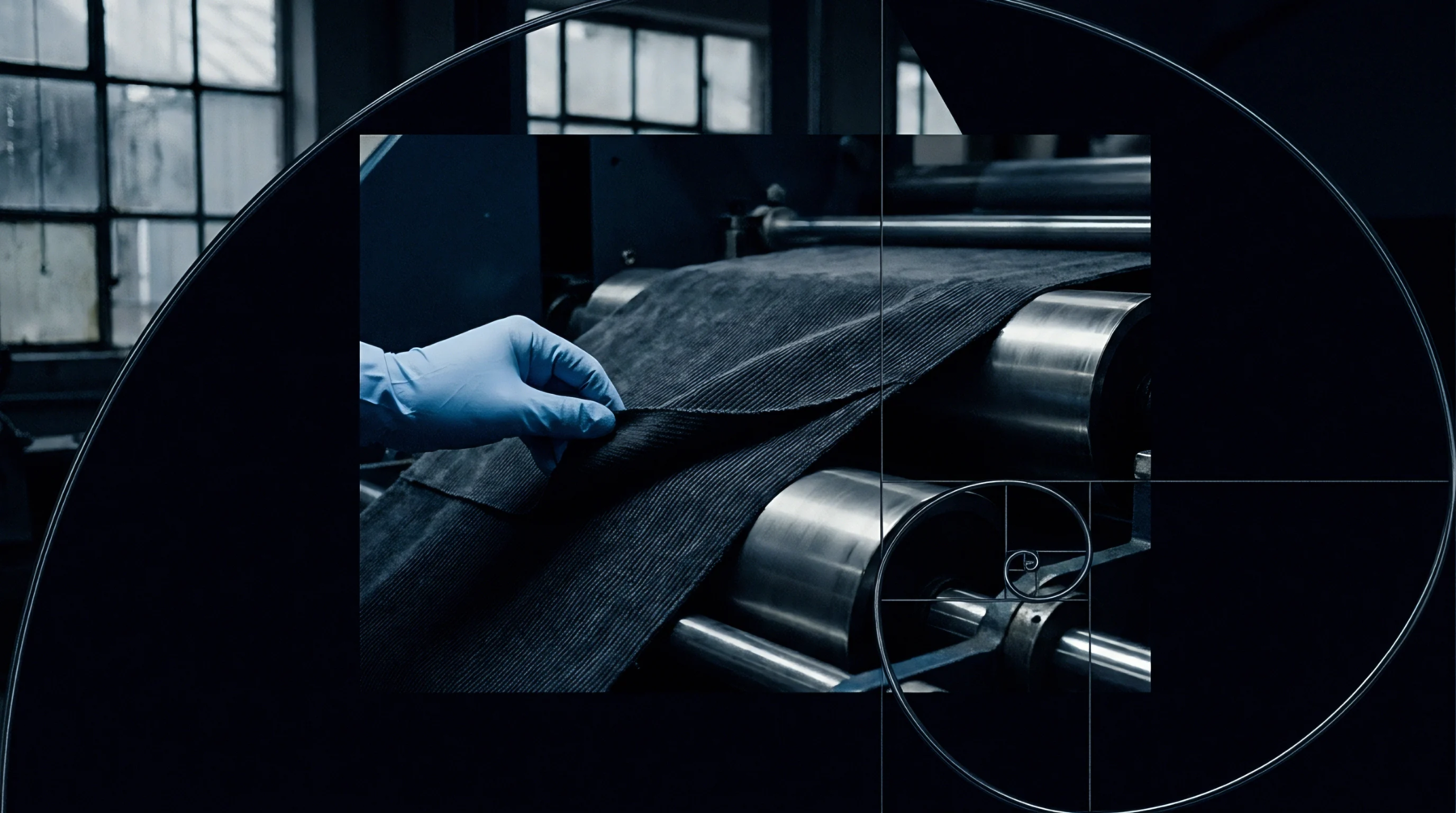
Crease Recovery
Fabric stiffness defines the capacity of a textile material to return to a planar state after compression or folding. The iso 2313 method quantifies this property by measuring the angle of recovery displayed by a specimen under controlled conditions. This protocol applies primarily to woven and knitted textiles intended for apparel where wrinkle resistance dictates quality.
Testing Procedure
Operators cut rectangular samples to specific dimensions before placing them inside a specialized device for mechanical loading. A weight applies pressure across the crease line for a fixed duration to simulate the stress encountered during garment wear. Removing the weight allows the specimen to recover freely on a protractor scale.
The resulting angle indicates the ability of the yarns to overcome internal friction and regain their original configuration.
Performance Evaluation
Textile scientists compare these recovery angles against historical performance data to assign ratings for end-use suitability. Synthetic fibres often exhibit higher recovery values than cellulosic fibres because of their molecular structure and elastic properties. Finishing treatments like cross-linking resins increase these values significantly by reducing the mobility of polymer chains.
Fabrics showing angles below seventy degrees require frequent ironing or blending with more resilient fibres to remain commercially viable for shirts or trousers.
Metric Significance
Laboratory results obtained through this standardization enable buyers to predict garment behaviour during long periods of storage or transit. Manufacturers use the recorded data to adjust production parameters during the finishing stage to ensure the output meets consumer expectations for wash and wear performance. Reliable crease angle data reduces claims related to premature wrinkling and provides a basis for verifying the efficacy of anti-crease chemical applications.