Lateral Force
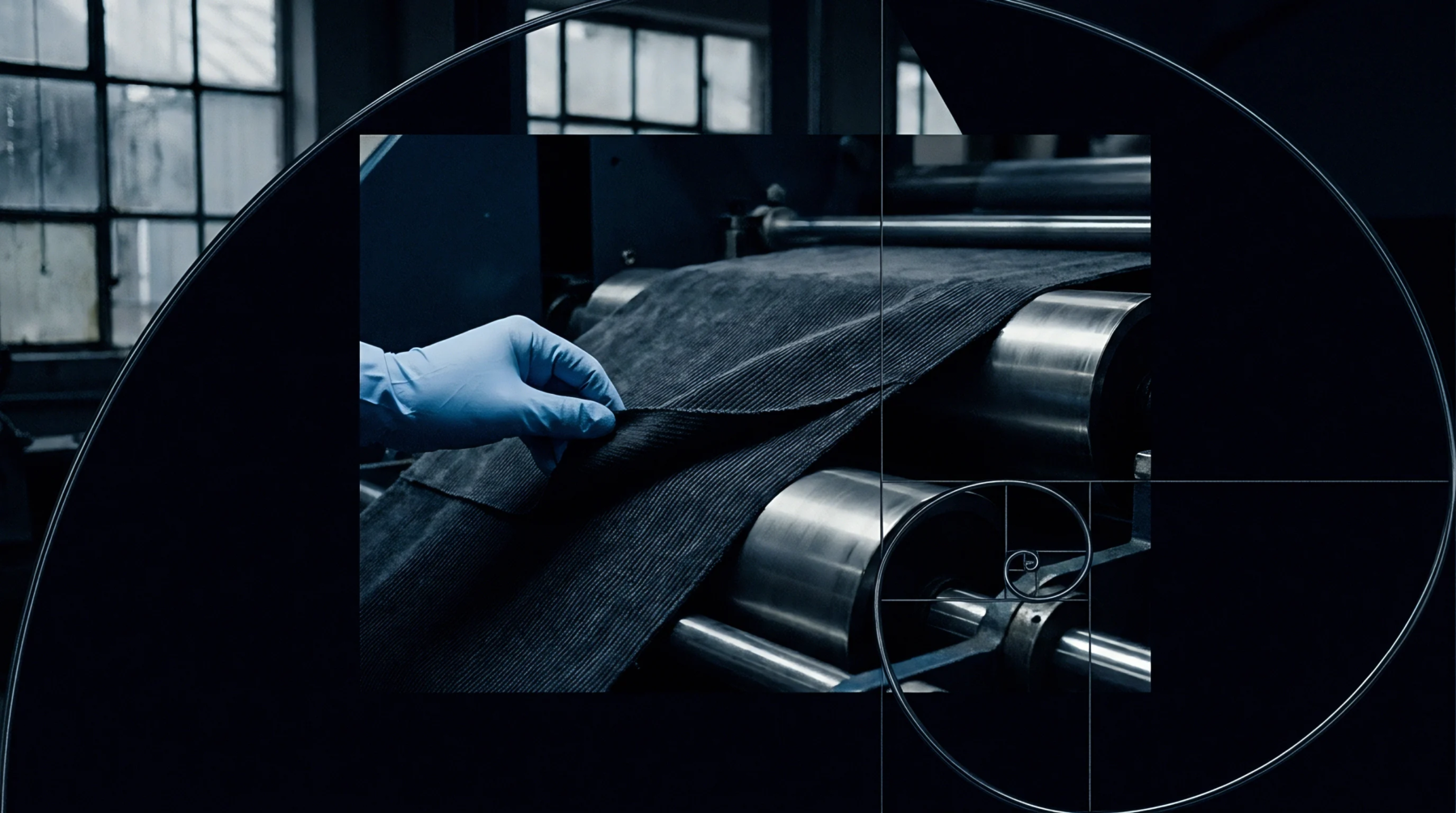
Displaced deformation represents the primary stress condition occurring when parallel planes within a material structure slide past one another. Shear tension describes the directional component of this phenomenon where individual fibre layers experience longitudinal pulling while simultaneously undergoing lateral displacement. Laboratories verify these mechanical responses by applying controlled loads along the longitudinal axis of a fabric specimen until the material structure reaches its rupture point.
Standard test protocols assess this specific resistance to determine whether textiles withstand processing forces during high speed industrial garment manufacturing.
Deformation Mechanics
External loads applied to woven structures generate internal friction between yarns as they attempt to slide relative to their neighbors. When the fabric orientation forces this movement, the shear tension within the weave restricts the freedom of the yarns. This resulting restriction creates localized zones of high stress concentration at the junction points of warp and weft intersections.
Excessive forces at these contact regions induce yarn slippage which alters the geometric uniformity of the final textile product.
Structural Implications
Fabric durability relies upon the ability of the construction to manage these non parallel stress vectors without permanent distortion. Garment patterns requiring complex curves often subject fabric to high levels of this tension during the assembly process. Producers adjust the yarn density or the type of weave to mitigate potential issues like seam gaping or panel rotation.
Proper management of these internal forces ensures that finished goods retain their intended dimensions despite the physical handling encountered in commercial factory lines.
Testing Parameters
Verification involves clamping a textile sample into a specialized rig designed to measure resistance against directional pull. Technicians record the force required to induce a standard degree of fabric shift across the designated axis. These measurements determine the suitability of the material for specific industrial applications where repeated mechanical stress occurs.
Reliable data regarding these physical limits prevents production losses by identifying inadequate fibre bonds before bulk manufacturing begins.