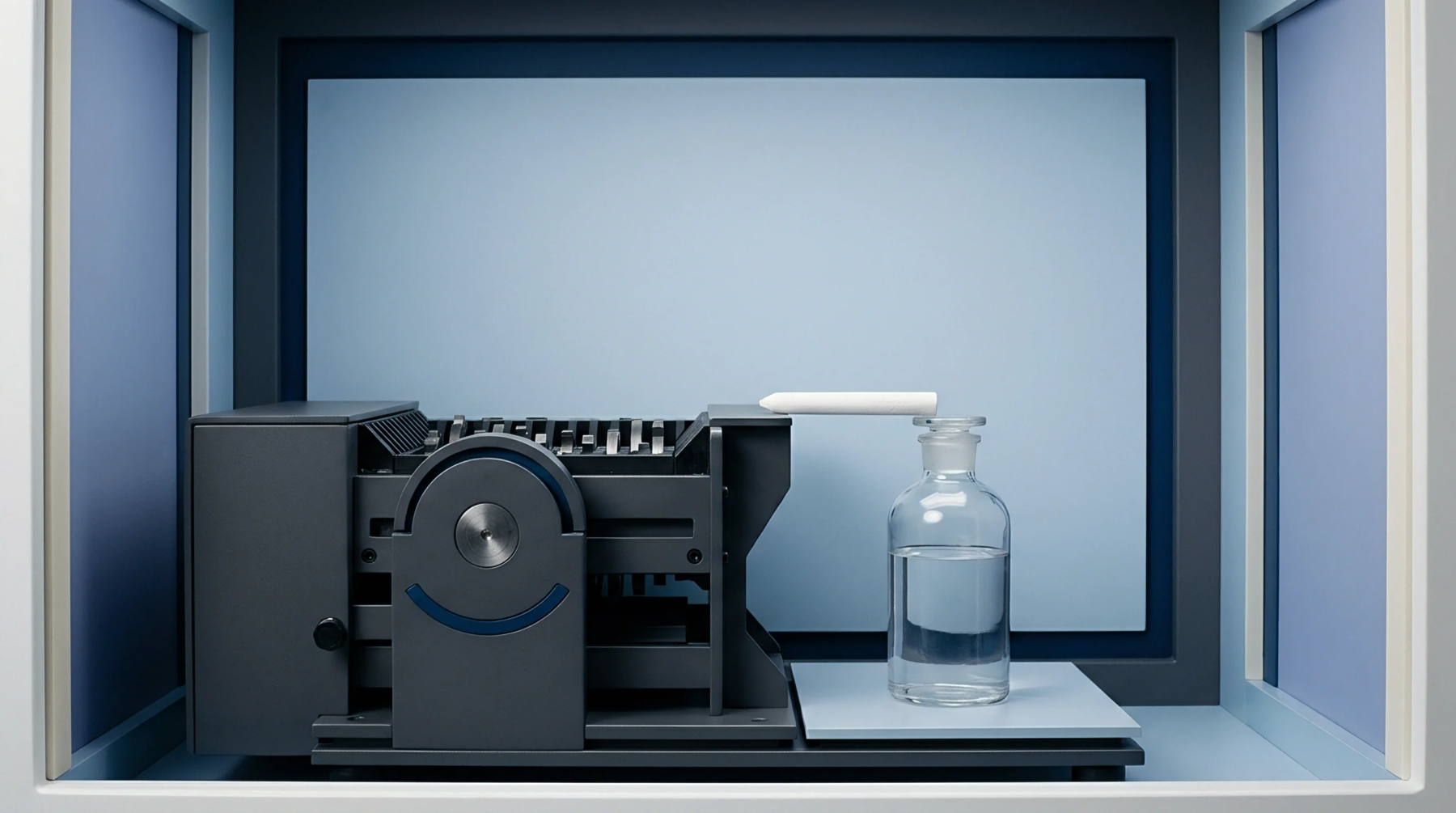
Analytical Method
Laboratory determination of protein content in organic substances relies on chemical decomposition to release bound nitrogen for measurement. The kjeldahl nitrogen test provides the standard technique for calculating these nitrogen-based finishes on technical fabrics.
Chemical Digestion
Sulphuric acid digests the textile sample in the presence of a catalyst to convert organic nitrogen into ammonium sulphate. Once digestion is complete, the solution is treated with sodium hydroxide to release ammonia gas, which is distilled into an acid receiver. This chemical release allows for precise volumetric measurement.
Textile Application
Technicians use this analysis to verify the application of flame retardants or durable finishes containing nitrogen. For example, verifying the resin concentration on easy-care shirts requires measuring the nitrogen residue left after curing. This assessment ensures that the functional treatment meets performance specifications.
Quantitative Calculation
Titration of the distillate determines the exact volume of nitrogen present in the digested specimen. The resulting percentage of nitrogen is multiplied by a specific factor to estimate the total protein or chemical resin content. This mathematical conversion is used during quality control audits, where precise additive levels must be documented to satisfy buyer standards and ensure that performance properties like flame resistance are fully realized.