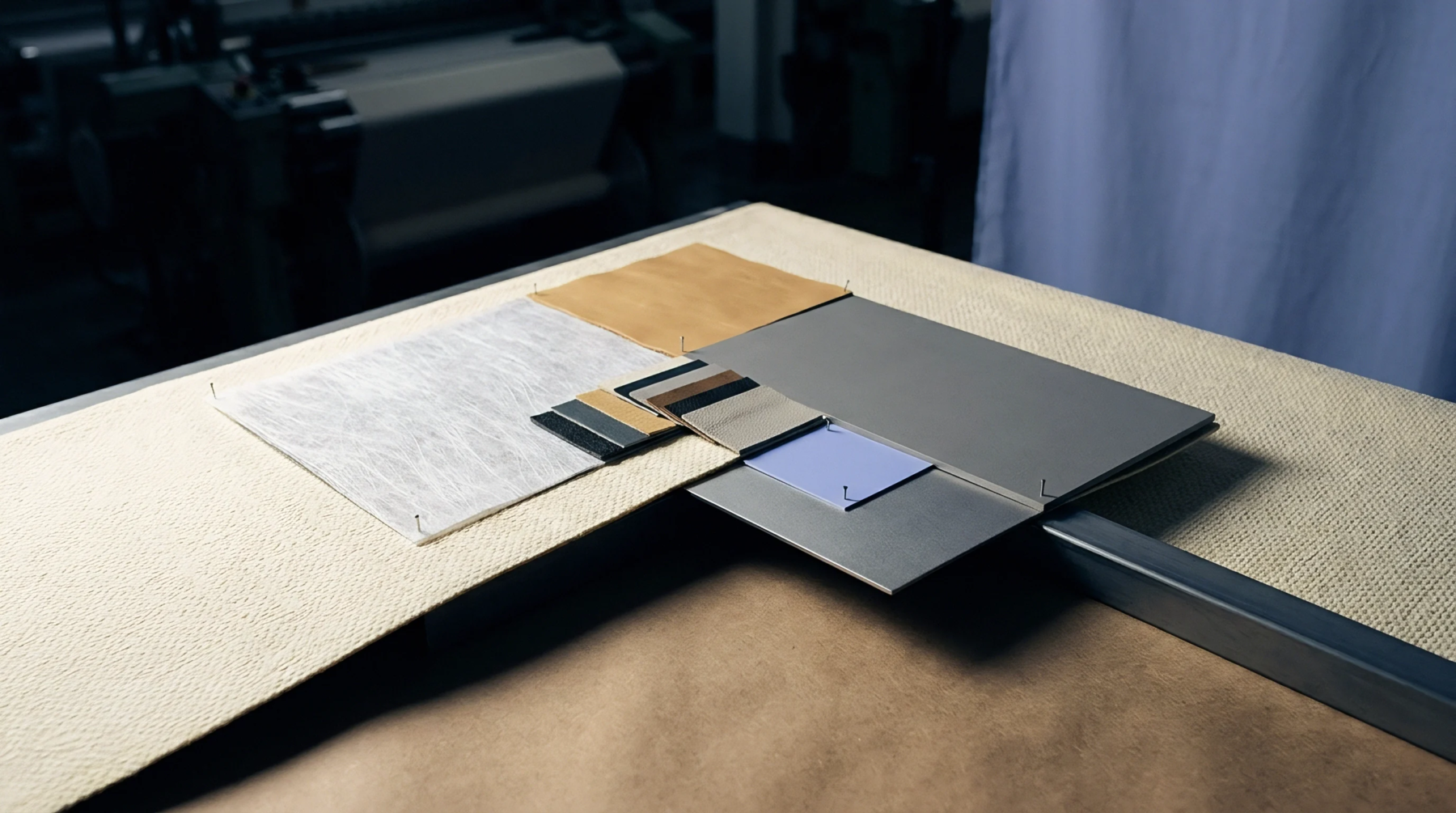
Application Process
Fabric finishing equipment utilizes a stationary blade held at a precise distance above a supported textile web to control depth. During knife-over-roll coating, the liquid polymer is metered through the gap created between the steel knife and the roller underneath. It stops at the boundaries of the reservoir maintained behind the blade.
Physical Geometry
Changing the angle of the blade alters the amount of resin forced into the yarns versus the amount left on the surface. Knife-over-roll coating produces a uniform level of thickness even on heavy fabrics that have high internal tension.
Machine Regulation
Operators use feeler gauges to set the blade height across the full width of the production line. Consistent knife-over-roll coating depends on maintaining a constant liquid head in the dam to avoid dry patches. Precise alignment of the roll is checked every morning to prevent wedge-shaped variations in the finish.
Mechanical micrometers monitor the actual thickness of the wet film to signal when the blade starts to wear down.
Process Efficiency
This method handles high viscosity liquids that other systems struggle to distribute evenly across the web. If knife-over-roll coating is calibrated correctly, the yardage variance stays within one percent.