Fixation Procedure
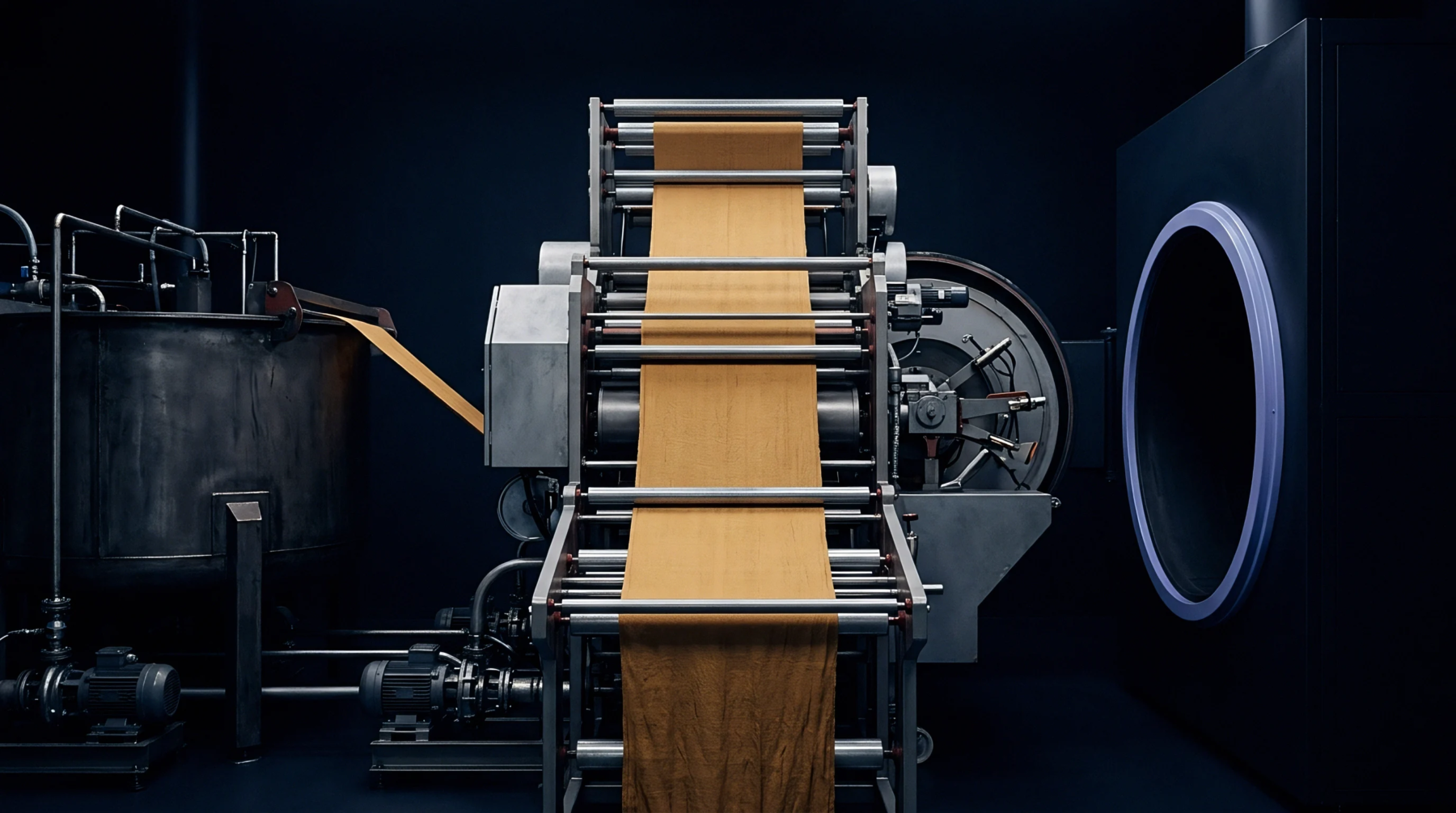
Continuous atmospheric processing guarantees that dyes react fully with fibres through the application of saturated steam. This loop steaming technique carries long folds of fabric through a heated chamber on a series of rotating rods.
Mechanical Transport
Fabric enters the top of the machine and hangs in deep vertical loops that do not touch each other. This suspension prevents marking or smearing of the wet print paste before the dye is permanently fixed. Small motors rotate the carrying poles to ensure that the contact points change constantly, preventing bar marks across the width.
Atmospheric Control
Saturated steam at approximately one hundred degrees Celsius provides the moisture and heat required for molecular migration. Dwell times vary based on the fibre type, with polyester requiring higher temperatures or longer cycles than cellulosic materials. Maintaining a consistent temperature profile across the chamber prevents shade variation between the beginning and end of the production run.
Internal sensors monitor the humidity level to prevent the condensation of water droplets that could cause spotting on the printed surface.
Capacity Limit
Production volume is determined by the length of the loops and the speed of the transport chain. Machines are often rated by the total fabric length they can contain at any one time. Effective loop steaming requires careful management of tension to prevent the fabric from stretching while in its softened state.