Physical Distortion
Superficial lines or indentations categorized as mechanical creasing occur when a fabric is subjected to high pressure or sharp folds in a dry state without chemical intervention. The phenomenon of mechanical creasing differs from biological wrinkles because it stems from force applied by industrial rollers or improper handling during the storage of bulk rolls. It creates permanent dislocations in the fibre matrix that appear as bright or dark lines depending on how they catch the light.
This defect primarily impacts high density polyester blends and crisp cotton poplins which lack the natural elasticity to recover from intense compression. It is typically assessed visually against a standard rating scale at the end of the manufacturing line.
Force Application
Compression occurs when the cloth travels through tight clearances in calendars or when rolls are stacked horizontally in high piles in a warehouse. The mechanism of mechanical creasing involves the shifting of yarns within the weave structure into an unstable orientation that is then set by pressure. Unlike folds created during a wet process which can sometimes be steamed out, these marks often involve physical crushing of the fibre cross section.
When multiple fabric layers are wound under excessive tension, the innermost layers develop these vertical marks near the core. The pressure from the external weight forces the weave to bite into itself, leaving a visual track of the yarn intersections. Handling errors during manual transport where the fabric is dragged or bunched by hand also contribute to these blemishes.
Such defects become obvious during the final inspection when the fabric is spread on the light table. Correcting this issue usually requires a return to the scouring range or intensive heat setting to reset the fibre memory.
Production Risk
Financial impacts of these defects manifest as reduced usable yardage and lower profit margins for the garment factory. During mechanical creasing, the saleable area of the roll decreases if the marks occur far from the selvage edges. Cutters must work around these imperfections by shifting their pattern placement, which increases waste.
High speed automatic cutters may not detect subtle creasing, leading to rejected garment panels further down the line. Quality control managers monitor the density of these marks to determine if a weaving mill or a logistics provider is at fault. If specific batches show a recurring pattern, the staff investigates the roller alignment on the winding machines.
Prevention remains more cost effective than treatment after the event. Reliable production schedules depend on fabrics arriving in a clean, flat state.
Technical Limit
Scrutiny of the marks reveals their origin through the spacing and regularity of the repeat across the cloth. While mechanical creasing is a serious quality concern, its presence at the extreme edges of the roll is often tolerated if it falls outside the specified usable width. Deep marks in the body of the fabric remain an automatic ground for rejection according to major retail guidelines.
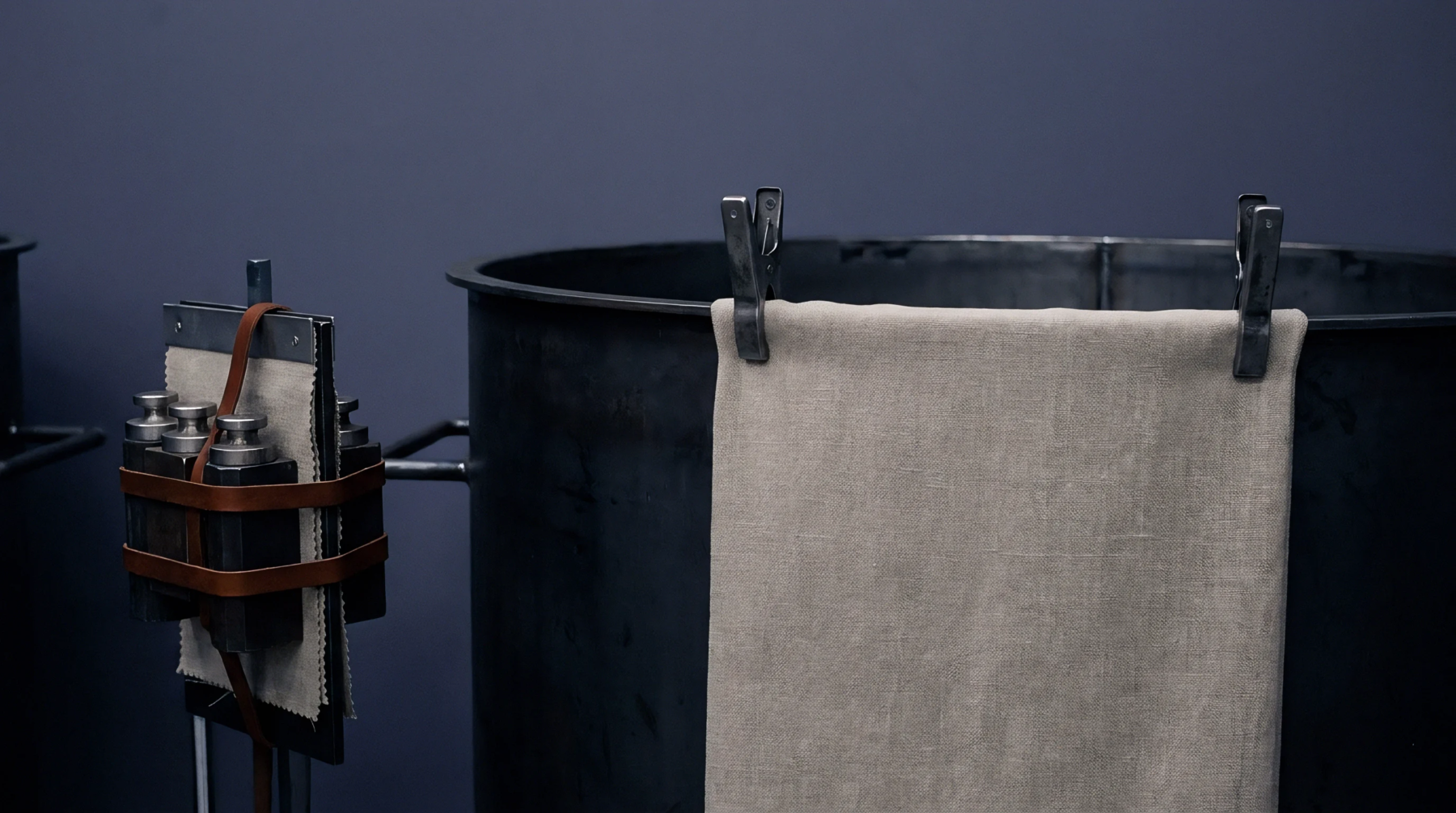
Verification of recovery involves a standard fold test where the fabric is pressed under a weight and then allowed to relax.