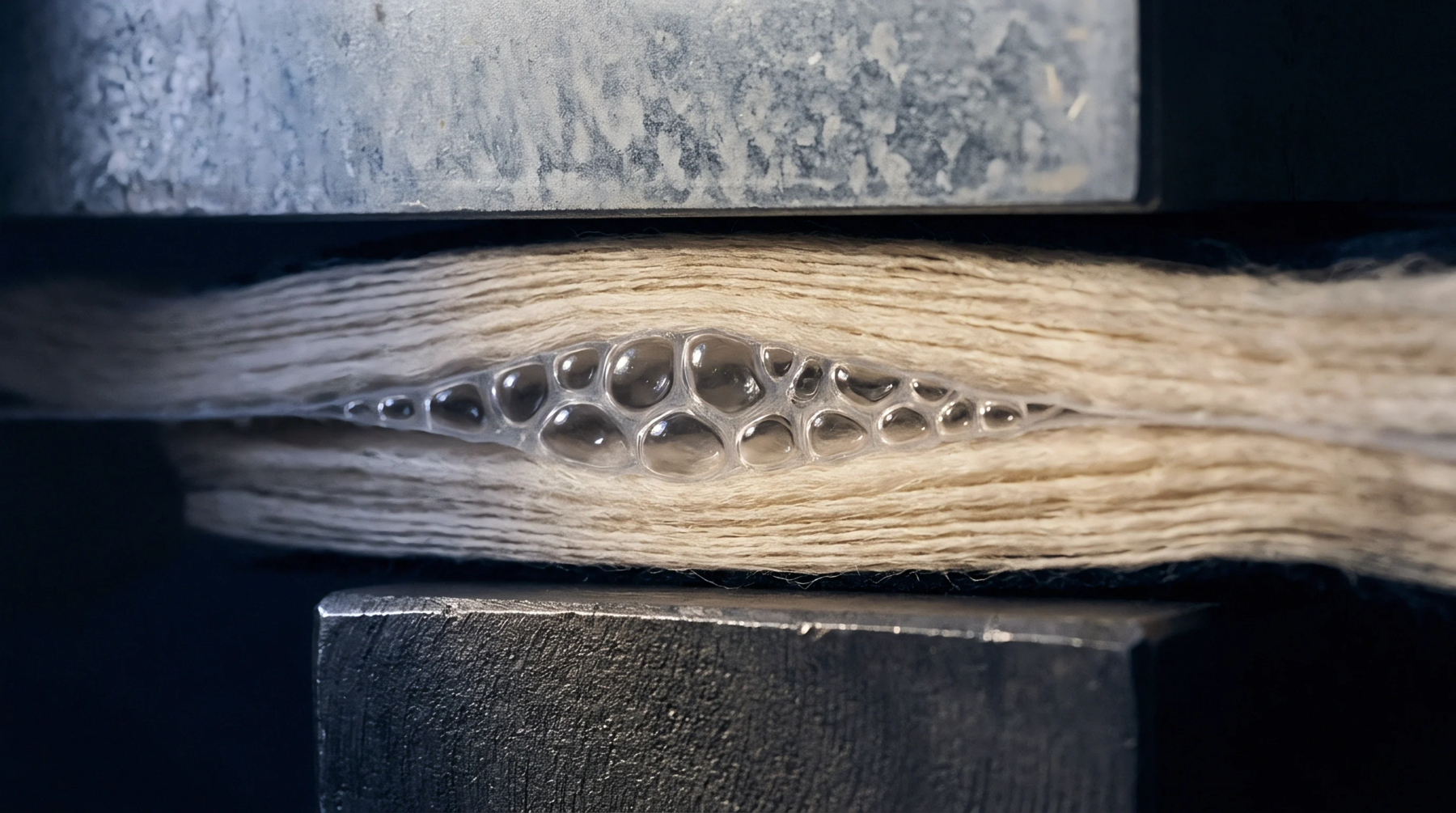
Micro Shed Dusting Accumulation Dynamics inside Air Jet Relay Nozzles under High Humidity
Humid air plasticizes sizing dust into sticky cakes inside relay nozzle bores, distorting airflow profiles and causing costly pick insertion stops.
Chemically altered natural corn polysaccharides serve as film-forming protective agents applied to warp yarns during commercial sizing operations prior to weaving. Modified maize starch designates native dent or waxy corn starches that have undergone chemical or enzymatic modification, such as hydroxyethylation, oxidation, carboxymethylation or acid thinning, to lower paste viscosity and elevate film elasticity. The material encapsulates raw fiber surfaces to resist the abrasive cycles of modern shuttleless looms.
Its chemical modifications yield stable water solubility, permitting rapid dissolution during subsequent finishing desizing baths. The classification stops at unmodified native grain starches, which exhibit unstable cooking viscosities, and synthetic polymers like pure polyvinyl alcohol or acrylics that lack a carbohydrate core.
Native corn starch granules contain high molecular weight amylose and amylopectin networks that form thick, unstable gels when cooked in water. Chemical processing disrupts these hydrogen bonds through etherification or oxidation, transforming the crystalline structure into an adaptable polymer chain. Hydroxyethyl or acetyl groups introduced onto the anhydroglucose units create steric hindrance, preventing retrogradation and maintaining stable liquid viscosity across high-temperature size boxes.
When dried onto yarn sheets, modified maize starch forms a tough, coherent, semi-flexible surface film. This protective coating cements external fiber hairs to the yarn stem while maintaining sufficient internal penetration between individual fibers to elevate breaking strength and retain essential elongation.
Processing spun cotton, rayon and blended yarns without adequate surface protection produces severe processing failures. Modified maize starch shields warp threads against cyclic tensile loads, abrasive drop wires, vibrating heddle eyes and reed impact. Insufficient size add-on or brittle film structure results in extensive warp shedding, fuzz balls, warp end breaks and loom stoppages.
Conversely, over-sizing causes excessive yarn stiffness, causing brittle fracture during shed opening and generating copious dusting around the sley. When properly formulated, this starch provides sufficient flexibility to withstand high-speed shedding cycles without flaking off into delicate air-jet channels or heald frames, thereby maintaining clean loom operating environments and high operational output.
Determining sizing efficacy requires strict commercial testing of pick-up percentages, film flexibility and subsequent desizing efficiency. Desizing facilities verify size distribution on raw greige fabric using potassium iodide tinting tests, measuring uniform yarn coverage under optical magnification. Water solubility profiles of modified starches permit removal via low-temperature enzymatic or mild alkaline washing, preventing harsh desize chemicals from degrading underlying cellulosic fibers.
Size recipe solids content is monitored continuously using digital refractometers on the sizing machine, ensuring precise concentration control across every running meter. Correct balance between size penetration and film encapsulation establishes robust warp yarn integrity, minimizing warp stops while enabling residue-free removal during downstream fabric wet processing.
Humid air plasticizes sizing dust into sticky cakes inside relay nozzle bores, distorting airflow profiles and causing costly pick insertion stops.
Expertise is a utility, not a secret. sentiention™ publishes its working knowledge as open reference: intelligence layer covering the materials it sources, the markets it enters, and the reference that serves both.