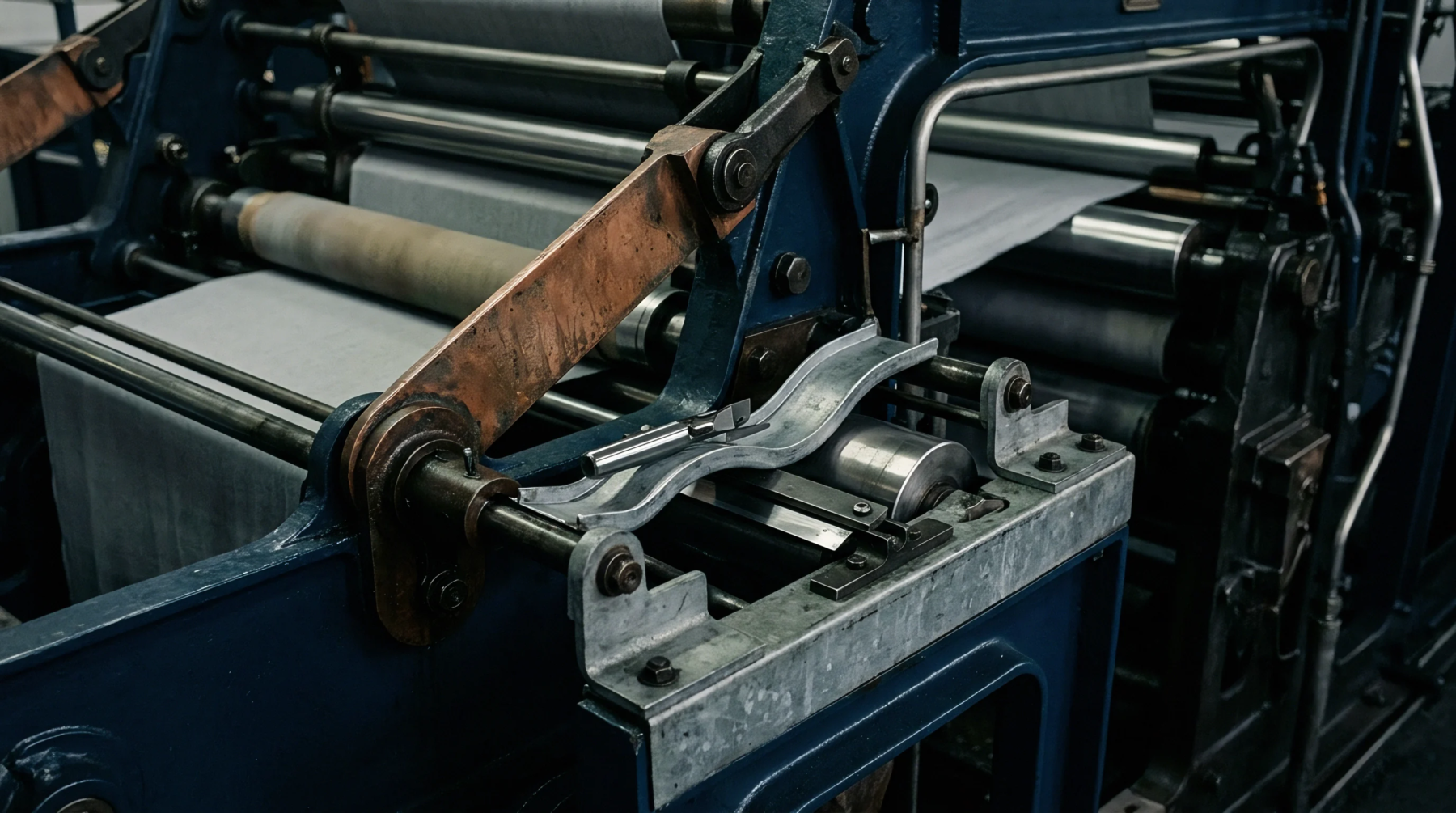
Regain Distribution
Quantitative water assessment identifies the spatial variation of moisture content measured across the width and length of running textile webs. Evaluating the moisture profile allows plant operators to identify uneven liquid extraction, heat distribution anomalies and wet streaks before fabric enters final packaging. The inspection discipline applies to woven broadcloths, warp-knitted tricots and circular knitted tubes emerging from wet finishing, washing or drying ranges.
Unprocessed raw yarn packages and dry synthetic monofilaments do not undergo open-width web profile scanning.
Differential Evaporation
Moisture variations emerge when water evaporates unevenly across the textile surface during thermal processing. Mechanical squeeze rolls containing worn rubber cores apply irregular pressure across the web, leaving heavy water pools along center lines or selvages. Unequal air flow velocity inside drying flues causes uneven drying rates across the width.
A distorted moisture profile causes regional contraction differences, leaving fabric panels with skewed grain lines or wavy edges. Synthetic blends like polyester-cotton experience uneven dye migration in wet zones, producing darker color shades along damper sections.
Finishing Distortion
Dimensional instability represents a persistent risk when finished fabrics exit dryers with unbalanced moisture distribution across adjacent lanes. Over-dried fabric sections experience localized shrinkage suppression, only to contract aggressively when ambient humidity rehydrates the fibers later. Moist fabric zones wound under tension create roll creases and harbor mold spores during ocean freight transit.
Tracking the moisture profile prevents post-finishing relaxation shrinkage from exceeding international commercial standards.
Sensor Array
Scanning sensor bridges mounted above delivery exits continuously measure water concentration through non-contact near-infrared or microwave radiation. Traverse carriages slide across the moving fabric path, recording moisture percentages every few centimeters from left selvage to right selvage. Data outputs display cross-deck graphs, alerting operators to mechanical padder wear or blocked air jets inside the dryer.
Adjusting segmented edge heaters or zoned squeeze pressures realigns the fabric moisture profile to target regain targets. Maintaining a uniform moisture profile prevents finishing defects from reaching commercial garment cutting floors.