Understanding Standard Moisture Regain Calculations in Textile Import Valuation
Commercial mass calculations adjust textile shipping weights to standard moisture regain levels, preventing overpayment of invoices and customs import duties.


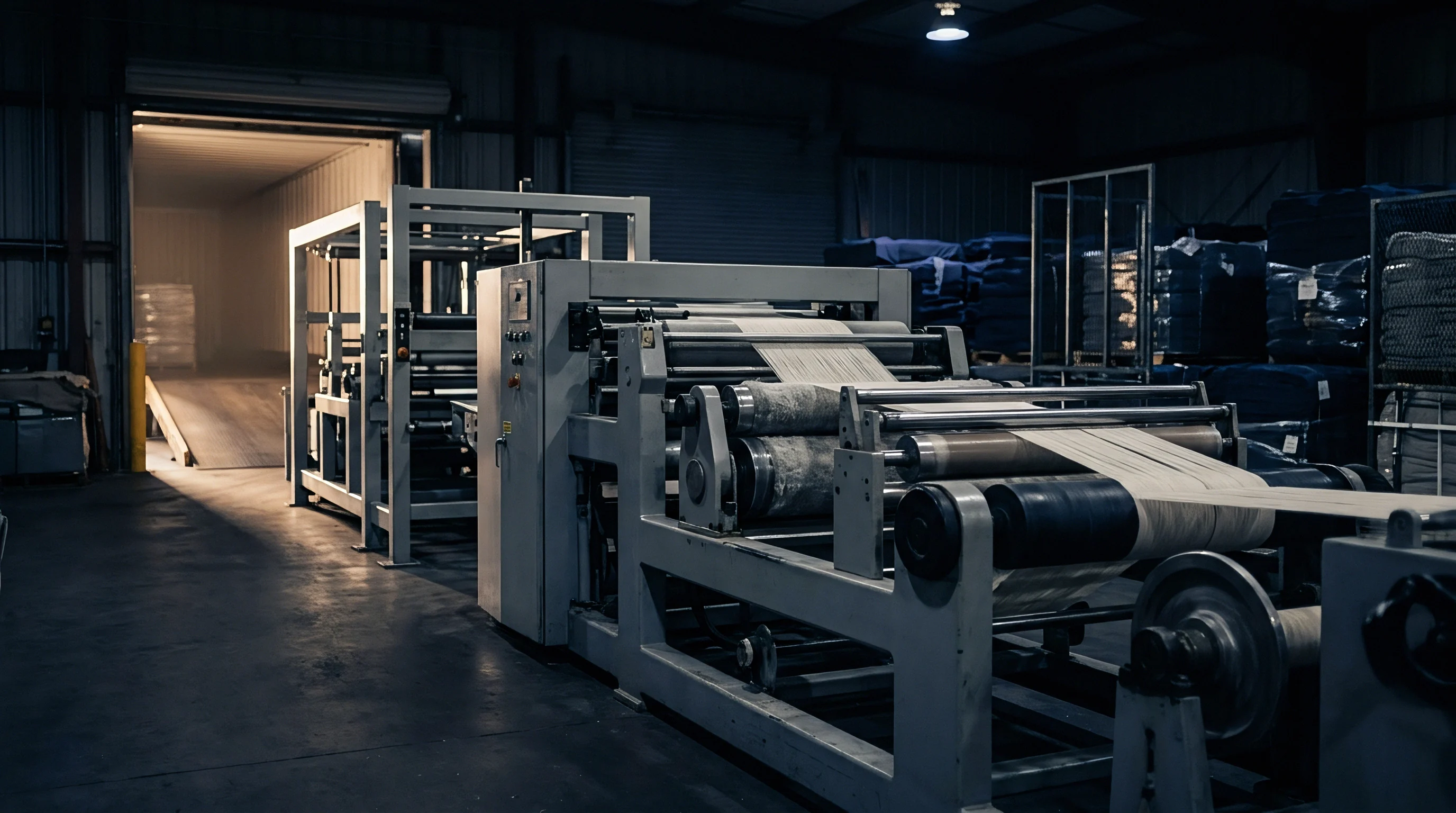
Oven
Calculating the billed weight of fiber, yarn, or fabric requires isolating absorbed moisture from the dry polymer mass. When a shipping container arrives at port, weighbridge readings register both the physical fiber and whatever atmospheric moisture penetrated the cargo in transit or storage. Because ambient conditions fluctuate, trade contracts and customs classifications depend on standardized weight metrics rather than raw scale tickets.
International trade rules determine commercial mass by adding an agreed moisture percentage ~ the commercial regain allowance ~ to the oven-dry mass of the lot.
Invoicing and customs valuation rest entirely on the operational difference between moisture content and moisture regain. Moisture content expresses water as a percentage of the total wet mass, while moisture regain calculates water mass relative to completely dry polymer weight. Because oven-dry mass remains constant regardless of local humidity, commercial regain serves as the basis for international trade settlements.
Paying invoices or tariffs against unadjusted scale weights simply means paying raw fiber prices for ambient water.
Commercial Mass Principles
Settlement weights under commercial contracts are derived by drying representative core samples down to zero moisture and applying the standard commercial allowance. Under ISO 6741-1 and ASTM D1909 test standards, samples dry inside ventilated laboratory ovens until successive weighings show no detectable change in mass. This value establishes the oven-dry mass ~ free of water, but still containing natural waxes or non-extractable finishes unless an initial solvent scour was performed.
Commercial mass is then calculated directly from this dry baseline using standard regulatory factors.
Varying fiber chemistries complicate mass calculations for importing teams. Natural cellulosics like cotton and bast fibers draw water vapor directly into their polymer networks through accessible hydroxyl groups, whereas synthetics such as polyester feature dense crystalline regions that resist water uptake. When relative humidity climbs from sixty percent at origin to eighty-five percent at destination, hydrophilic fibers gain substantial weight while polyester mass barely shifts.
Standard regain benchmarks eliminate these environmental distortions by anchoring commercial settlements to oven-dry mass.
| Fibre Type | Standard Moisture Regain ISO % | Commercial Allowance ASTM % | Dominant Sorption Mechanism | Equilibrium Moisture Content at 65% RH % |
|---|---|---|---|---|
| Raw Combed Cotton | 8.50 | 8.50 | Hydroxyl group hydrogen bonding | 7.50 to 8.00 | Carded Wool Top | 18.25 | 13.60 to 18.25 | Amorphous region peptide binding | 15.00 to 16.50 | Viscose Rayon | 13.00 | 11.00 | Accessible amorphous cellulose sites | 12.50 to 13.50 | Polyester Staple | 0.40 | 0.40 | Surface physical adsorption | 0.30 to 0.45 | Polyamide 6,6 Filament | 4.50 | 4.50 | Amide linkage water uptake | 4.00 to 4.25 |
| Flax / Linen Bleached | 12.00 | 12.00 | Lignin and cell-wall pore condensation | 10.50 to 11.50 |
| Values reflect standard conditioning environments of 20 degrees Celsius and 65 percent relative humidity as specified in ISO 139. Commercial allowances include agreed commercial adjustments for trade settlement. | ||||
Standard Regain Values across Fibre Categories
Trade agreements specify fixed commercial regain percentages for pure fibers to ensure commercial parity across changing climates. Combed wool yarn carries the highest allowance among common industrial fibers, established at eighteen point two five percent under ISO standards due to keratin’s open, amorphous structure. Viscose rayon is set at thirteen percent, reflecting the accessibility of regenerated cellulose to ambient water.
Raw cotton defaults internationally to eight point five percent, though ASTM schedules permit ranges between seven point zero and eight point five percent depending on cleaning and processing state.
Synthetic fibers operate with tighter allowances. Polyester filament is pegged at zero point four percent across ISO and ASTM frameworks. Nylon 6,6 carries a factor of four point five percent based on water absorption at its amide linkages, while acrylic is set at two point zero percent.
If a container of 100-percent polyester fabric gains two percent in gross scale mass during transit, the added weight represents surface moisture rather than delivered polymer, requiring an invoice adjustment before customs submission.
Under ISO 6741-1, an unconditioned tare determination invalidates the commercial mass calculation for whole bulk lots.
Direct Laboratory Measurement Protocols
Verifying billing weight requires forced-draft ventilated drying ovens equipped with integrated precision balances. Technicians draw core samples from sealed packages across the lot in accordance with statistical sampling plans. The chamber is brought to one hundred five degrees Celsius plus or minus two degrees, with continuous airflow stripping out vapor.
Technicians reweigh the test specimens every twenty minutes until consecutive mass readings differ by less than zero point zero five percent of the sample mass.
This stable dry mass serves as the calculation anchor. Once readings level off, the system records the bone-dry mass. If samples undergo prior solvent extraction, processing oils, sizing, and topical finishes are removed so they do not volatilize and distort the fiber weight.
Testing laboratories report clean dry mass alongside total volatile loss, providing the technical basis needed to reconcile vendor billings against actual fiber delivered.
Disparities between factory dispatch weights and entry port readings often trace back to packing room humidity rather than production errors.

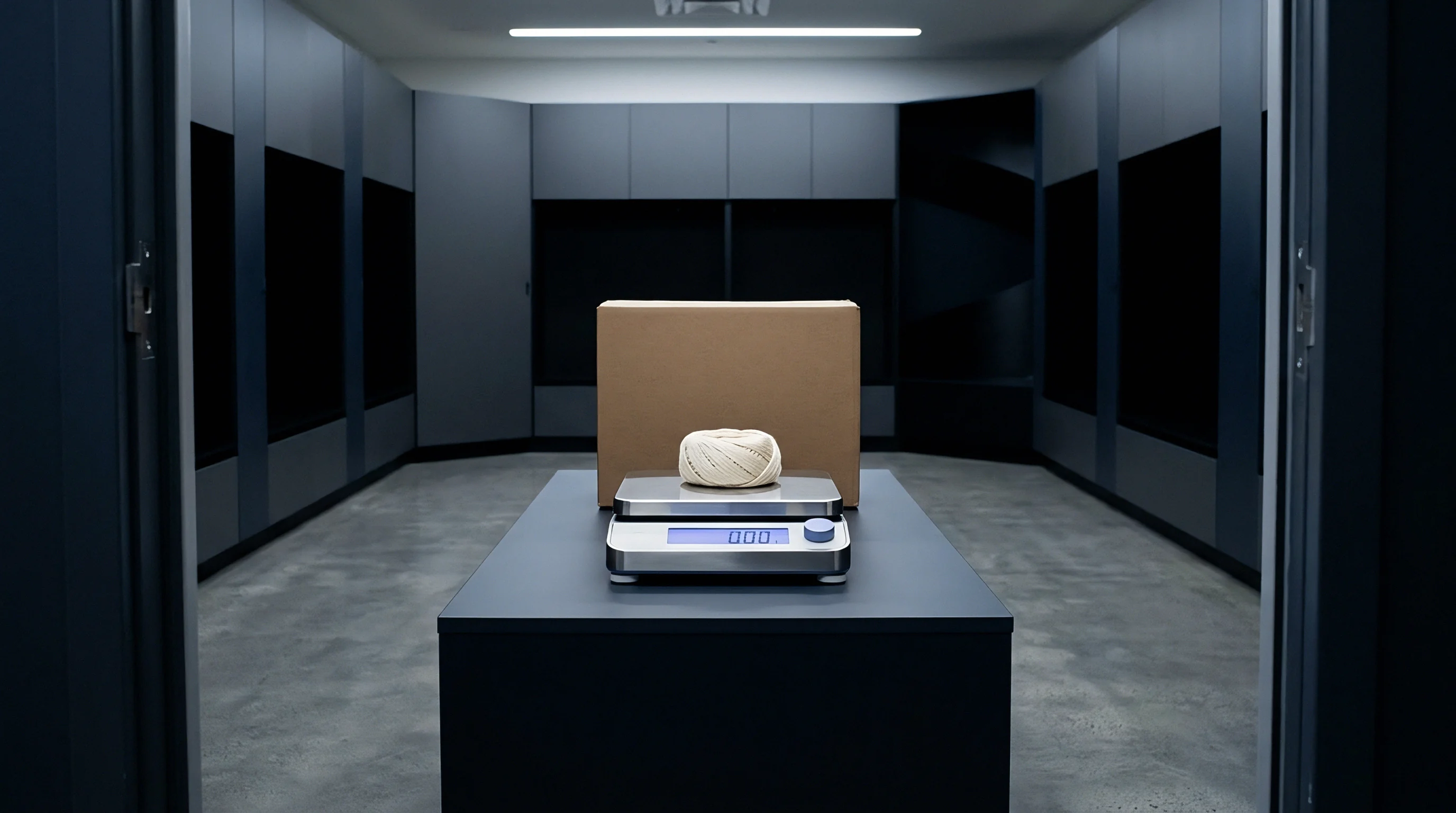
Scale
Translating scale weights into commercial mass requires applying standardized conversion formulas to laboratory oven-dry figures. Weighbridge certificates capture gross physical mass under whatever atmospheric conditions prevail at the scale head. Converting raw readings into commercial mass protects trading partners against climate-driven invoice variations, while providing customs authorities with the correct legal basis for dutiable weight.
Commercial mass calculations depend on the ratio between standard regain allowances and measured dry mass. From an oven-dry sample, commercial mass is derived by multiplying dry mass by one plus the commercial regain allowance expressed as a decimal. When starting from gross scale mass, technicians first determine moisture content to isolate dry polymer weight before applying the trade regain rate.
Adding commercial regain percentages directly to unconditioned scale weights inflates invoiced mass and produces compounding accounting errors.

Mathematical Structure of Commercial Mass Adjustments
Deriving commercial weight accurately relies on the mathematical relationship between physical scale mass, oven-dry mass, and standard regain rates, which vary according to polymer retention characteristics. The primary formula for calculating commercial mass from a laboratory oven-dry sample is:
Commercial Mass = Oven-Dry Mass (1 + (Commercial Regain Allowance / 100))
Where the oven-dry mass is calculated from an unconditioned physical sample mass using the measured moisture content percentage:
Oven-Dry Mass = Unconditioned Physical Mass (1 – (Moisture Content Percentage / 100))
Combining these steps establishes the direct conversion formula from physical container arrival mass to official commercial invoice mass:
Commercial Mass = Unconditioned Physical Mass ((100 + Commercial Regain Allowance) / (100 + Measured Moisture Regain Percentage))
Whenever destination moisture regain exceeds the statutory allowance, raw physical scale weight outpaces commercial mass. Importers must adjust billed weights downward to match verified commercial mass, avoiding excess payments on raw material and inflated ad valorem customs assessments.

Multi Fibre Blend Regain Integration
For blended yarns, the composite commercial regain allowance is calculated as a weighted average based on the dry mass fraction of each constituent fiber, which also governs customs classification lines. The composite regain rate equals the sum of each component’s dry mass percentage multiplied by its respective standard regain factor, divided by one hundred.
- Constituent Fiber Dry Mass Fraction sets the proportional dry weight of each fiber component, measured by chemical extraction under ISO 1833.
- Individual Commercial Regain Allowance applies the standard regain percentage assigned to each pure fiber type under trade schedules.
- Blended Commercial Regain Factor combines individual fiber allowances into a single composite percentage for bulk shipment calculations.
- Extractable Non-Fibrous Content Allowance accounts for commercial adjustments covering spin finishes, oils, and processing additives on finished yarns.
In a blended yarn containing sixty percent combed wool and forty percent polyester by dry weight, applying standard ISO regain allowances ~ eighteen point two five percent for wool and zero point four percent for polyester ~ yields the following composite factor:
Blended Commercial Regain = (60 18.25 / 100) + (40 0.40 / 100) = 10.95 + 0.16 = 11.11 percent
When a twenty thousand kilogram scale-weight lot of this blend tests at thirteen point five percent destination moisture regain, the commercial mass equals twenty thousand multiplied by one hundred eleven point eleven, divided by one hundred thirteen point five. The resulting commercial mass is nineteen thousand five hundred seventy-eight point eight five kilograms. Invoicing this shipment against the unadjusted scale reading of twenty thousand kilograms overbills the purchaser by four hundred twenty-one point one five kilograms.
A three percentage point humidity drop during inland transit reduces invoice mass by twenty-two kilograms per metric ton of raw combed cotton.
Declared Weight versus Net Invoice Weight
Discrepancies between shipping declarations and net invoice weights remain a frequent source of customs holds and commercial adjustments. Origin manifests often record scale weights gathered immediately after spinning or finishing, while packages remain damp from mill humidification. Invoicing against these raw weights bakes temporary processing moisture into the trade price.
| Parameter / Condition | Dry Mill Baseline | Standard Regain Condition | High-Humidity Transit Arrival | Desiccated Warehouse Storage |
|---|---|---|---|---|
| Ambient Relative Humidity % | 0.00 (Oven Dry) | 65.00 | 85.00 | 45.00 | Measured Moisture Regain % | 0.00 | 8.50 (Standard) | 11.80 | 5.20 | Physical Mass Reading kg | 9,216.59 | 10,000.00 | 10,304.15 | 9,695.85 | Official Commercial Mass kg | 10,000.00 | 10,000.00 | 10,000.00 | 10,000.00 |
| Invoice Weight Discrepancy kg | -783.41 | 0.00 baseline | +304.15 (Overbill) | -304.15 (Underbill) |
| Valuation Error at 5.00/kg () | -$3,917.05 | $0.00 baseline | +$1,520.75 exposure | -$1,520.75 loss |
Filing import documentation based on uncorrected scale weights creates substantial compliance exposure during customs inspections. If border weighbridges show a container significantly heavier than declared paperwork due to water absorbed at sea, officers can flag the entry for weight under-declaration. Conversely, if dry transit lowers physical mass while billing remains tied to humid factory weights, the importer overpays ad valorem duty.
Standardized commercial mass formulas resolve both risks by fixing customs declarations to regulated moisture baselines.
An unadjusted polyester-viscose shipment incurred a six thousand dollar demurrage and re-weighing fee after customs flagged scale-to-manifest discrepancies at the entry terminal.


Transit
Ocean freight routes expose containerized textiles to shifting microclimates that alter physical lot mass. Boxes moving from humid manufacturing centers in Southeast Asia through cold marine air experience pronounced temperature and humidity cycling. Solar heating warms the container shell during daylight hours, driving moisture out of wooden pallets and corrugated packaging.
When night temperatures fall, relative humidity inside the box hits the dew point, producing condensation that drips onto outer cartons.
Textile polymers absorb water vapor along distinct sorption isotherms characterized by hysteresis, meaning equilibrium moisture content remains higher during desorption than during absorption. A cotton yarn lot loaded at seven percent moisture content in a dry interior mill will absorb water across a tropical maritime passage, frequently reaching ten or eleven percent regain at destination. Without laboratory commercial mass adjustments upon arrival, this environmental moisture ends up billed as fiber.

Container Microclimates and Moisture Equilibrium
Atmospheric conditions within sea containers rarely align with standard laboratory conditioning environments of twenty degrees Celsius and sixty-five percent relative humidity, and the resulting water weight directly inflates gross freight charges. When cargo is loaded under tropical port conditions, the air sealed within packaging holds substantial moisture vapor. In transit, solar radiation on container roofs can push internal air temperatures past forty degrees Celsius, accelerating moisture exchange across packing materials and raw yarn packages.
During extended ocean voyages, hydrophilic fibers gradually equilibrate with the ambient air in the container. Cotton, linen, wool, and viscose exchange vapor until reaching dynamic equilibrium. While exterior cartons adjust within days, inner packages deep inside dense pallet stacks absorb moisture far more slowly, establishing steep moisture gradients throughout the container.
Weighbridge scales record all of this absorbed ambient water as physical goods mass.
Bales positioned near the container doors absorb ambient moisture faster than those packed in the central core during sea transit.

Sampling Core Lots at Port Entry
Auditing containerized cargo requires structured core sampling immediately after container seals are broken at the terminal. Because outer packages equilibrate rapidly with ambient air, technicians must draw test samples across stratified depths to prevent surface condensation from distorting the calculated mass of the bulk shipment.
- Container Core Stratification Extraction selects sample cartons from door, middle, and rear positions across top, middle, and bottom pallet levels.
- Immediate Hermetic Sealing Protocol seals drawn yarn cones or swatches into heavy aluminum vapor-barrier bags with heat crimps immediately upon extraction.
- Gross Arrival Weight Verification weighs individual sample specimens on calibrated analytical field balances to four decimal places before sending to the lab.
- Desiccated Laboratory Oven Transport transfers sealed samples to an accredited testing facility within twenty-four hours for ISO 6741 oven drying.
Gathering core samples before freight moves into port warehouses avoids secondary atmospheric moisture pickup. When doors first open, moisture distribution across the stow is uneven. Testing outer cartons near the door header reveals artificially elevated regain from container rain, whereas interior cores reflect true baseline conditions.
Blending cross-zone samples establishes the representative regain average required for commercial invoice reconciliation.

Discrepancies between Shipping Point and Entry Port Mass
Variations between origin ocean bills of lading and destination weighbridge tickets stem primarily from moisture transfer during transit. When mills record lot weights immediately following wet finishing, dyeing, or forced room humidification, yarn packages retain unbound water. Across ocean voyages, this water evaporates into the container headspace and vents out, causing arrival scale readings to fall below origin invoice weights.
In contrast, dry-spun yarns packed in low-humidity inland regions take up ambient vapor when routed through humid transshipment hubs. Scale readings at port entry can exceed factory gate weights by up to three percent. Without contract terms requiring ISO 6741 commercial mass adjustments, buyers pay supplier invoices for weight gains created entirely by weather.
Commercial mass clauses eliminate these disputes by tying payment strictly to oven-dry mass plus statutory regain factors.
Yarn shipments stored on lower container tiers absorb less ambient water vapor than top-tier cartons exposed to direct solar radiation.


Duty
Customs administrations evaluate import declarations against net mass and verified transaction values under Harmonized System rules. Specific-rate duties assess fixed charges per kilogram of net weight, whereas ad valorem tariffs apply against total entered value. Declaring physical scale weights elevated by transit humidity means paying duty on ocean water, making commercial mass adjustments essential for accurate landed cost management.
Customs valuation principles require declared invoice figures to represent the true transaction value of imported merchandise. If an invoice includes charges for moisture exceeding standard commercial regain, customs authorities treat the excess weight as part of the dutiable base unless commercial mass adjustments are formally specified in the purchase contract. Applying standard regain calculations aligns declared customs weights with statutory net mass definitions.
Customs Valuation Regulations Governing Net Weight
Customs valuation rules define net weight as the weight of the merchandise itself, excluding packaging, pallets, and shipping restraints, which directly dictates the duty owed. For textile goods, trade regulations permit importers to declare commercial mass derived from standard regain allowances as the official dutiable net weight.
During post-clearance audits, regulatory laboratories analyze shipment samples to verify blend composition and actual moisture regain. If testing reveals that declared weights were based on bone-dry mass without applying commercial regain allowances, customs officers will reassess the entry for revenue under-declaration. If declared weights mirror raw scale tickets carrying twelve percent transit moisture on cotton yarn, customs assesses ad valorem duty on the inflated invoice value and disallows duty refunds unless clear commercial mass provisions exist in the underlying sales contract.
Duty Assessment Exposure on Bounded Moisture Fluctuations
Evaluating exposure to ambient humidity shifts is necessary for volume textile import programs. Under specific-rate tariff lines billed per kilogram, moisture absorption translates directly into additional tax liability. Under ad valorem classifications, absorbed water inflates entered CIF values whenever vendors bill against unadjusted gross arrival scale weights.
- Specific Duty Tariff Surcharge Risk occurs when duty applies per kilogram of scale weight, turning transit water absorption into a direct duty tax.
- Ad Valorem Valuation Exposure arises when unadjusted arrival weights inflate overall CIF invoice values, increasing duties across high-rate lines.
- Customs Misdeclaration Audit Risk stems from differences between declared shipping weights and port weighbridge readings during border inspections.
- Tariff Classification Regain Threshold Shifts happen when absorbed water shifts relative dry mass ratios across critical blend thresholds, altering Harmonized System classifications.
Consider a ten thousand kilogram lot of combed wool fabric priced at twenty dollars per kilogram and dutiable at twelve percent ad valorem. Standard commercial mass yields a dutiable value of two hundred thousand dollars and a corresponding duty liability of twenty-four thousand dollars. If transit moisture increases arrival weight to ten thousand four hundred kilograms and billing follows scale weight, the declared value rises to two hundred eight thousand dollars.
The resulting duty liability increases to twenty-four thousand nine hundred sixty dollars, generating a nine hundred sixty dollar duty overpayment on absorbed atmospheric moisture.
Can Commercial Regain Allowances Neutralize Customs Assessment Penalties?
Integrating commercial regain allowances into customs declarations protects importers against penalties stemming from weight variances. Customs regulations accept net weight declarations calculated under ISO 6741 commercial mass formulas, provided purchase contracts, commercial invoices, and transport manifests explicitly state that billing rests on standard commercial mass adjustments.
Auditors require laboratory documentation to support weight adjustments, accepting accredited regain certificates to validate declared net mass. When port scales record higher weights due to transit humidity, customs officers cross-reference scale tickets against the laboratory dry mass analysis. Confirming that mass differences result solely from moisture uptake beyond standard regain levels prevents authorities from assessing under-declaration penalties or adjusting tariff values upward.
Section 4 of the International Cotton Association bylaws mandates that invoice settlement rests exclusively on dry mass plus official commercial regain regardless of arrival humidity.

Margin
Calculating accurate landed margins requires integrating commercial regain adjustments directly into standard cost models. Price quotes from textile mills per kilogram or linear meter assume standard commercial moisture conditions. When shipments arrive damp, paying unadjusted vendor invoices inflates unit costs and compresses operating margins for manufacturers and converters.
Rigorous commercial mass accounting protects projected cost targets.
Sensitivity modeling across humidity ranges reveals significant margin exposure across global sourcing lines. Small shifts in moisture regain generate noticeable cash flow variances on volume purchases. Applying systematic laboratory verification converts variable scale weights into predictable commercial costs, removing environmental noise from inventory accounting.

Worked Case of a Polyester Cotton Wool Blend Invoice
A three-fiber blended yarn import illustrates commercial mass auditing in practice. An apparel manufacturer imports fifteen thousand kilograms gross scale weight of a blend comprising fifty percent combed wool, thirty percent raw cotton, and twenty percent polyester staple by dry mass. The contract price is twelve dollars per kilogram based on commercial mass under ISO 6741 regain rules.
Step one determines the blended commercial regain allowance using standard fiber regain factors: wool at eighteen point two five percent, cotton at eight point five percent, and polyester at zero point four percent.
Blended Commercial Regain Allowance = (0.50 18.25) + (0.30 8.50) + (0.20 0.40) = 9.125 + 2.55 + 0.08 = 11.755 percent
Step two evaluates entry port core sampling results. Accredited laboratory testing reveals an actual measured arrival moisture regain of fourteen point two percent across the container lot, driven by tropical sea route humidity.
Step three calculates true oven-dry mass from the raw arrival scale mass of fifteen thousand kilograms:
Oven-Dry Mass = 15,000 (100 / (100 + 14.20)) = 15,000 (100 / 114.20) = 13,134.85 kilograms
Step four derives legal commercial mass by applying the calculated blended commercial regain allowance of eleven point seven five five percent to the true oven-dry mass:
Commercial Mass = 13,134.85 (1 + (11.755 / 100)) = 13,134.85 1.11755 = 14,678.85 kilograms
Step five compares vendor billing based on raw arrival scale mass against corrected commercial mass billing at twelve dollars per kilogram:
Raw Scale Mass Invoice Value = 15,000 kilograms $12.00/kg = $180,000.00
Corrected Commercial Mass Invoice Value = 14,678.85 kilograms $12.00/kg = $176,146.20
Financial Overbill Amount = $180,000.00 – $176,146.20 = $3,853.80
Step six calculates the corresponding customs duty saving assuming an ad valorem tariff rate of ten percent applied to CIF invoice value:
Raw Duty Liability = $180,000.00 10% = $18,000.00
Corrected Duty Liability = $176,146.20 10% = $17,614.62
Duty Overpayment Avoided = $385.38
Recalculating commercial mass yields total direct cash savings of four thousand two hundred thirty-nine dollars and eighteen cents on this single container.
| Arrival Regain Scenario % | Physical Lot Mass kg | Oven-Dry Mass kg | Official Commercial Mass kg | Corrected Invoice Value ($) | Variance vs Raw Scale Billing ($) | Ad Valorem Duty Exposure ($) |
|---|---|---|---|---|---|---|
| 8.00 (Arid Transit) | 15,000.00 | 13,888.89 | 15,521.53 | $186,258.36 | +$6,258.36 (Underbill) | $18,625.84 |
| 11.755 (Standard Baseline) | 15,000.00 | 13,422.22 | 15,000.00 | $180,000.00 | $0.00 (Baseline) | $18,000.00 |
| 14.200 (Container Rain) | 15,000.00 | 13,134.85 | 14,678.85 | $176,146.20 | -$3,853.80 (Overbill) | $17,614.62 |
| 16.500 (Monsoon Dock Storage) | 15,000.00 | 12,875.54 | 14,389.06 | $172,668.72 | -$7,331.28 (Overbill) | $17,266.87 |

Sensitivity Analysis of Relative Humidity Spikes on Landed Margins
Maintaining margin targets requires monitoring how environmental humidity affects fabric mass per linear meter. Textile fabrics are priced and specified by weight per unit area based on yarn structure and pick counts. When relative humidity rises, rolls absorb water vapor without gaining real fiber, artificially inflating measured grams per square meter.
Fabrics purchased by scale weight in high-humidity conditions yield less usable dry fiber than planned during garment costing. When that fabric reaches equilibrium in conditioned cutting rooms, it loses both mass and linear yield. Purchasing against verified commercial mass guarantees that finished yields align with technical specifications regardless of transit humidity.
Customs authorities calculate ad valorem import duties on declared invoice weight rather than dry fibre mass.

Dispute Resolution Procedures for Overstated Invoice Mass
Resolving overbilling disputes requires clear contract terms supported by certified laboratory test reports. Importers receiving invoices tied to raw arrival weights must initiate formal claims within contractually agreed inspection periods. Establishing that a shipment was billed on unadjusted damp weight has enabled the recovery of forty-two thousand dollars in tariff overpayments on single-season programs.
- Formal Claim Notice Timelines require notifying overseas suppliers of weight discrepancies within ten days of container arrival at port terminals.
- Independent Accredited Laboratory Retesting sends sealed core samples to an ISO 17025 accredited lab for joint testing under ISO 6741.
- Commercial Invoice Debit Note Issuance issues debit adjustments against vendor ledger accounts matching verified commercial mass reductions.
- Customs Post-Summary Correction Filing submits corrected commercial mass certificates to customs to recover overpaid import duties.
These dispute frameworks safeguard profitability and reinforce vendor discipline. When mills know that import audits enforce core sampling and commercial mass calculations on every container, they calibrate factory conditioning systems to meet standard regain specifications prior to shipment.
Whether international customs authorities will establish a unified digital protocol for real-time regain adjustment during clearance remains an open administrative question.


Receipt
Executing moisture regain standards in trade operations requires clear contract terms, strict laboratory procedures, and consistent shipping documentation. Purchase contracts should state explicitly that billing masses, packing lists, customs entries, and final settlements depend on ISO 6741 or ASTM D1909 commercial mass formulas. Relying on unwritten conventions leaves buyers exposed to raw scale billing during humid transit seasons.
Testing reliability depends directly on instrument calibration and environmental control. Laboratories supporting import desks require analytical balances calibrated to zero point zero zero one gram precision within testing rooms kept at twenty degrees Celsius plus or minus two degrees and sixty-five percent relative humidity plus or minus four percent. Pre-conditioning samples in desiccators before oven drying strips out prior sorption history, ensuring repeatable oven-dry mass measurements.
Laboratory Testing Protocols for Chemical Extraction and Regain
Determining commercial regain in finished fabrics combines quantitative chemical analysis under ISO 1833 with oven drying under ISO 6741. Commercial fabrics carry spin finishes, starches, waxes, and functional chemical finishes that alter moisture absorption and add non-polymeric mass. Testing procedures require scouring specimens in petroleum ether or enzyme baths to remove non-fibrous additives prior to oven drying.
Extracting these finishes exposes the clean polymer base for accurate dry mass determination. Technicians weigh the scoured specimens, dry them to constant mass at one hundred five degrees Celsius, and calculate non-fibrous matter alongside pure dry mass. Applying commercial regain factors exclusively to scoured dry fiber prevents suppliers from invoicing sizing agents and lubricants at premium textile prices.
Formulating Protective Commercial Mass Specifications
Protecting operating margins requires explicit commercial mass provisions across sales agreements, purchase orders, and documentary letters of credit. Contract language must specify the governing test standard, establish agreed regain percentages for each fiber type, and outline formal debiting protocols for weight variances beyond agreed tolerances. These clauses provide legal standing during billing reconciliations and customs audits.
Standard purchase contract clauses for composite yarn lots require origin mills to declare official commercial mass alongside unadjusted physical scale weight on all packing lists, commercial invoices, and bills of lading. Standardizing documentation across the supply chain allows customs brokers to file entries against verified commercial weights automatically. Anchoring import accounting to commercial mass formulas protects margins, maintains customs compliance, and prevents paying premium fiber rates for absorbed water.