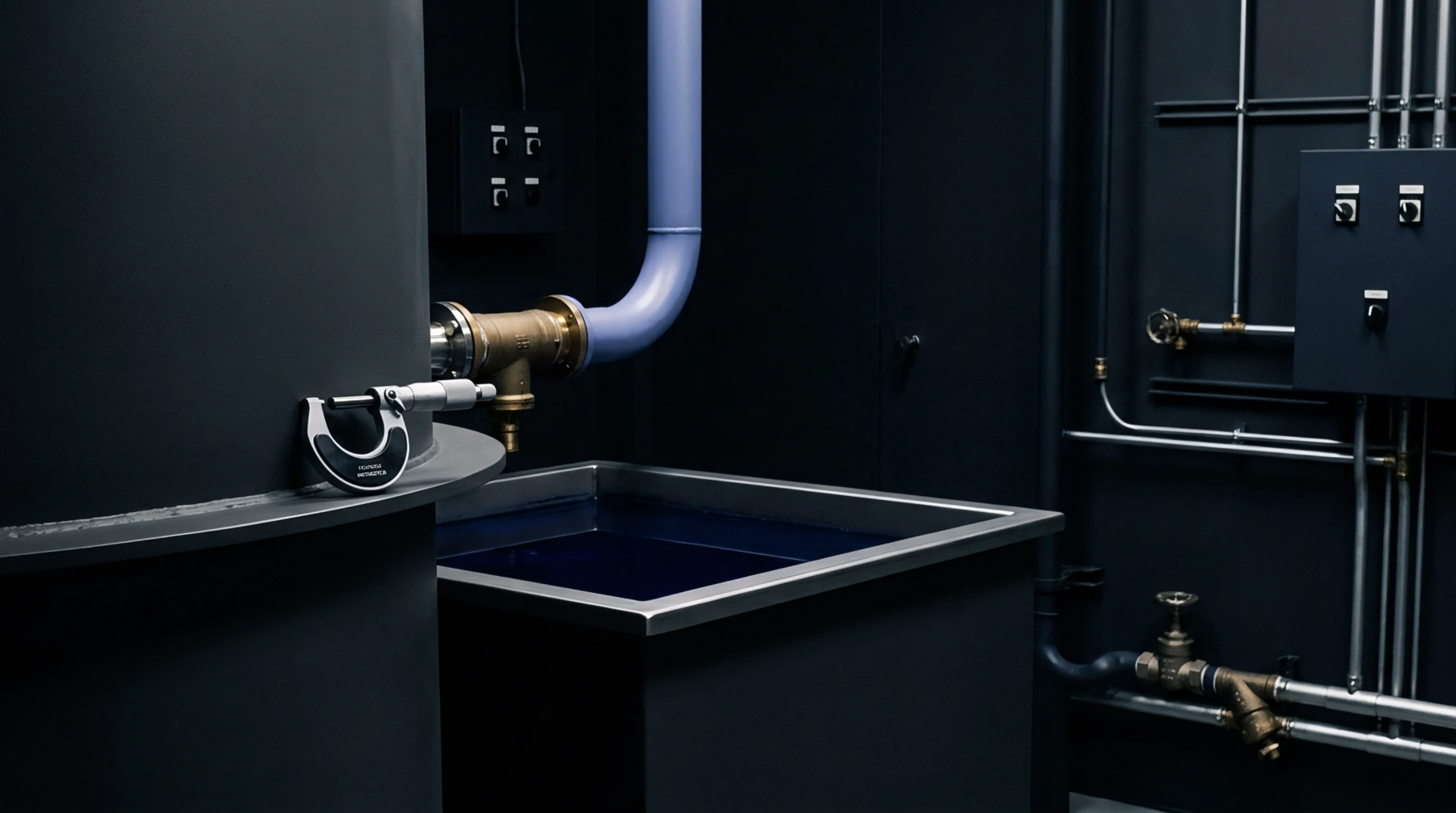
Dyehouse Vessel Hydraulics and Dye Lot Conversion Schedule Reconciliation
Dye lot conversion schedule reconciliation requires matching greige bulk density and nozzle hydraulics to vessel capacity, preventing pump cavitation and shade drift.
Atmospheric equilibrium within a dyeing vessel regulates liquid flow through textile substrates to prevent uneven pigment distribution across mass-produced fabrics. Multi tube chamber symmetry corrects pressure variances that arise when high-speed centrifugal pumps force dyebath fluids through dense fibre packages. Internal pressure sensors record the differential between individual channels while automated valves adjust flow velocity to match the reference port.
Uniform delivery forces consistent absorption rates across every yarn core during the initial saturation stage of processing. Consistent movement avoids cold spots inside the compressed material block, so heavy shades achieve total dye uptake without mottled patches or streaks. Constant adjustment maintains the balance until the exhaustion period concludes.
Hardware positioning relative to the main circulation pump determines the efficiency of chemical distribution. Multi tube chamber symmetry occupies the space between the primary impeller and the material carrier to smooth turbulent intake streams. Engineers monitor the velocity profile inside every branch to verify that flow remains laminar rather than erratic.
Turbulent flow risks damaging delicate silk filaments or brittle synthetic fibres during long immersion cycles. Rigid geometry ensures that the fluid pressure profile hits the fibre wall with equal force at every coordinate. Proper alignment reduces the mechanical stress placed on internal gaskets.
Consistent physical geometry prevents the fluid from selecting path-of-least-resistance routes. A stable distribution of liquid allows the bath concentration to remain identical at every point of the chamber volume.
Lab-scale results provide the baseline for full-scale vat operations when bulk production begins. Multi tube chamber symmetry acts as the bridge between laboratory samples and factory output by standardizing the fluid dynamics of larger vessels. Production teams measure the hydraulic drag within the chambers to ensure that massive fabric loads receive the same treatment as gram-weight samples.
Mismatching drag factors leads to shade differences between the first piece off the machine and the final piece in a batch. Accurate data prevents costly re-dyeing cycles that waste water and utility power. Technicians use flow meters to map the pressure drop across the internal tube array under varying load density conditions.
Precise control over these factors determines the level of shade consistency achievable across multiple production lots.
Fabric density represents the primary variable that restricts the effectiveness of pressure correction systems. Dense cotton or polyester constructions resist fluid penetration more effectively than open weaves. Multi tube chamber symmetry loses utility when the material porosity falls below the threshold for efficient saturation.
Hydraulic resistance spikes occur if the machine operates at maximum capacity or utilizes incorrect packing methods for the specific textile weight. These fluctuations exceed the capacity of automatic valves to compensate for pressure loss. Reliable colour results require strict adherence to standard load limits for each specific vessel design.
The physical design of the chamber imposes a physical limit on the volume of fabric one unit can process with full uniformity. Successful dyeing depends entirely on maintaining pressure parity throughout the entire duration of the cycle.
Dye lot conversion schedule reconciliation requires matching greige bulk density and nozzle hydraulics to vessel capacity, preventing pump cavitation and shade drift.
Expertise is a utility, not a secret. sentiention™ publishes its working knowledge as open reference: intelligence layer covering the materials it sources, the markets it enters, and the reference that serves both.