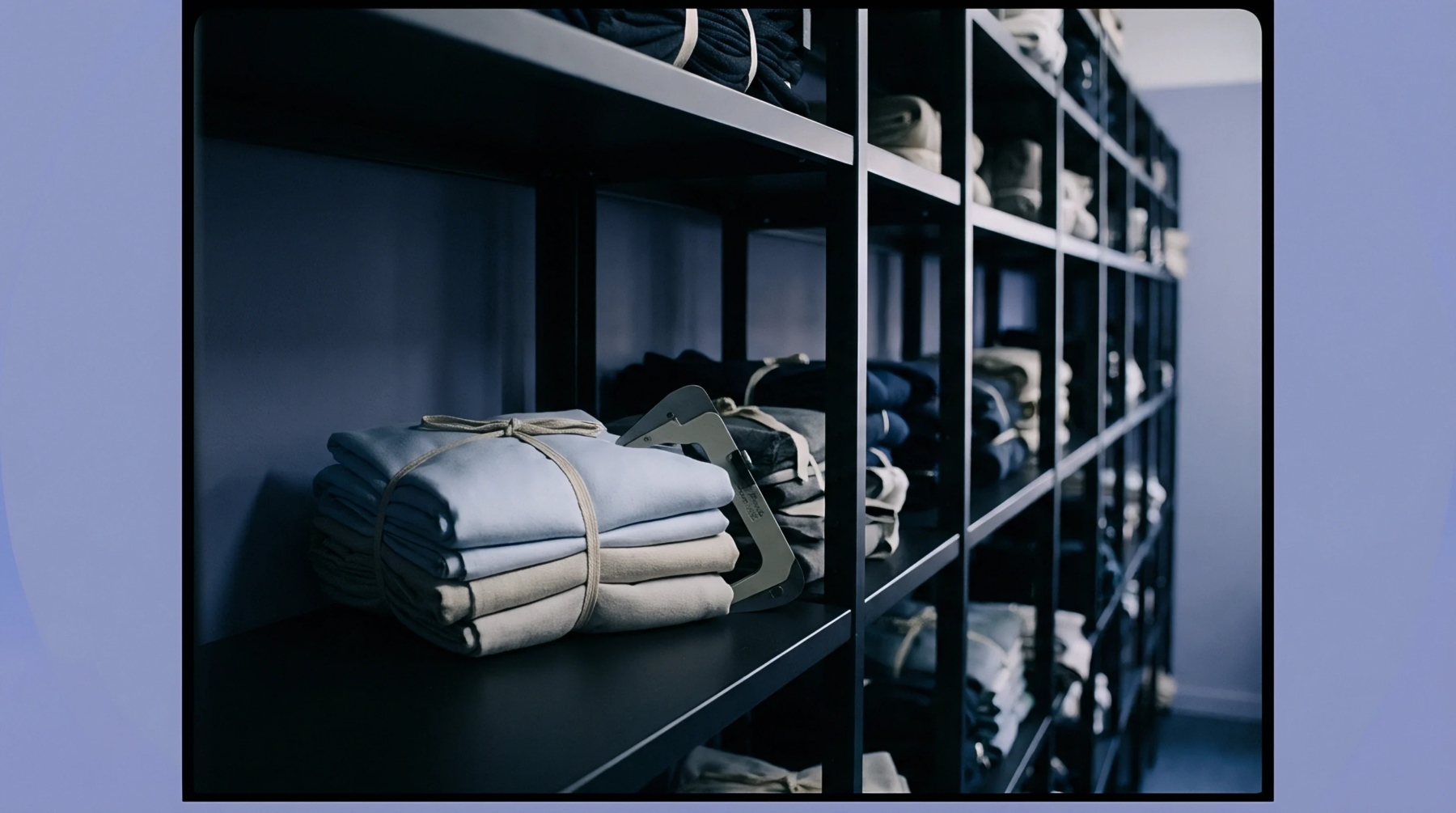
Scouring Operation
Wet preparation treatments remove spinning oils, knitting lubricants, and paraffin sizes from raw textile substrates using uncharged surfactant formulations. Applied before dyeing or quantitative chemical testing, a non-ionic pre-wash cleans yarn surfaces without reacting with ionic chemical finishes or altering the inherent structure of the fibers. The bath operates under neutral to mildly alkaline conditions, relying on non-ionic surfactants like ethoxylated fatty alcohols to emulsify hydrophobic residues.
This step does not replace high-temperature scouring of natural raw cotton containing heavy seed-coat fragments and pectin matrices.
Chemical Mechanism
Non-ionic surfactants feature hydrophobic hydrocarbon tails paired with hydrophilic polyethylene oxide chains that carry no net electrical charge. When added to warm wash baths, these molecules orient their hydrophobic tails toward mineral oils, synthetic lubricants, and knitting oils, enclosing them in stable aqueous micelles. A non-ionic pre-wash prevents these oily emulsions from redepositing onto the fabric surface during rinse cycles.
Because the surfactant lacks charge, it does not form insoluble salts with hard water minerals or react electrostatically with anionic and cationic finishes.
Analytical Cleansing
Laboratory technicians run solvent extractions and composition testing on cleaned fiber specimens to avoid mass distortion from spinning lubricants. Executing a non-ionic pre-wash removes non-fibrous processing aids that otherwise register as false fiber mass in gravimetric dissolution tests under ISO 1833 standards. If lubricants remain on specimen yarns, selective chemical reagents dissolve finish components alongside fiber polymers, skewing fiber ratio calculations by several percentage points.
Gentle washing cleans the sample without hydrolyzing or degrading sensitive natural or synthetic fiber chains.
Inspection Checkpoint
Mill process audits verify washing quality by measuring residual solvent-extractable content on washed greige goods before they enter dye vessels. An inadequate non-ionic pre-wash leaves oil patches that block dyestuff absorption, creating blotchy dye yields, streakiness, and poor wash-fastness across finished fabric rolls. Commercial fabric buyers inspect pre-treatment consistency through water droplet absorption tests across greige goods.
Uniform wetting confirms complete removal of hydrophobic processing lubricants from production lots.