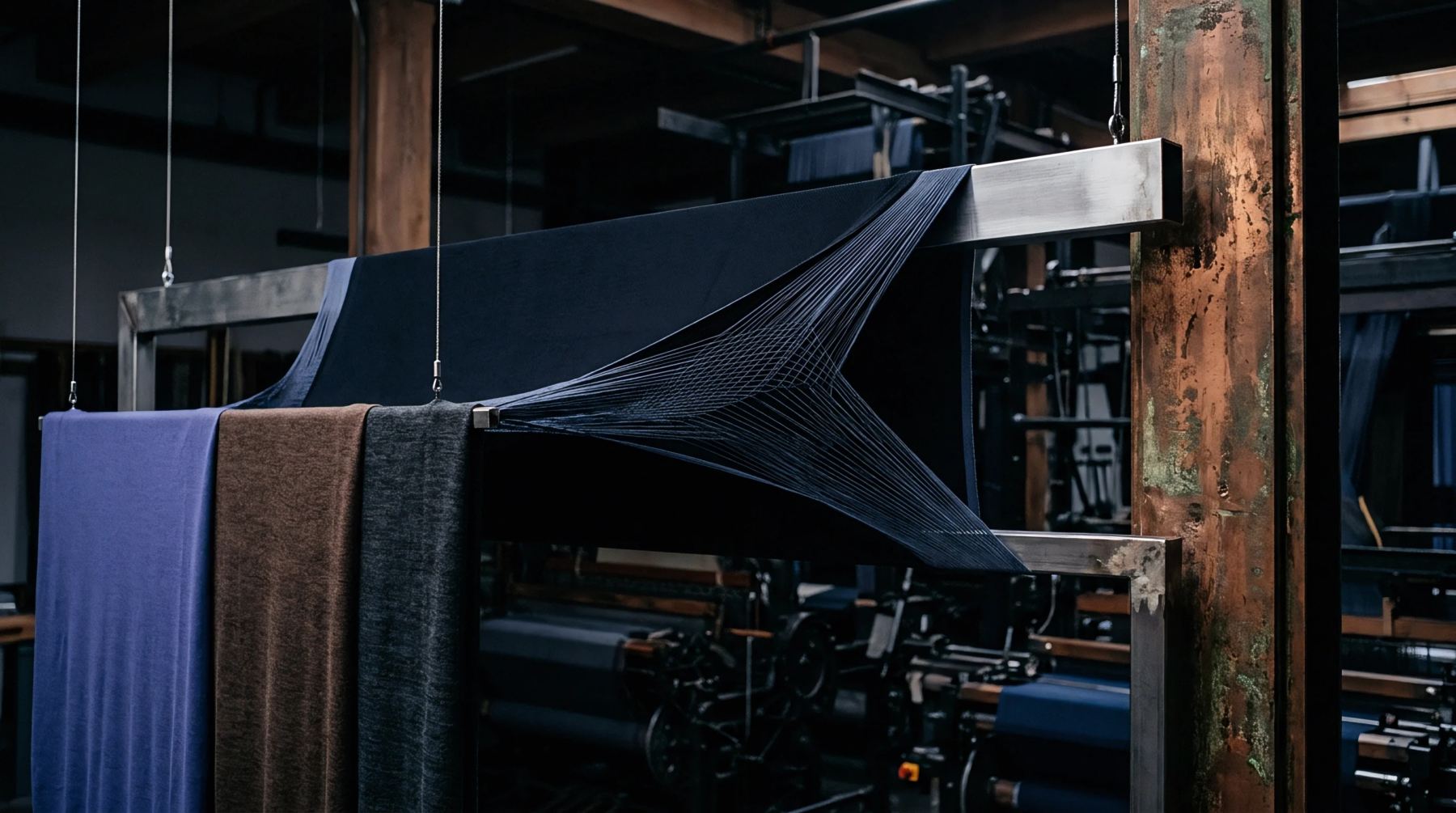
Calculating Loom Reed Width from Warp Crimp and Fabric Sett
Calculating correct loom reed width requires combining off-loom grey contraction, finished warp sett, and weft crimp percentage into one unified formula.
The ratio of total void space to the entire surface area of a textile filter medium determines its filtration efficiency and throughput capacity. Open area percentage establishes the physical limit for particle passage through a woven or extruded fabric structure by quantifying the gaps between individual yarns. Engineers calculate this value by dividing the aggregate surface of all holes by the gross area of the material sample.
Accurate measurements occur during the laboratory testing phase after initial loom state fabrication. Higher values allow fluids to pass through the filter with minimal resistance, whereas lower values trap finer solid particles while increasing the pressure drop across the filter medium. Verification of these results relies on microscopic analysis or automated optical systems that track clear space versus solid matter.
The physical arrangement of intersections dictates the final consistency of the airflow or liquid flow, as dense patterns yield smaller individual holes and reduced flow rates compared to loose constructions. Factories monitor these values to maintain consistent batch performance during the production of industrial mesh or screen goods.
Manufacturers define the acceptable range for this measurement to account for minor fluctuations during the warping or weaving process. Variations in yarn tension sometimes alter the actual pore size despite theoretical calculations suggesting a uniform grid. The variance remains within narrow tolerances defined by the application requirements of the end consumer.
If a machine operator notices a shift in the consistency of the mesh, they must recalibrate the tensioning equipment to return the geometry to within specification. Calibration occurs against standardized templates to ensure that the physical product matches the technical data sheet provided to the client. This validation step guards against the accidental production of nonconforming material that fails to meet flow requirements.
Yarn diameter and profile shape dictate the mathematical maximum achievable porosity for any given mesh count. Finer yarns occupy less space at each intersection, which increases the total open area percentage for a fixed number of threads per centimetre. Conversely, monofilament yarns with circular cross sections create consistent voids, while flat or tape yarns produce elongated gaps that change the flow characteristics significantly.
Textile mills select fibre materials based on their ability to maintain these dimensions under mechanical stress and thermal expansion during operational use. Polyester, nylon, and polypropylene demonstrate different levels of dimensional stability when exposed to heat, meaning the mesh aperture changes slightly after the heat setting process. Producers adjust the starting loom density to compensate for this anticipated shrinkage to ensure the finished fabric retains the desired filtration capability.
Operational efficiency decreases when the fabric experiences excessive blinding or internal plugging caused by debris accumulation in the open areas. Stable geometry ensures that the pressure drop remains constant across the entire surface of the filter cloth during standard cycle times. Sudden failures in the structure often link back to the loss of consistent hole size throughout the roll length.
Uniformity determines the longevity of the installation.
Calculating correct loom reed width requires combining off-loom grey contraction, finished warp sett, and weft crimp percentage into one unified formula.
Expertise is a utility, not a secret. sentiention™ publishes its working knowledge as open reference: intelligence layer covering the materials it sources, the markets it enters, and the reference that serves both.