Nip Distortion
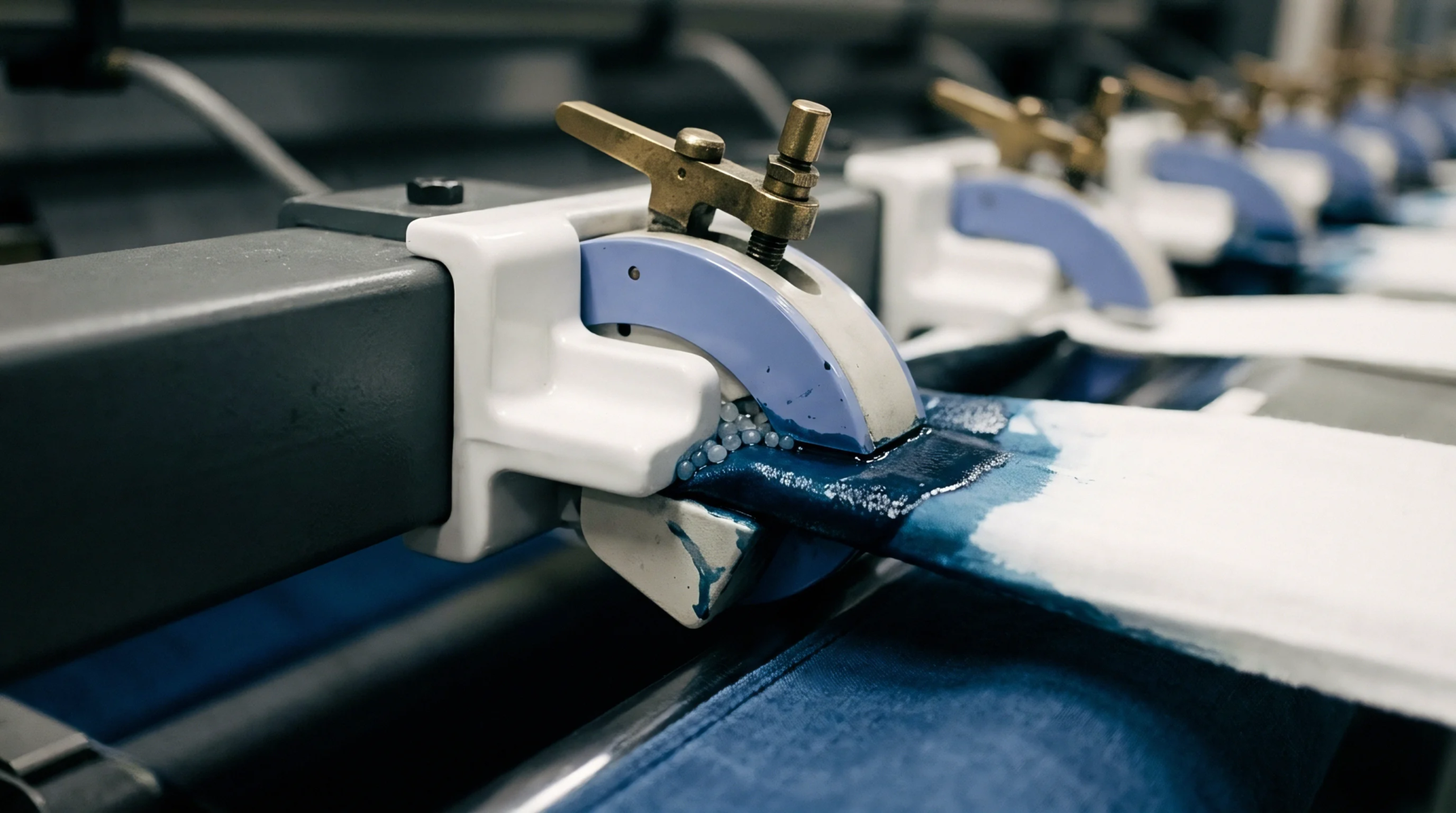
Transverse bending of horizontal finishing rolls occurs when mechanical or hydraulic loading applied at the roll journals causes differential deflection across the working machine face. In wet processing lines, padder deflection distorts the pressure uniformity of the extraction nip, altering chemical expression and moisture pick-up from edge to center. This structural deformation ceases its influence as soon as the processed fabric separates from the roll convergence line.
Mechanical Flexure
Heavy compressive forces applied by hydraulic or pneumatic pistons force standard cylindrical steel rollers to behave as beam structures, flexing away from each other at the mid-span. This physical bowing lowers the effective nip pressure across the center of the fabric web relative to the highly compressed selvedges. As a consequence of this uneven pressure distribution, the center of the web carries higher chemical pick-up than the edges.
Differential expression generates serious side-to-center color shading defects in continuous dyeing and variable resin distribution in durable press finishing runs. Equipment builders counter this structural deflection using cambered roll grinding, variable internal hydraulic pressure zones, or crowned elastomeric roll covers.
Pressure Verification
Routine roll maintenance involves physical nip impression testing using pressure-sensitive carbon measurement papers or calibrated sensory films. Placing measurement films between closed, loaded rollers reveals the exact physical contact footprint across the entire roll width. A narrower contact width in the center confirms uncontrolled shaft flexure, necessitating internal pressure compensation adjustments.
Operators measure residual moisture pickup using multi-point laboratory extraction tests on swatches cut across the width according to ASTM D3776.
Deflection Control
Modern padders integrate floating rolls or counter-bending cylinders that apply dynamic internal fluid pressure directly behind the working sleeve to neutralize deflection. Fine-tuning these internal hydraulic circuits matches roll curvature to varying production loads and diverse substrate thicknesses. Correct roll profile alignment ensures consistent wet pick-up across running webs, protecting finished fabric lots from horizontal shade disparities.