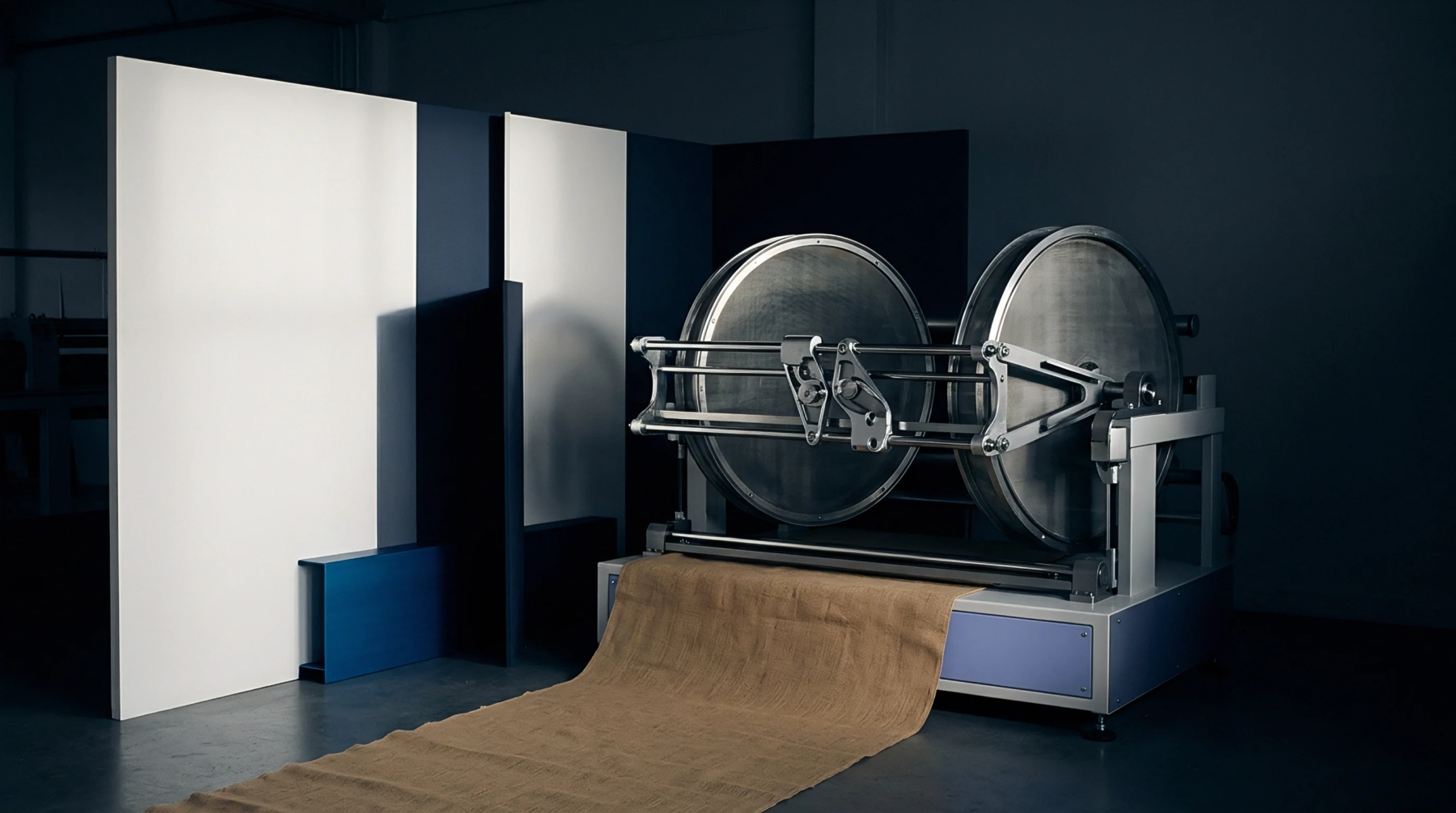
Structural Dimension
The physical distance between consecutive weft yarns in a woven fabric determines the thread density and overall stability of the material. Adjusting pick spacing during the weaving process directly affects the weight, breathability and strength of the textile. This measurement is monitored using pick counters or magnifying glasses.
It dictates how tightly the filling yarns are beaten against each other by the loom reed, defining whether the resulting cloth holds its shape under tension or yields to deformation.
Loom Configuration
Loom take-up mechanisms control the pick spacing by pulling the warp beam forward after each weft insertion. A slow take-up creates a dense fabric with narrow spacing, while a fast take-up produces an open structure. Modern electronic take-up systems allow precise micrometer-level adjustments.
Fabric Performance
Woven fabrics with irregular pick spacing show visual defects known as set marks or pick bands. Consistent pick spacing is necessary for uniform dye absorption and mechanical strength. This uniform structure prevents fabric distortion during sewing.
Inspection Standard
Quality control laboratories verify this dimension after the fabric is finished and relaxed. Because shrinkage occurs during scouring and dyeing, the final pick spacing is usually closer than the loom settings. This measurement must match the specification sheet.