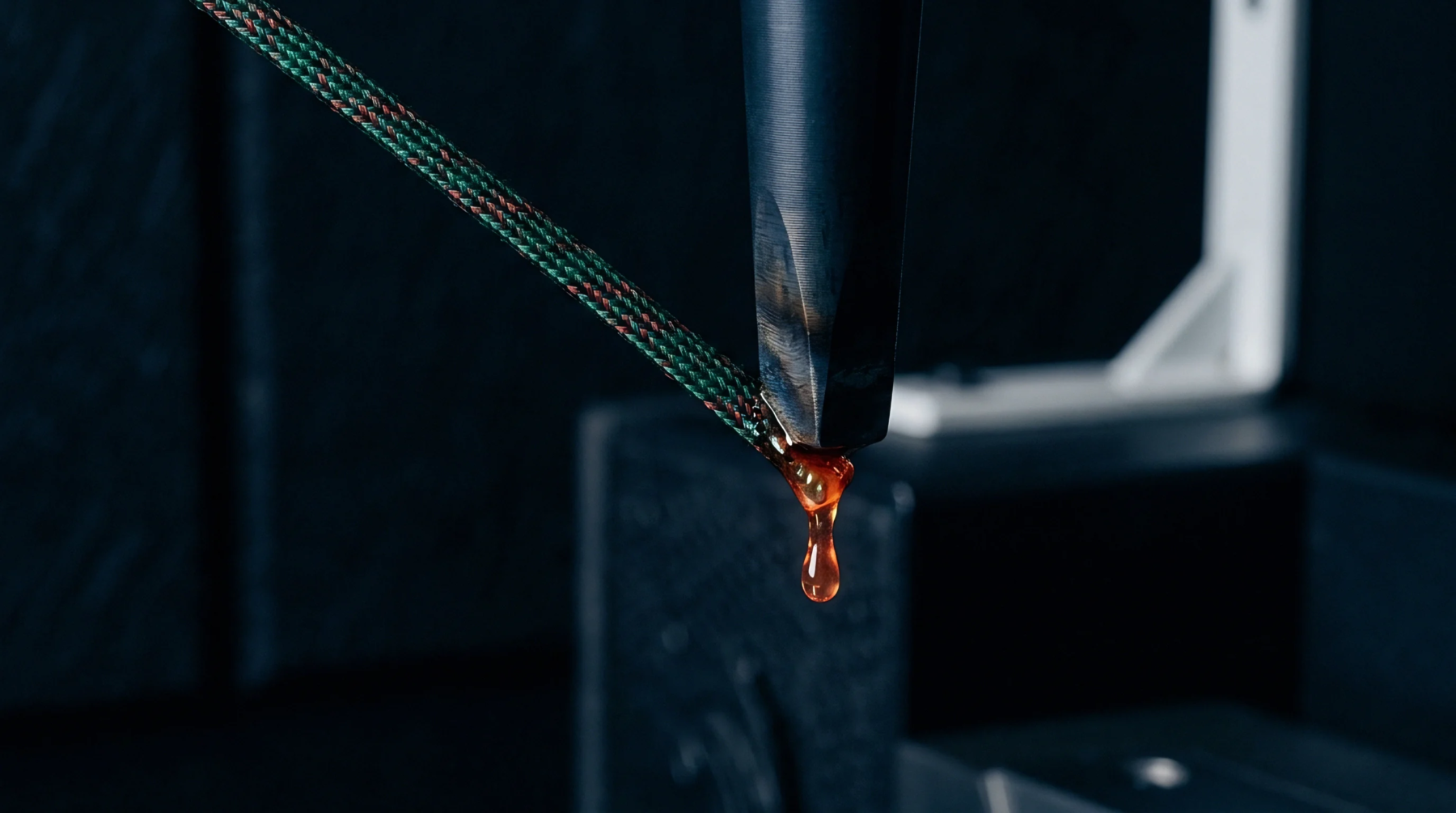
Extrusion Mechanics
Molten polymer extrusion transforms pelletized thermoplastic resins into continuous filaments through heated spinneret assemblies during industrial textile manufacturing operations. Polymer melt spinning operates as the primary formation pathway for synthetic filament yarns inside commercial filament extrusion mills. Thermoplastic pellets enter a heated barrel where rotating screws apply thermal energy and mechanical shear until the material reaches a uniform fluid state.
Metering pumps then force the viscous fluid through fine orifices drilled into metallic spinneret plates positioned above cooling chimneys. Molten jets emerge from these tiny holes and immediately encounter cold air quenching zones that solidify the liquid streams into solid filaments. Air velocity and temperature profiles inside the quenching stack determine the initial crystallinity level developed within the newly formed filament structure.
Rheological Profile
Fluid behavior inside the extrusion pack dictates the ultimate mechanical properties of manufactured filament yarns. Shear viscosity dictates how smoothly the polymer chains flow through capillary channels under high pressure loads. High molecular weight polymers demand elevated processing temperatures to lower melt resistance before entering the spinneret capillaries.
Molecular orientation develops rapidly as fluid streams accelerate through the conical entrance region of each individual capillary hole. Unchecked molecular relaxation behind the spinneret face causes undesirable filament distortion before complete solidification occurs inside the quenching duct. Rapid cooling locks in this molecular orientation, which subsequently dictates the tenacity and elongation values measured on finished yarn packages.
Spin Finish
Chemical agents applied immediately after filament solidification alter surface friction characteristics before downstream winding operations occur. Lubricating emulsions coat the moving filament bundle to prevent static charge accumulation and abrasion against metal contact points. Even distribution of these liquid formulas ensures consistent package unwinding behavior during subsequent texturing or weaving processes.
Excess liquid removal requires precision applicator metering systems to maintain strict finish pick up percentages across every produced bobbin. Insufficient lubricant deposition leads to filament breakage and high yarn defect counts during high speed winding runs.
Package Formation
Winding heads collect continuous filament yarn onto cylindrical tubes at speeds reaching several thousand meters per minute. Mechanical tension applied during this take up stage stretches the partially oriented filaments to establish final linear density specifications. Package density variations alter dye uptake behavior during subsequent fabric coloration procedures performed at industrial dyeing facilities.
Quality control inspectors verify spool geometry and internal yarn tension before releasing material to commercial weaving floors. Consistent winding parameters ensure that final fabric constructions exhibit uniform hand and strength characteristics across every inspected commercial batch.