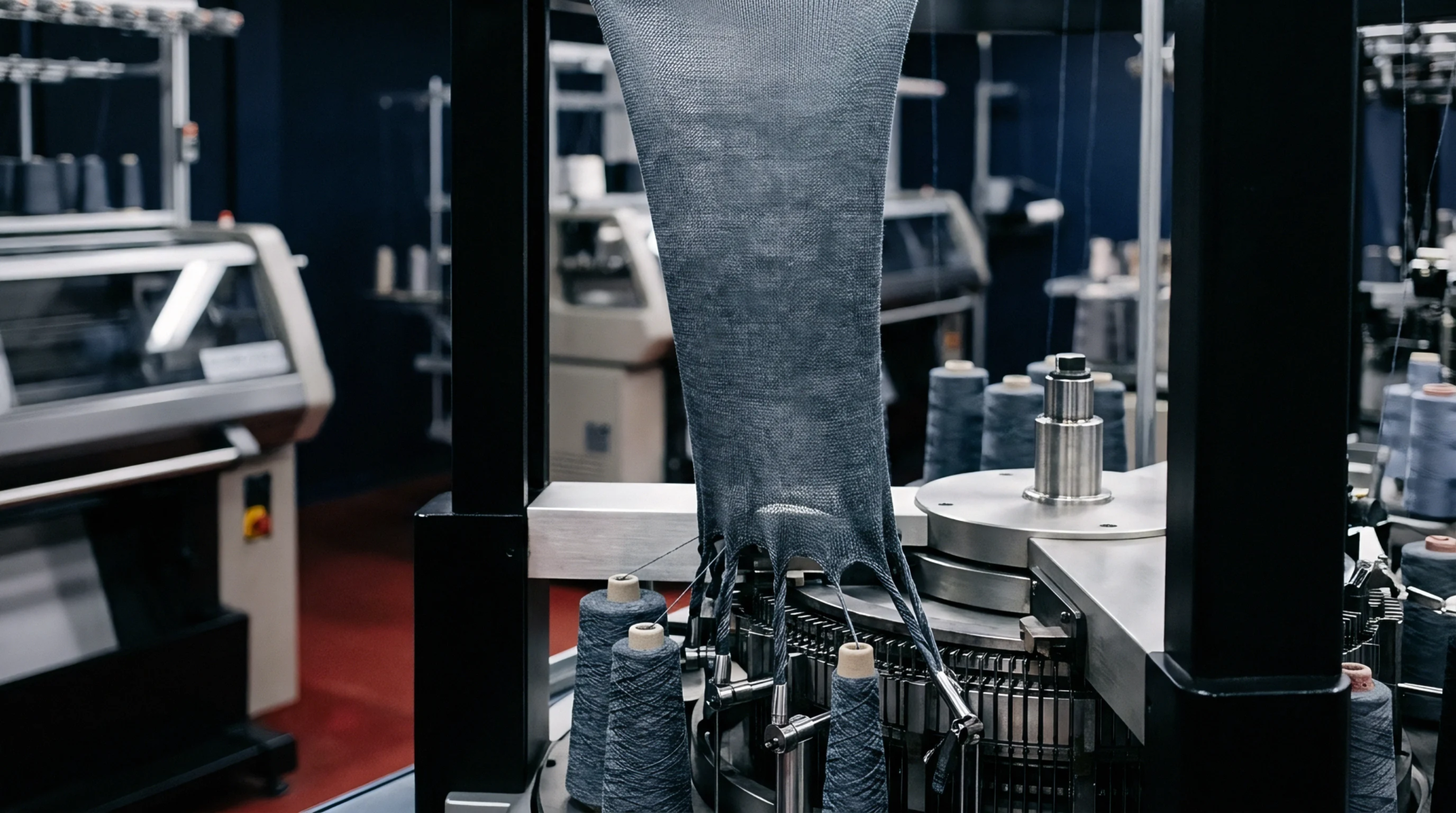
Structural Deviation
Dimensional instability within circular knitting patterns creates a physical phenomenon known as radial yarn expansion. This displacement occurs when internal tension release causes individual filaments to occupy a larger circumference than the design geometry predicts. The effect alters the volumetric density of the final fabric.
Quality control teams measure the variance against the baseline tube diameter specified in the construction brief.
Operational Variance
Production cycles generate heat and friction that pull synthetic yarns beyond their static resting state. Once the fabric exits the spreader mechanism, the material attempts to recover its original geometry. This recovery involves a lateral shift of the yarn loops away from the center axis.
Mill technicians observe this behavior during the relaxation phase, where the absence of machine tension allows the structure to settle. Excessive amounts of this shift lead to irregular stitch density and uneven dye uptake across the roll.
Measurement Protocol
Inspectors quantify the degree of growth by comparing the grey state tube width against the finished width of the same batch. Laboratory staff utilize light tables to detect localized distortion patterns in the circular grid. Deviations exceeding the tolerance thresholds trigger a revaluation of the yarn feeding rate.
The data identifies specific machine settings that exacerbate the physical displacement. Consistency depends upon the calibration of the positive feed rollers.
Performance Impact
Finished garments exhibit altered drape and fit characteristics when the expansion exceeds defined design parameters. The resulting fabric structure experiences a reduction in burst strength as the yarns push apart. Increased loop spacing creates visual inconsistencies such as grinning or thin spots within the knit.
Dimensional control remains a primary factor in managing the final mass per unit area.