Harvested Down
Unprocessed fiber harvested from the undercoat of cashmere goats consists of a dual fleece containing both fine underdown and coarse outer guard hair. Known at this primary commercial stage as raw cashmere, the fiber reaches processing centers laden with natural suint, sand, dirt, and dried vegetable matter gathered during spring shedding or mechanical harvesting. The commodity definition covers the harvested, un-scoured, and un-dehaired biological growth, ending where industrial scouring, mechanical dehairing, and spinning operations convert the stock into processed fiber down, tops, or open-width fabrics.
Mechanical Separation
High-value downstream spinning demands the near-complete separation of the valuable underdown from the coarse, heavily medullated guard hairs that poke through garments and create prickle discomfort. Fiber processors run the unwashed or raw fleece through high-speed openers and specialized air-separator dehairing cards, utilizing differences in fiber stiffness, air drag, and specific gravity to lift away the fine down while dropping the heavy, brittle guard hair. The fine underdown rarely carries an average diameter above nineteen micrometers, whereas outer guard hairs exceed forty to eighty micrometers and lack spinning utility.
Yield Mechanics
Commercial purchasing transactions price lots strictly on the basis of clean down yield, which typically ranges from thirty to sixty percent of the original raw fleece weight. The remaining raw mass consists of fine mineral dust, biological secretions, moisture, and unusable coarse hairs that will be discarded or diverted into cheap coarse insulation felts. Lots harvested by mechanical shearing rather than manual hand-combing carry higher proportions of cut guard hairs, requiring repeated dehairing passes that increase processing fiber breakage, shorten fiber length, and lower the final spinning yield.
Commercial Testing
International trading follows precise physical testing protocols to determine moisture content, trash percentage, coarse hair contamination, and down diameter before price settlement. Representative samples drawn from baled lots undergo mini-dehairing laboratory extraction and solvent degreasing to yield certified commercial weights under standard moisture regain settings of thirteen to fifteen percent. Fiber diameters are verified using automated projection microscopy to confirm that the mean diameter and the presence of residual coarse hair meet luxury trade thresholds.
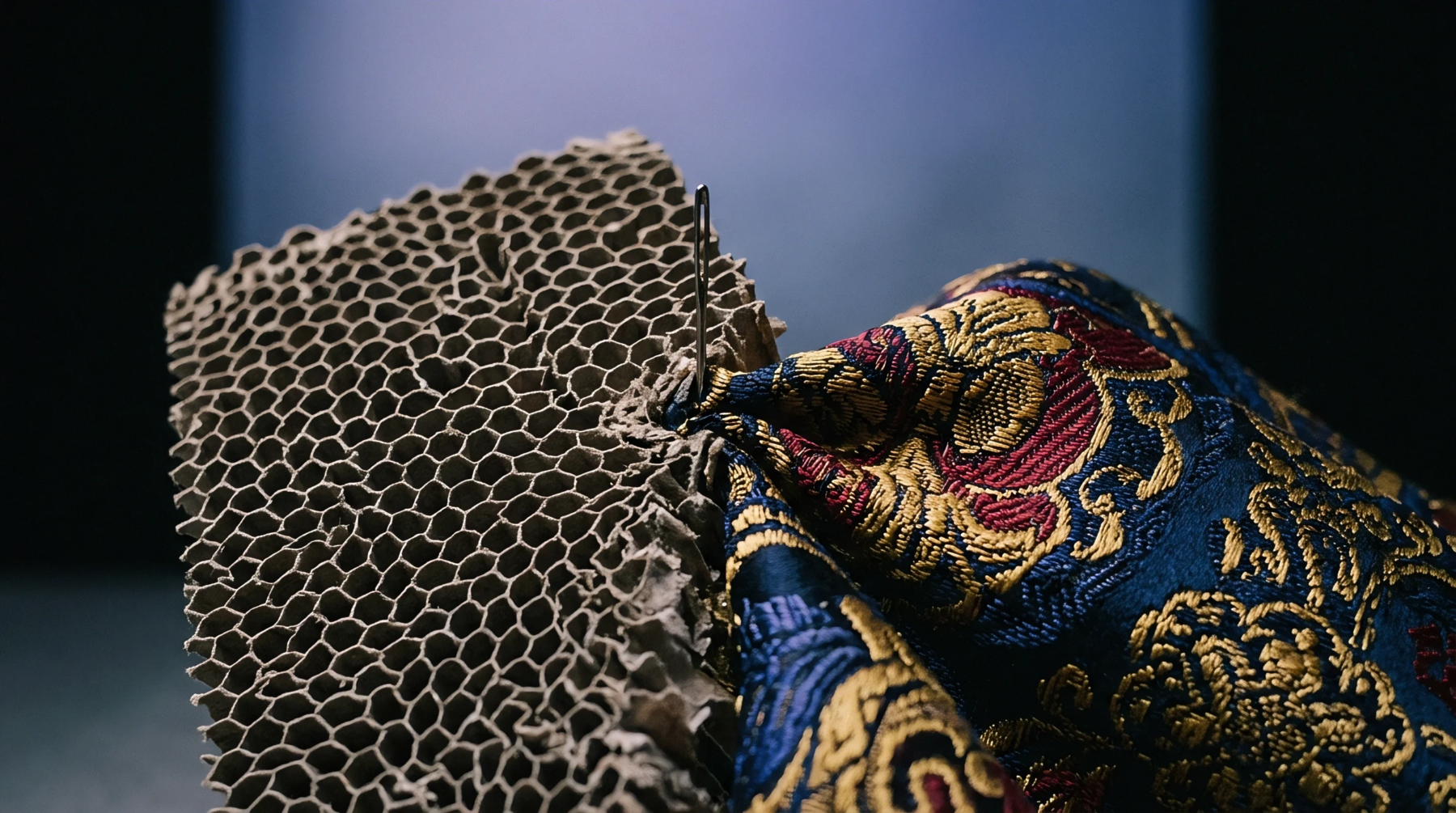
Raw cashmere values decline sharply when vegetable matter or coarse hairs are caught within the fine down.