Determining Raw Cashmere Fiber Diameter and Composition Tolerances
Raw cashmere verification requires coupling OFDA diameter distribution limits with MALDI-TOF mass spectrometry to prevent low-micron wool substitution.


Specimen
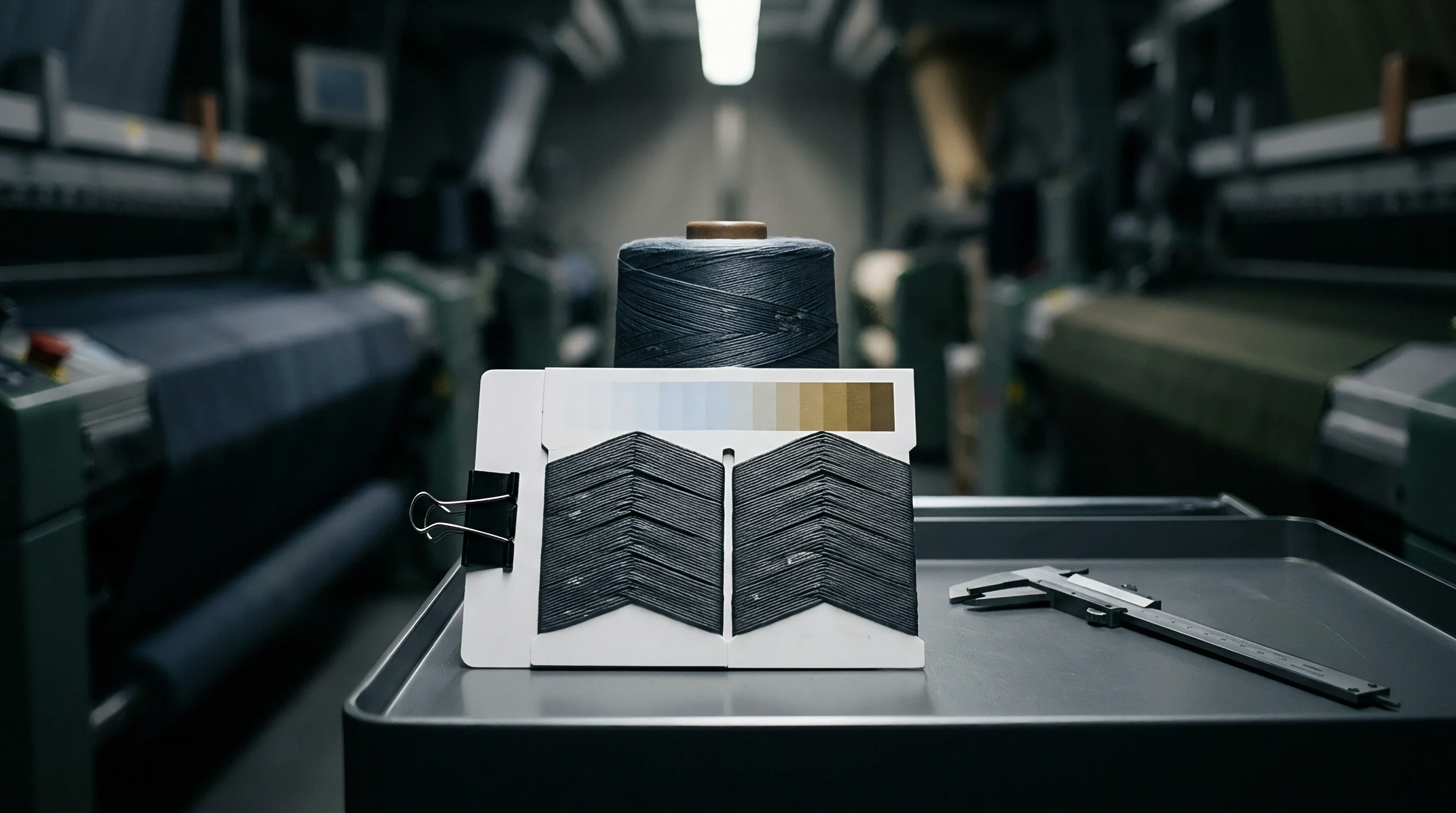
IWTO Core Test Protocols
Acceptance testing for raw dehaired cashmere hinges on the precise separation of underdown from guard hair, quantified under IWTO-08 and IWTO-12 test conditions. A representative raw lot sample undergoes standardized coring, drawing minimums of 20 cores across lots exceeding 10 tonnes to suppress extraction variances below 0.15 microns. Conditioned at 20 degrees Celsius and 65 percent relative humidity, the raw mass releases its residual grease, suint, and vegetable matter through sequential petroleum ether and neutral aqueous wash steps.
The resulting cleaned specimen splits into two commercial fractions across an air-flow separator or coarse mechanical card. Coarse hairs exceeding 30 microns constitute the guard fraction, while true down consists of fine fibers with non-medullated cross-sections. The International Wool Textile Organisation mandates scanning a minimum of 2,000 fiber snippets across duplicate cross-sections to establish the arithmetic mean fiber diameter, denoted as MFD, and the associated distribution curve.
A contract core specimen conditioned at 65 percent relative humidity yields clean dry weights only after petroleum ether extraction clears residual spinning lubricants and natural fleece grease.
Diameter measurement relies directly on optical analysis. Projectina projection microscopy historically delivered fiber diameters by measuring shadow projections at 500x magnification under ASTM D2130. Automated optical fiber diameter analyzers, operating under IWTO-47, currently capture fiber profiles in minutes using high-resolution video imaging of snippet suspensions in cell solutions.
Fiber diameter distributions in raw down exhibit a right-skewed profile; standard deviations typically fall between 3.2 and 4.2 microns, depending on the pastoral collection region.
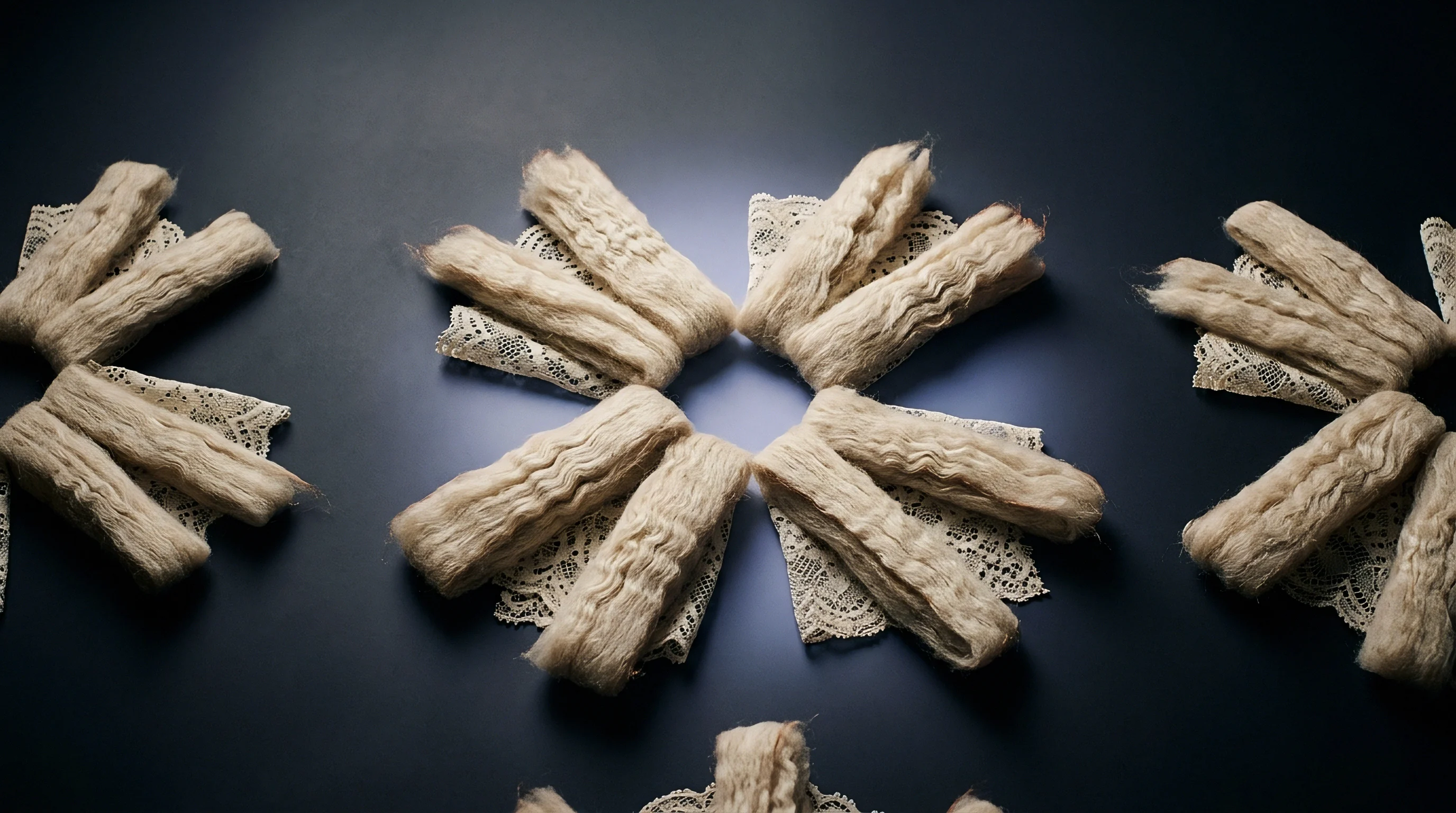
Morphological Scale Frequency Differentiation
Distinguishing genuine caprine down from low-micron ovine wool presents the primary analytical challenge during raw cashmere qualification. Scanning electron microscopy and optical microscopy reveal clear surface differences. Cashmere fibers demonstrate a characteristic scale frequency between 6 and 8 scales per 100 microns of fiber length.
Fine Merino wool fibers exhibit between 10 and 12 scales over an identical 100-micron increment.
Scale margin thickness offers a secondary definitive identifier. Cuticle edges on raw cashmere measure under 0.55 microns in radial elevation. Sheep wool displays prominent, ragged scale margins measuring between 0.80 and 1.20 microns.
Chemical de-scaling treatments, including mild chlorination and enzymatic peeling, reduce wool cuticle thickness artificially. Such chemical interventions flatten margins to simulate cashmere morphology, requiring secondary molecular or spectroscopic diagnostics to expose the modification.
The standard visual analysis relies on experienced fiber analysts examining scale structure under polarized illumination. When scale patterns appear indistinct or damaged by mechanical processing, analysts verify the presence of elliptical cross-sections. True cashmere down maintains an eccentricity ratio between 1.15 and 1.25.
Merino wool displays higher circularity, yielding eccentricity values hovering near 1.05 to 1.10 under transverse sectioning.

Fiber Count and Mass Conversions
Optical analyzers measure fiber count distributions rather than direct mass proportions. Converting snippet populations to mass-based composition percentages requires integrating fiber volume with natural density values. The volumetric mass of unmedullated cashmere keratin equals 1.31 grams per cubic centimeter.
Guard hairs, bearing interrupted or continuous medullary canals filled with air pockets, show lower apparent densities, dropping to 1.22 grams per cubic centimeter.
Calculations translate snippet counts into commercial clean weight percentages. A numerical sample containing five percent coarse fibers by count yields a mass proportion exceeding fifteen percent due to the quadratic relationship linking diameter to total volume. Down spinning performance degrades rapidly when coarse fiber content by weight exceeds 0.5 percent in high-count yarns.
A supplier explains off-gauge bulk shipments by claiming that unusual seasonal cold snaps thickened down undercoats across grazing herds without altering nominal fiber counts.
Dispersion

Diameter Distribution across Herds
Raw down fineness varies across pastoral habitats in China and Mongolia. Chinese Alashan cashmere yields fiber populations centering around 14.2 to 15.0 microns, paired with a standard deviation below 3.4 microns. Mongolian raw lots from the Bayankhongor and Arkhangai provinces typically center between 15.8 and 16.8 microns, exhibiting wider diameter spreads that reach standard deviations of 4.2 microns.
Spinning performance tracks these underlying distributions directly.
Processing consistency depends heavily on the coefficient of variation of diameter, denoted as CVD. Lots exhibiting a CVD under 22 percent spin cleanly into two-ply yarns finer than Nm 2/48. When CVD breaches 26 percent, spinning limits drop toward Nm 2/28 due to irregular draft-zone friction.
The lower tail of the distribution, containing fibers under 11 microns, accelerates fiber breakage and fly generation in carding. The upper tail, comprising fibers above 20 microns, causes fabric prickle.
A raw lot demonstrating a mean diameter of 15.2 microns with a coefficient of variation above 26 percent triggers prickle sensations equivalent to coarse sheep wool.
Extreme fiber diameters dictate fabric sensory thresholds. Human cutaneous receptors register tactile prickle when exposed to individual fiber tips exerting loads above 75 milligrams, a force typically generated by fibers exceeding 30 microns in diameter. Even a fractional mass contamination of 0.2 percent coarse guard hair ruins the perceived softness of a single-jersey knitwear garment.
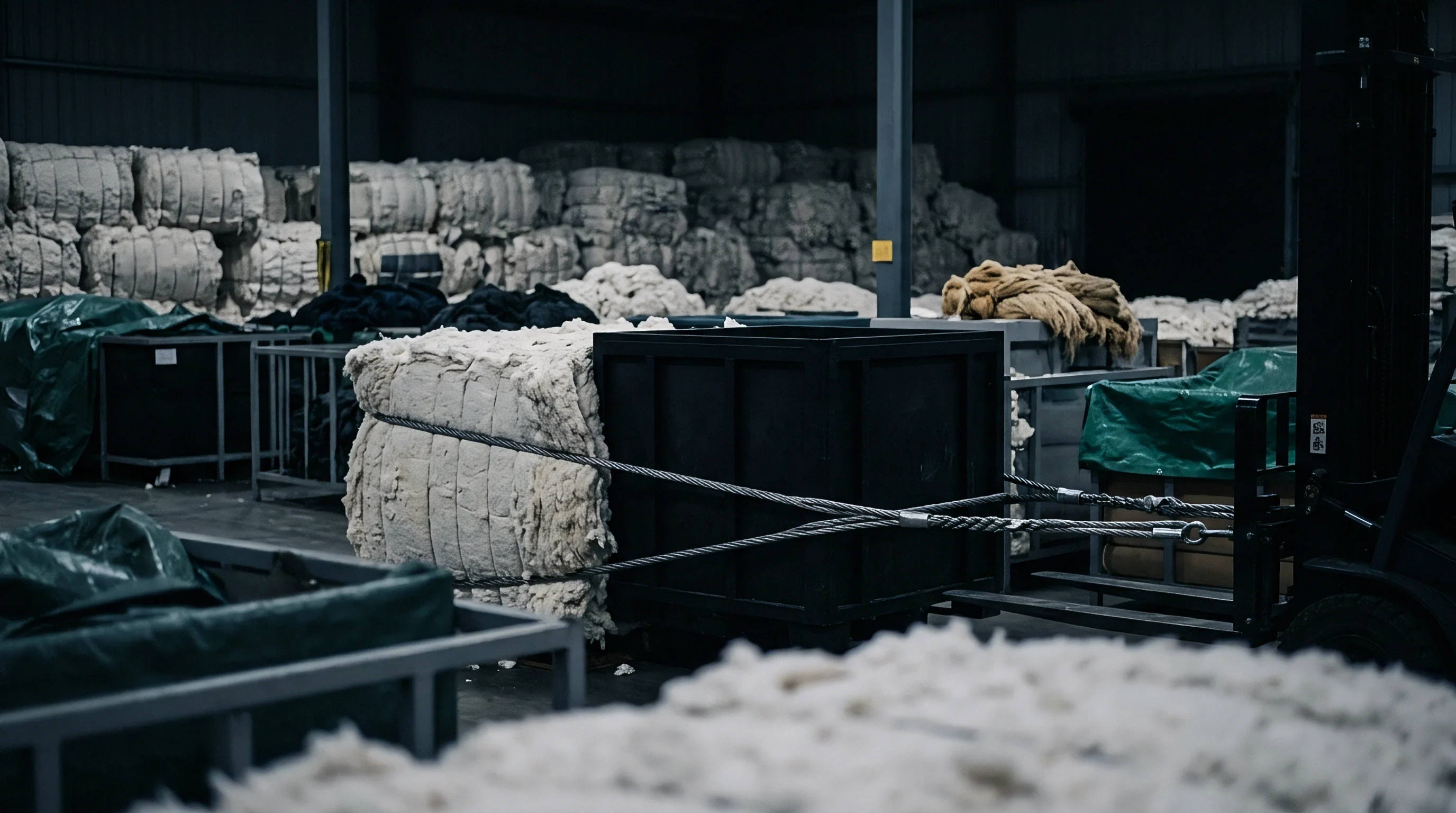
Cross-Sectional Eccentricity and Medullation
Fibers harvested from Capra hircus down display pronounced transverse asymmetry compared to ovine fiber. Elliptical geometries reduce bending stiffness, lending raw cashmere its characteristic fluid drape. Measurements taken across cross-sections define major and minor orthogonal axes.
The ratio between these measurements, termed the ellipticity index, governs how fibers twist under tension inside open-end and ring-spun yarn systems.
Medullated fibers represent processing contaminants in fine down lots. Coarse guard hairs carry broad, lattice-type medullary cores that resist dye penetration, leaving pale, reflective specks across piece-dyed fabrics. Intermediate fibers, known as kemp, contain discontinuous, interrupted marrow channels.
Testing protocols quantify kemp levels by submersing fibers into benzyl alcohol matching the refractive index of solid keratin, which highlights opaque internal channels under transmitted light.
| Origin and Grade | Mean Diameter (μm) | Maximum CVD (%) | Guard Hair Allowed (%) | Mean Staple Length (mm) |
|---|---|---|---|---|
| Inner Mongolia (Alashan Grade 1) | 14.3 to 15.0 | 21.5 | 0.15 | 36 to 42 |
| Inner Mongolia (Erlangshan) | 15.2 to 15.6 | 23.0 | 0.20 | 34 to 38 |
| Mongolia (Bayankhongor Brown) | 16.0 to 16.6 | 24.5 | 0.35 | 38 to 44 |
| Tibetan Plateau Raw | 14.8 to 15.4 | 23.8 | 0.30 | 30 to 34 |
| Afghan Sourced Down | 16.8 to 17.5 | 26.0 | 0.80 | 28 to 32 |
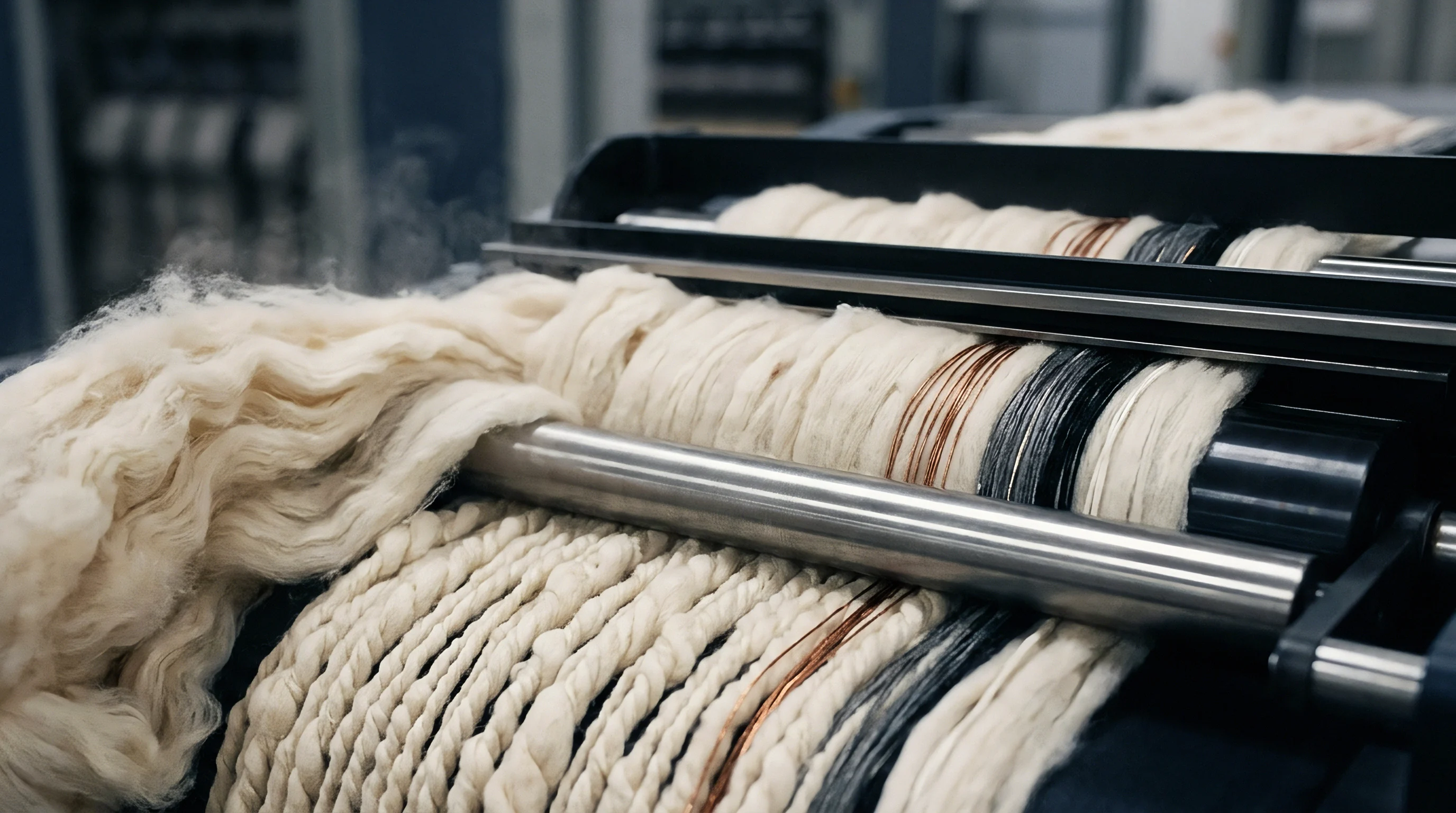
Dehairing operations strip guard hairs mechanically through high-speed revolving cylinders lined with fine wire teeth. Separation relies on mass differences: dense guard fibers travel along high-inertia trajectories into waste collection chutes, while low-mass down floats onto collection screens. Excessive processing passes snap delicate down fibers, shortening mean staple lengths from 42 millimeters down to 30 millimeters while inflating nep counts by 200 percent.
The boundary where high-micron down ends and low-micron guard hair begins remains a subject of active debate among raw fiber appraisers, because environmental pressures across high plateaus cause single goats to grow ambiguous, semi-medullated fibers that defy clean mechanical categorization.

Yield

Raw Weight Loss during Dehairing
Raw, unwashed cashmere locks arrive at processing facilities containing non-keratin impurities that lower net commercial output. The total mass divides into greasy grease-bearing down, coarse guard hair, sand, mud, and organic field debris. Typical greasy raw cashmere returns clean down yields of 35 to 55 percent by weight.
Guard hair accounts for 40 to 50 percent of the raw harvest mass, while dirt and natural fleece waxes make up the remainder.
Commercial contracts price greasy lots based on calculated dehaired yields derived from laboratory core testing. A sample yielding 42 percent clean down demands substantial processing expense per kilogram of recovered fiber relative to a lot testing at 52 percent. Failure to sample lots accurately before industrial dehairing leads to direct financial loss through unrecovered initial raw purchase outlays.
Industrial scour lines remove fleece oils at water temperatures held strictly between 52 and 58 degrees Celsius using non-ionic surfactant baths. Water temperatures running above 60 degrees Celsius induce permanent fiber felting, which crushes down staples and prevents mechanical separation on card clothing. Clean scouring limits residual grease content to a tight commercial band between 0.8 and 1.2 percent by mass.
Worked Mass-Balance and Recovery Arithmetic
Tracking product mass across mechanical opening and dehairing proves how minor changes in yield radically alter the raw cost per clean kilogram. Consider a baseline production scenario utilizing industrial scouring and four-cylinder mechanical dehairing trains.
- Gross Greasy Input arrives as a 5,000-kilogram raw lot invoiced at 75.00 USD per kilogram, representing an initial outlay of 375,000 USD.
- Scouring Losses extract 250 kilograms of grease and 350 kilograms of mineral dirt, reducing the dry greasy mass to 4,400 kilograms entering the card feed.
- Guard Hair Extraction strips away 2,150 kilograms of coarse outer fiber, which diverts to low-value utility batting lines at a nominal salvage value of 3.00 USD per kilogram.
- Opening Waste expels 150 kilograms of unrecoverable dust, short fiber fragments, and card dropped lint.
- Dehaired Down Output recovers exactly 2,100 kilograms of clean processing fiber, establishing an absolute net commercial down yield of 42.0 percent.
Processing fees across the wash, dehair, and comb sequence total 18.00 USD per clean kilogram. The total operating outlay equals 375,000 USD in greasy material plus 37,800 USD in direct industrial processing fees, minus a 6,450 USD credit earned on recovered guard hair. The resulting net pool of 2,100 kilograms clean down represents an aggregate invested cost of 406,350 USD, yielding a baseline cost of 193.50 USD per kilogram of clean down.
If laboratory testing miscalculates down content by two absolute percentage points, declaring 44 percent instead of the true 42 percent recovery, the buyer expects 2,200 kilograms of down. Under that error, the anticipated unit cost sits at 186.07 USD per clean kilogram. The real-world shortfall of 100 kilograms increases the delivered production cost by 7.43 USD per clean kilogram across the spinning lot, entirely erasing budgeted yarn manufacturing margins.
Accepting inaccurate raw yield projections shifts the entire financial burden of processing waste onto the purchaser before mechanical carding begins.
Assay

Optical Fiber Diameter Analysis Mechanics
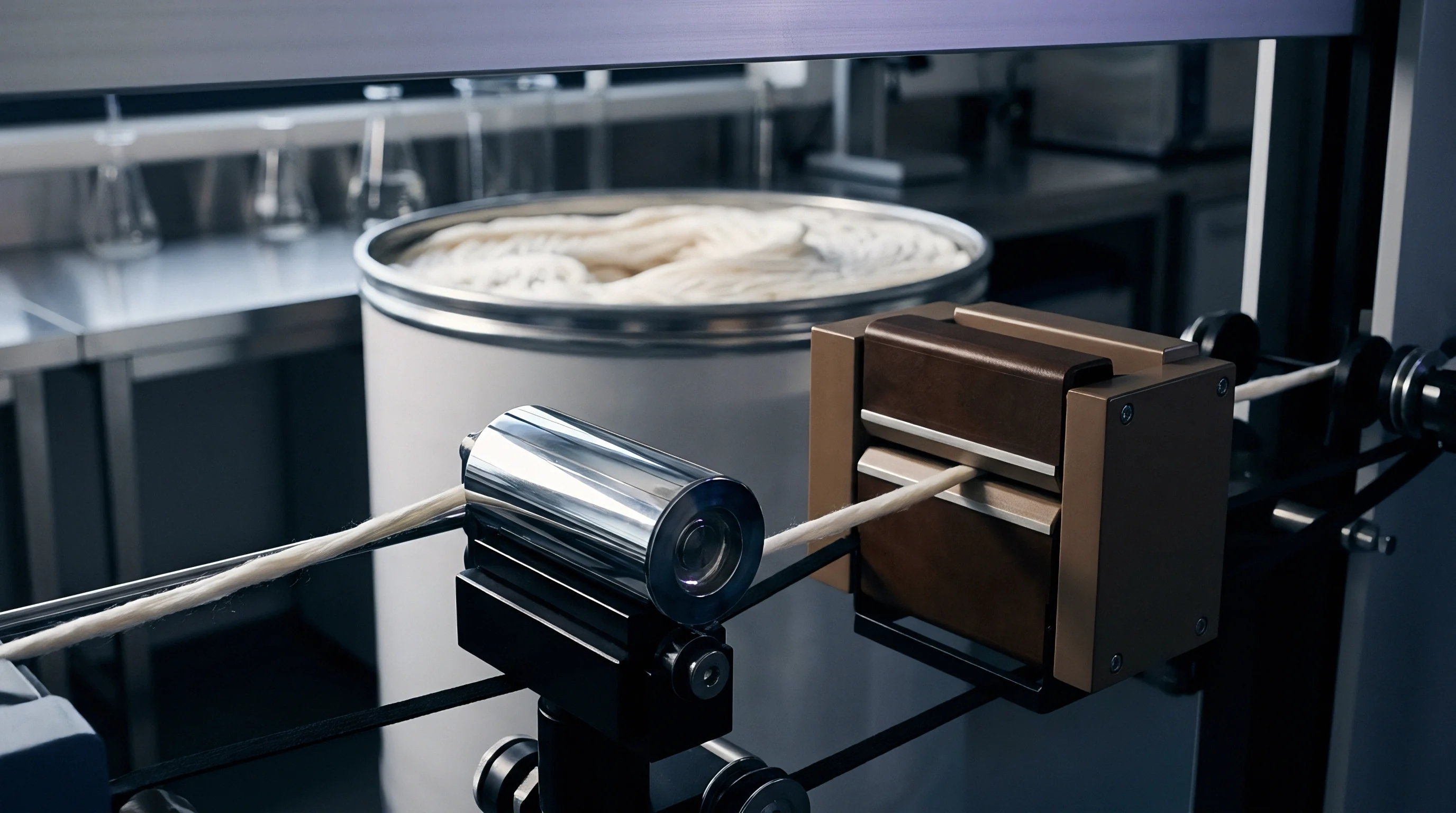
Automated projection tools provide rapid diameter verification on scoured and dehaired tops. Equipment operated under IWTO-47 captures thousands of individual fiber shadow images as snippets travel through a hydrodynamic fluid cell. The software calculates mean diameter, standard deviation, and CVD instantaneously, displaying a histogram that exposes synthetic adulteration or blended wool top additions.
Specimen preparation governs instrument accuracy. Technicians cut fiber slivers into 0.8-millimeter segments using specialized heavy guillotine snippet cutters. Dull blades deform fiber ends, creating flare artifacts that falsely inflate optical diameter readings by up to 0.4 microns.
Clean, conditioned snippets suspended in analytical-grade isopropanol disperse uniformly across the optical sensor, eliminating clump-induced shadow distortion.
A dull guillotine blade deforms cut snippet ends, artificially inflating optical diameter readings by nearly half a micron across automated sensor fields.
Airflow systems such as the Wira Airflow Tester, standard under IWTO-6, offer a low-cost alternative for clean wool lots, but they struggle on pure cashmere tops. The instrument infers diameter by measuring airflow resistance through a compressed plug of fiber. Non-circular cross-sections, variable crimp frequencies, and the presence of fine debris skew airflow resistance, returning readings that deviate by up to 0.8 microns from optical image validation.
Mass Spectrometry and Proteomic Typing
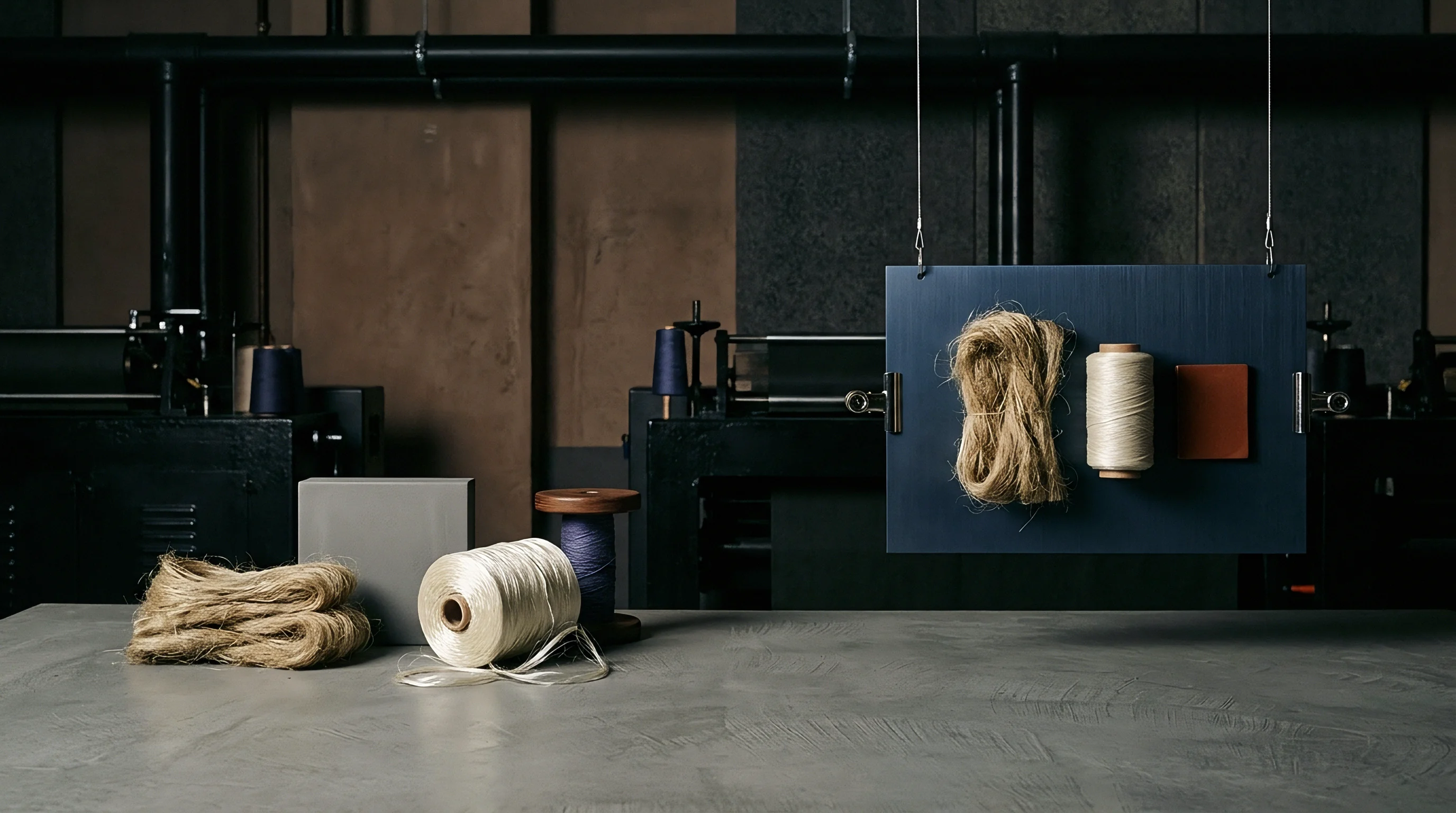
Chemical processing designed to mimic cashmere scales defeats optical microscopy, driving high-value verification toward matrix-assisted laser desorption/ionization time-of-flight mass spectrometry, known as MALDI-TOF MS. Keratin extracted from suspected fibers undergoes enzymatic digestion with trypsin, cleaving peptide chains at specific lysine and arginine amino acid sites.
The resulting peptide mixtures pass into the mass spectrometer, yielding distinct spectral fingerprints. Keratin intermediate filament proteins derived from Capra hircus down display unique peptide ion mass peaks differing cleanly from Ovis aries wool sequences. The presence of sheep-specific peptide markers at mass-to-charge ratios of 1428 m/z and 1512 m/z confirms ovine protein presence even if physical cuticles have been chemically stripped or smoothed.
| Analytical Method | Primary Standard | Target Measured Property | Measurement Tolerance |
|---|---|---|---|
| Optical Projection Microscope | IWTO-8 / ASTM D2130 | Transverse visual width | ±0.30 μm |
| OFDA 100 Automated Optical | IWTO-47 | Snippet shadow projection | ±0.15 μm |
| Sirolan-Laserscan System | IWTO-12 | Laser beam disruption | ±0.15 μm |
| Scanning Electron Microscopy | AATCC 20A / ISO 17751-1 | Cuticle scale height and frequency | ±1.0 scale/100 μm |
| MALDI-TOF Proteomic MS | ISO 20418-3 | Peptide mass-to-charge ratios | ±0.5% mass fraction |
| Quantitative PCR (DNA) | ISO 17751-3 | Species-specific mitochondrial DNA | Qualitative / Semi-quant |
DNA tracking via quantitative polymerase chain reaction provides a parallel route, although harsh bleaching and industrial mordant dyeing degrade nucleic acid chains. Severe industrial processing leaves short, unreadable genetic fragments behind. MALDI-TOF proteomic identification remains the definitive verification assay because stable peptide backbones withstand scouring, commercial carbonization, and reactive piece dyeing.
Standard purchase agreements should include clauses requiring MALDI-TOF mass spectrometry verification whenever optical analysis detects questionable scale morphologies on high-value yarn deliveries.

Tolerances

Which Standard Governs Commercial Cashmere Testing?
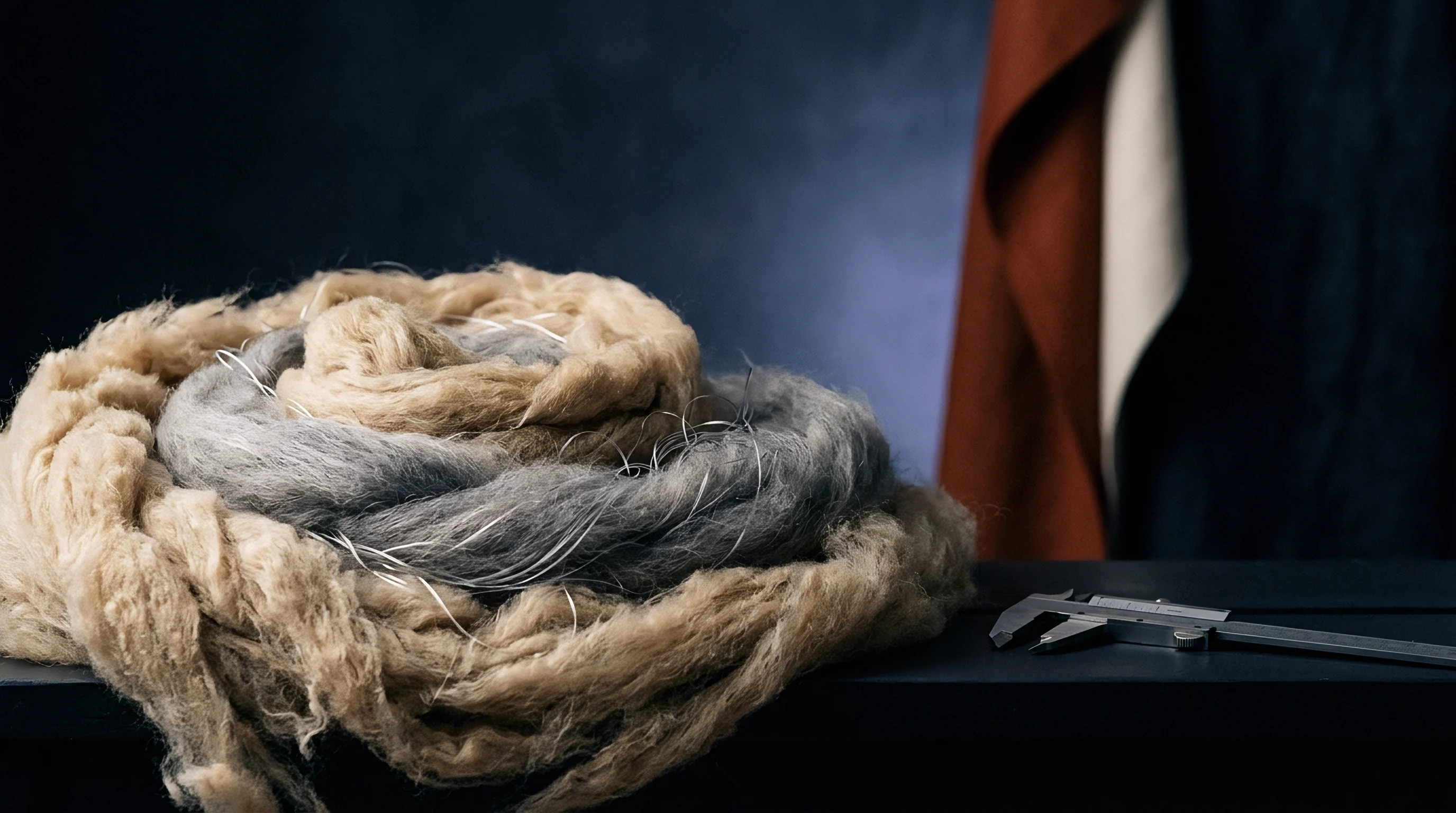
Regulatory frameworks governing commercial fiber tolerances clash across primary manufacturing jurisdictions. The United States Federal Trade Commission, enforcing the Wool Products Labeling Act, defines cashmere strictly as the fine underdown of the Capra hircus goat, mandating an average fiber diameter not exceeding 19.0 microns. The standard restricts the proportion of fibers exceeding 30 microns in diameter to a maximum of three percent by count.
The European Union rules enforce similarly stringent parameters under Regulation 1007/2011. Textile components labeled as pure cashmere may tolerate minor non-intended fiber contamination only up to two percent by weight, provided this presence stems from manufacturing residues rather than deliberate adulteration. The Chinese National Standard GB/T 10288-2003 establishes commercial grades dividing raw cashmere into distinct tiers based on fineness, length, and residual coarse hair fractions.
Disputes frequently center on testing variance between labs. Standard test methods carry an inherent inter-laboratory reproducibility tolerance of plus or minus 0.3 microns for mean fiber diameter. An offshore shipment testing at 15.8 microns on origin certificates can read 16.1 microns in an importing destination laboratory without either party manipulating the test.
Buyers protect themselves by defining specific arbitration facilities and fixed analytical tolerances directly in initial purchase agreements.
Contractual Tolerance Drafting Checklist
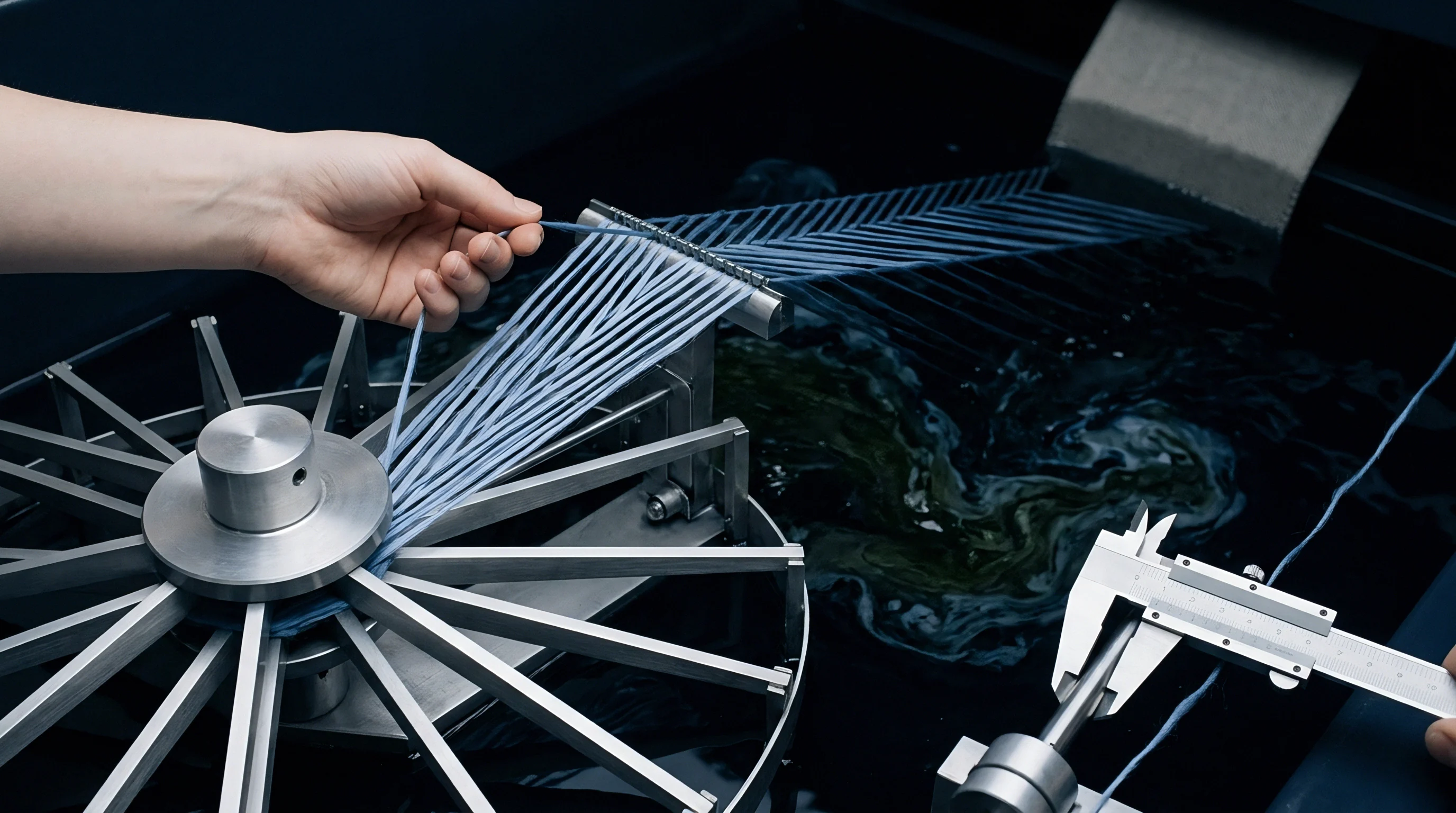
Technical sourcing specifications demand unambiguous quantitative thresholds to prevent blend manipulation and off-gauge down substitution. Sourcing managers enforce five mandatory verification parameters across all raw top and finished yarn purchase contracts.
- Mean Fiber Diameter remains restricted to a maximum target value with a contractual rejection ceiling set precisely 0.25 microns above the target specification.
- Diameter Coefficient of Variation caps at 23.0 percent for spinning counts up to Nm 2/36, dropping to 21.5 percent for extra-fine spinning lots.
- Maximum Guard Hair Content limits coarse fibers above 30 microns to 0.2 percent by weight in dehaired tops, measured under ISO 17751 image analysis.
- Permissible Ovine Adulteration caps non-caprine fiber presence at zero percent intentional addition, with a maximum laboratory allowance of 1.0 percent accidental contamination by weight under MALDI-TOF MS.
- Commercial Moisture Regain anchors settlements at a standard 13.0 percent moisture regain, measured through bone-dry oven desiccation protocols under ISO 6741.
When tests reveal unauthorized fine Merino wool blending, mills often claim unintentional mechanical cross-contamination inside shared carding halls. Sourcing contracts that define explicit price adjustments and chargeback structures protect buyers from bearing the cost of such processing errors.

Settlement

Landed Duty Classifications and Harmonized Tariff Lines
Customs declarations link laboratory composition assays to raw trade taxation. Under the international Harmonized Tariff Schedule, clean, uncarded cashmere falls under tariff heading 5102.11 for fine animal hair, separating it from ordinary coarse sheep wool classified under 5101. Adulterating fine cashmere with low-micron sheep wool alters legal classifications, exposing importers to heavy customs penalties for misdeclaring composition.
The United States tariff system taxes fine cashmere wool under distinct ad valorem rate schedules depending on scouring, carding, or combing stages. Declaring pure cashmere on imported shipments when laboratory assays reveal three percent sheep wool invalidates customs entries. Border agencies seize suspected cargo, enforce tariff rate adjustments, and levy financial penalties based on false country-of-origin or fiber composition filings.
The European Union applies stringent trade identity reviews on natural fiber imports entering under Chapter 51. Border enforcement testing selects suspicious knitwear containers for microscopic cross-examination. Shipments failing quantitative content thresholds face immediate impoundment, requiring either return to origin or formal destruction under customs surveillance.
Landed-Cost Financial Impact of Lot Drift
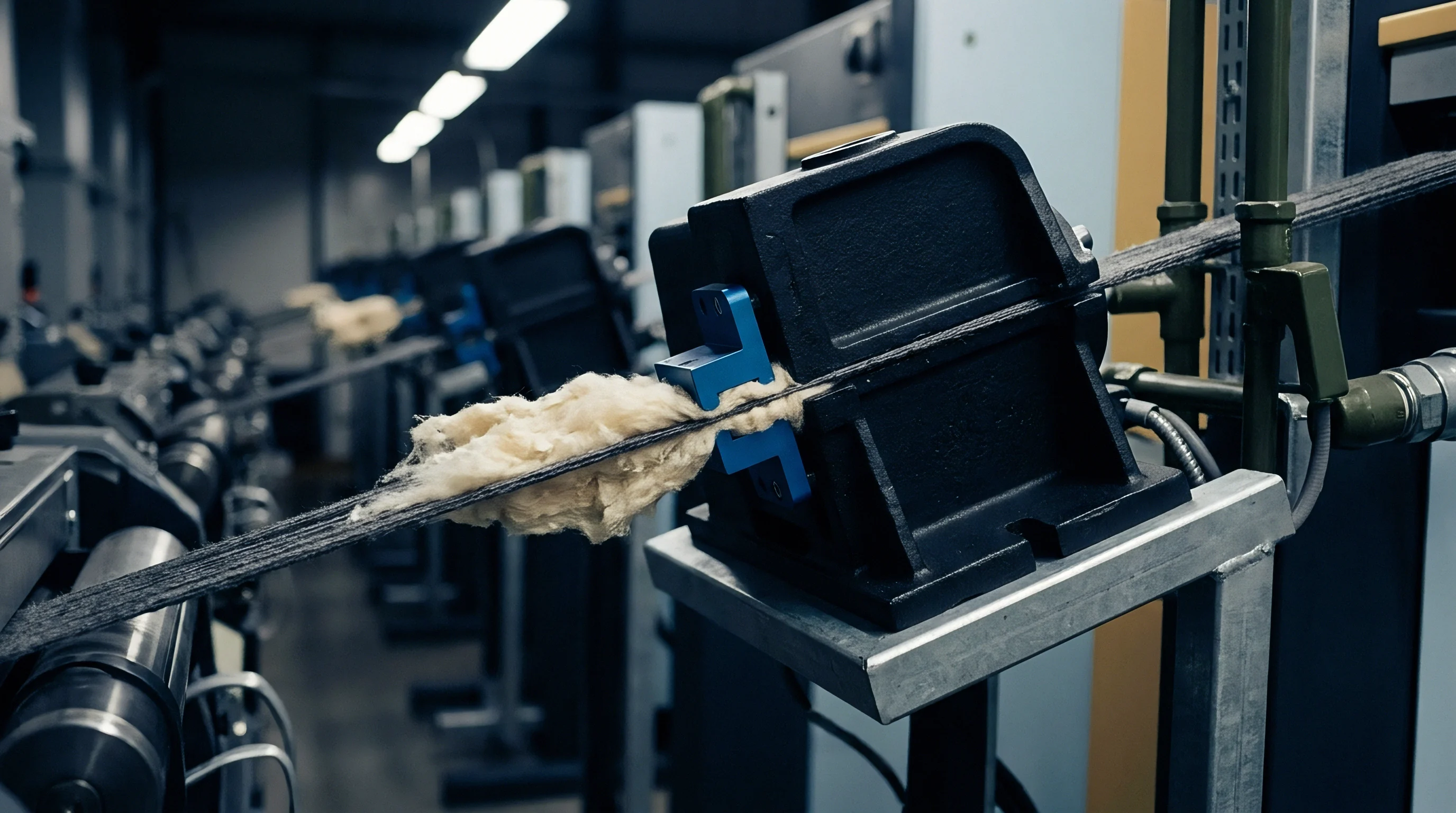
Variations in fiber diameter and composition disrupt spinning performance, garment processing, and finished inventory value. Sourcing fine raw lots that drift toward coarse specifications reduces garment production margins rapidly across three commercial pricing tiers.
| Specification Metric | Tier A: Specified Premium | Tier B: Moderate Drift | Tier C: Non-Compliant Lot |
|---|---|---|---|
| Mean Fiber Diameter (μm) | 14.8 | 15.6 | 16.8 |
| Clean Down Base Price ($/kg) | 210.00 | 175.00 | 135.00 |
| Customs Duty Exposure (8%) | 16.80 | 14.00 | 10.80 |
| Spinning Yield Loss to Fly (%) | 4.0 | 7.5 | 12.0 |
| Maximum Spun Yarn Count | Nm 2/48 | Nm 2/36 | Nm 2/26 |
| Finished Sweater Weight (g) | 210 | 270 | 340 |
| Raw Material Cost per Unit ($) | 47.63 | 51.03 | 50.93 |
| Finished Wholesale Value ($) | 185.00 | 120.00 | 75.00 |
The financial figures highlight the commercial stakes of diameter control. Tier A fiber spins into high-count, lightweight two-ply yarns that yield fine 210-gram luxury sweaters. When fiber diameter drifts toward Tier C, spinning limits drop to a heavy Nm 2/26 count.
Knitting the same garment pattern with heavier yarn increases fabric weight to 340 grams, consuming more raw material per garment while slashing the final wholesale selling price.
Sourcing operations that neglect strict fiber diameter verification absorb the higher processing costs of coarse yarns while losing the premium margins commanded by lightweight, high-gauge cashmere garments.