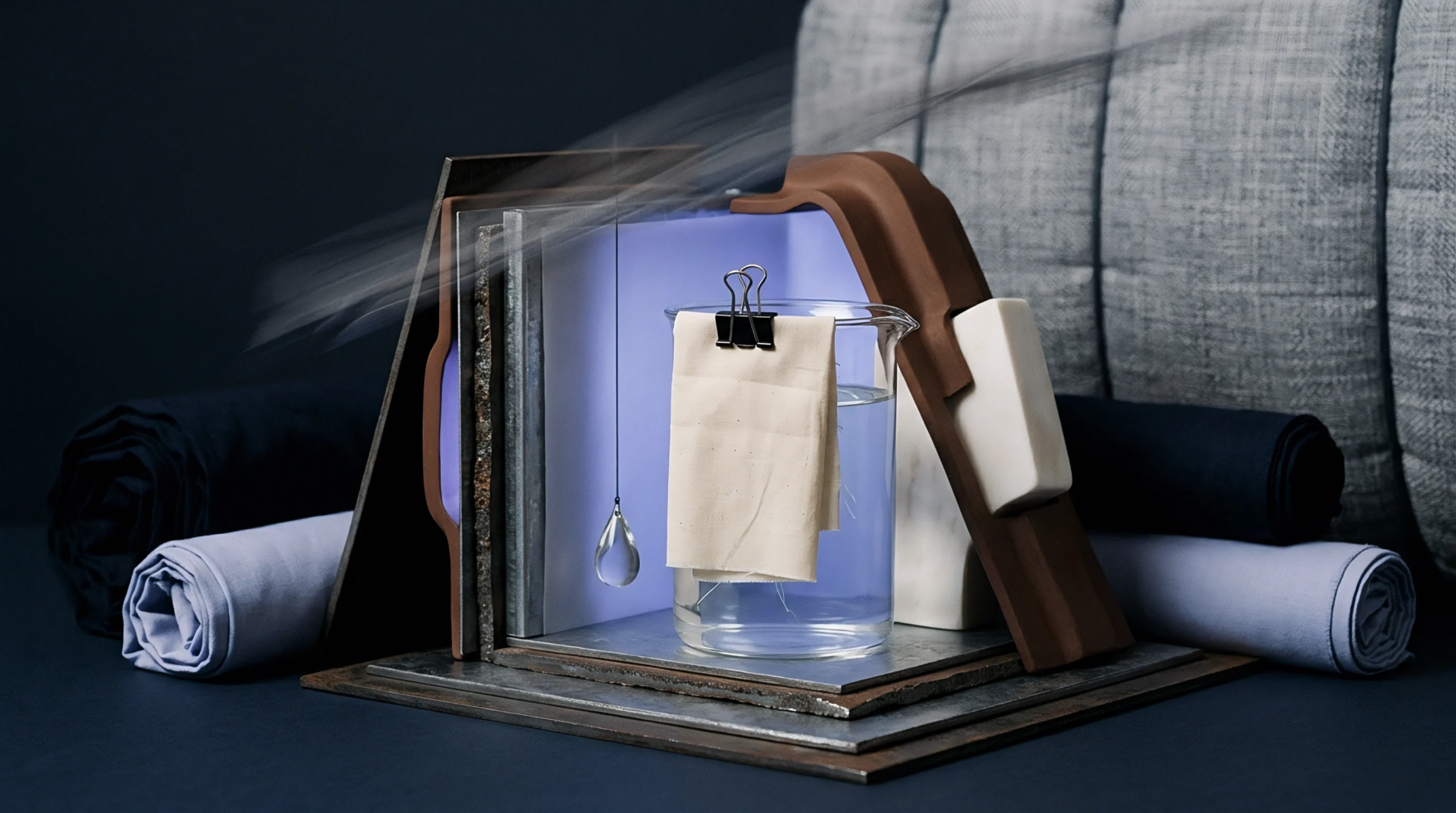
Viscose Wool Ratio Drift Calculation from Commercial Moisture Regain Variance
Viscose wool composition drift stems from differing standard moisture regain allowances, requiring dry-mass conversion formulas to protect tariff lines and invoices.
Molecular moisture capacity defines the high rate at which fibers like viscose and lyocell draw liquid into their structure compared to natural cotton or synthetic nylon. Regenerated cellulose absorption occurs because the manufacturing process breaks down the natural wood pulp and reforms it into a more open and accessible molecular arrangement. This allows water molecules to penetrate deep into the fiber more easily than they can in the tightly packed structure of natural cotton.
While this high absorption makes the fabric very comfortable to wear in hot weather, it also means the fibers swell and become much weaker when they are wet. Managing this property is necessary during the dyeing and finishing stages to prevent the fabric from stretching or losing its shape.
When regenerated cellulose fibers come into contact with water, they can absorb up to thirteen percent of their weight in moisture from the air and much more when submerged. This swelling causes the diameter of the fiber to increase significantly, which can change the dimensions of the finished fabric. Unlike polyester, which repels water and dries very quickly, viscose and lyocell hold onto the liquid and take much longer to dry.
This behavior is a primary reason why these fibers are often blended with synthetic materials to create fabrics that have both comfort and durability. The laboratory measures this absorption by comparing the dry weight of the fiber to its weight after it has been conditioned in a high-humidity environment. Understanding the exact rate of absorption helps mills predict how the fabric will respond to different chemical treatments and dyes.
The high absorption of regenerated cellulose requires specific machinery and chemical settings in the textile mill. Dyes must be chosen that can penetrate the swollen fibers evenly to avoid streaks or blotches in the color. Because the fibers are so weak when wet, the tension on the fabric must be kept very low during the washing and drying processes to prevent permanent damage.
Special finishing agents are often applied to the fabric to reduce the amount of swelling and improve the dimensional stability of the garment. These resins cross-link the cellulose molecules and create a more rigid structure that resists the entry of water. Testing the fabric after these treatments is necessary to ensure that the absorption has been controlled without ruining the soft hand feel of the material.
Retailers market the high absorption of regenerated cellulose as a performance feature that keeps the wearer cool and dry by wicking sweat away from the skin. This makes viscose and modal popular choices for summer clothing, underwear and sportswear. The ability of these fibers to take up deep, vibrant colors also adds to their value in the fashion industry.
However, the buyer must be aware of the care requirements, as the high absorption can lead to shrinking if the garment is not laundered correctly. Mills that can produce high-quality regenerated cellulose fabrics with controlled absorption are in high demand by global brands. The moisture management properties of these fibers are a primary driver of their popularity in the modern textile market.
Viscose wool composition drift stems from differing standard moisture regain allowances, requiring dry-mass conversion formulas to protect tariff lines and invoices.
Expertise is a utility, not a secret. sentiention™ publishes its working knowledge as open reference: intelligence layer covering the materials it sources, the markets it enters, and the reference that serves both.