Yarn Spinning
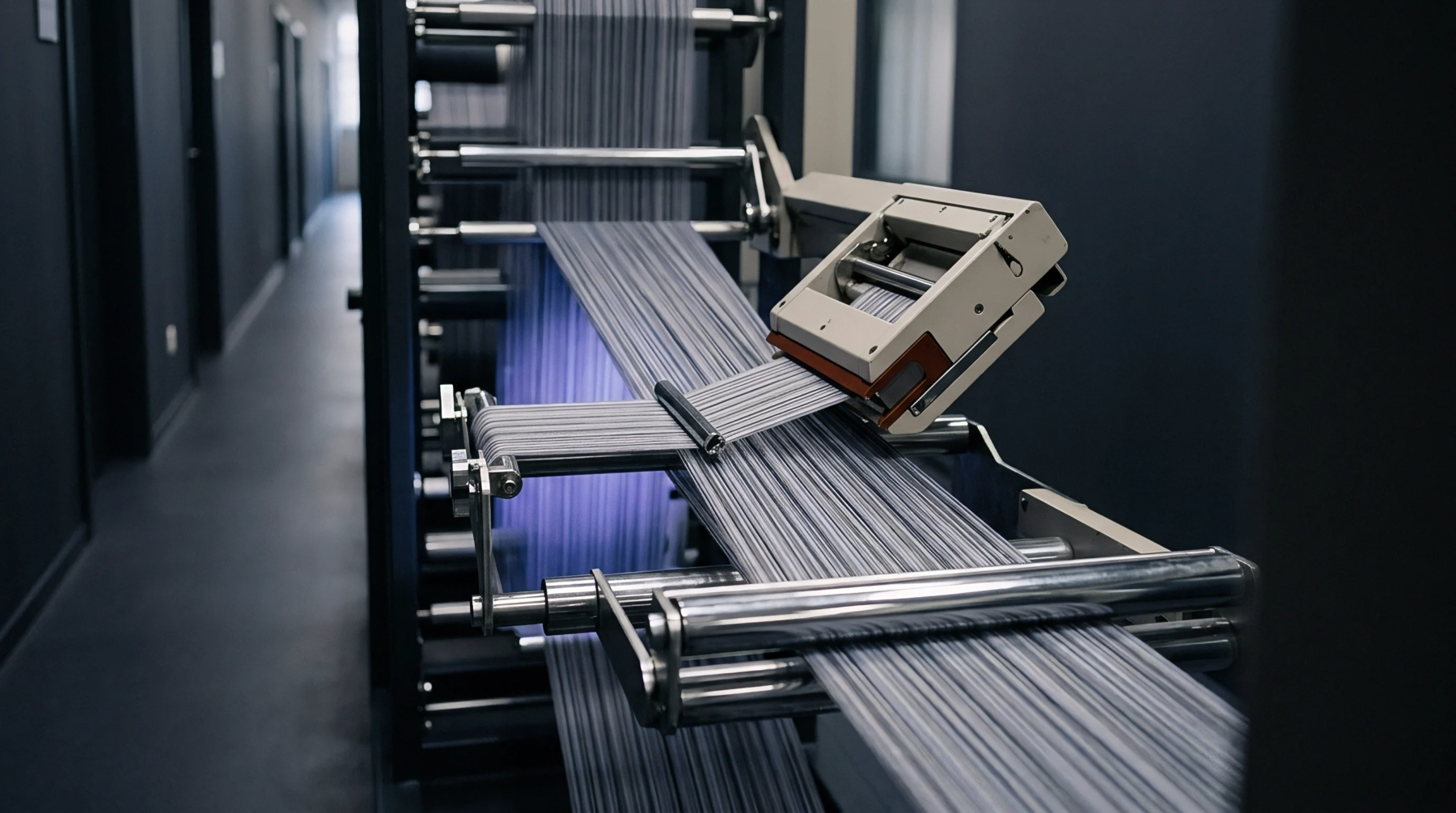
Mechanical spinning processes turn singulated sliver fibres into consolidated yarn through high-speed centrifuge twisting inside an enclosed spinning cup. Yarn production utilizes rotor open-end machinery to manufacture coarse to medium count yarns suitable for heavy denim, fleece knitwear, workwear, and flat sheeting fabrics. The mechanism operates by feeding a continuous card sliver to a high-speed opening roller covered with saw-tooth wire, which combs the sliver down to individual detached fibres.
An air stream carries these singulated fibres down a transport channel into the internal collection groove of a rapidly revolving rotor, where centrifugal force compacts them into a continuous ribbon along the rotor periphery. As the newly twisted yarn tail peels from the groove through a central doffing tube, it inserts real twist into the newly integrated fibre strand at production speeds far outstripping conventional ring frames. Finished open-end yarns feature a characteristic wrapper fibre exterior, lower tensile strength than ring-spun equivalents, and uniform mass distribution verified through standard capacitive mass evenness tests.
Twist Mechanics
Mechanics inside the spinning cup enforce a distinct structural arrangement that separates these products from traditional drafting systems. Centrifugal forces align the loose fibers against the outer collection groove before extraction mechanisms twist the tail. Stray fibers caught across the withdrawal zone wrap around the yarn exterior at right angles, creating wrapper fibers that lock the core.
These external wrappings generate a harsher, stiffer hand that buyers distinguish from ring-spun yarn.
Production Economics
Rotor machinery achieves delivery speeds exceeding two hundred meters per minute, lowering manufacturing costs per kilogram. Elimination of roving frames and winding stages allows processing from card sliver straight to finished yarn cones. Shorter staple cottons and recycled textile fibers process reliably through the opening cylinder, optimizing raw material costs across low-count spinning operations.
Tensile strengths run fifteen to twenty percent below ring-spun equivalents, limiting open-end use to garments where bulk, opacity, and abrasion resistance take precedence over breaking force.
Structural Attributes
Finished open-end fabrics display distinct abrasion and structural recovery behaviors during downstream laundering and cutting. Denim mills use the natural bulk and uniform cross-section of open-end warp yarns to achieve clean, crisp twill definitions and uniform indigo dye penetration. Fabric surfaces exhibit less twisting torque and lower pilling tendencies than carded ring-spun goods.
Testing programs deploy Uster evenness testers to certify that mass irregularity counts remain within contractual tolerances before dispatching yarn pallets to weaving sheds.