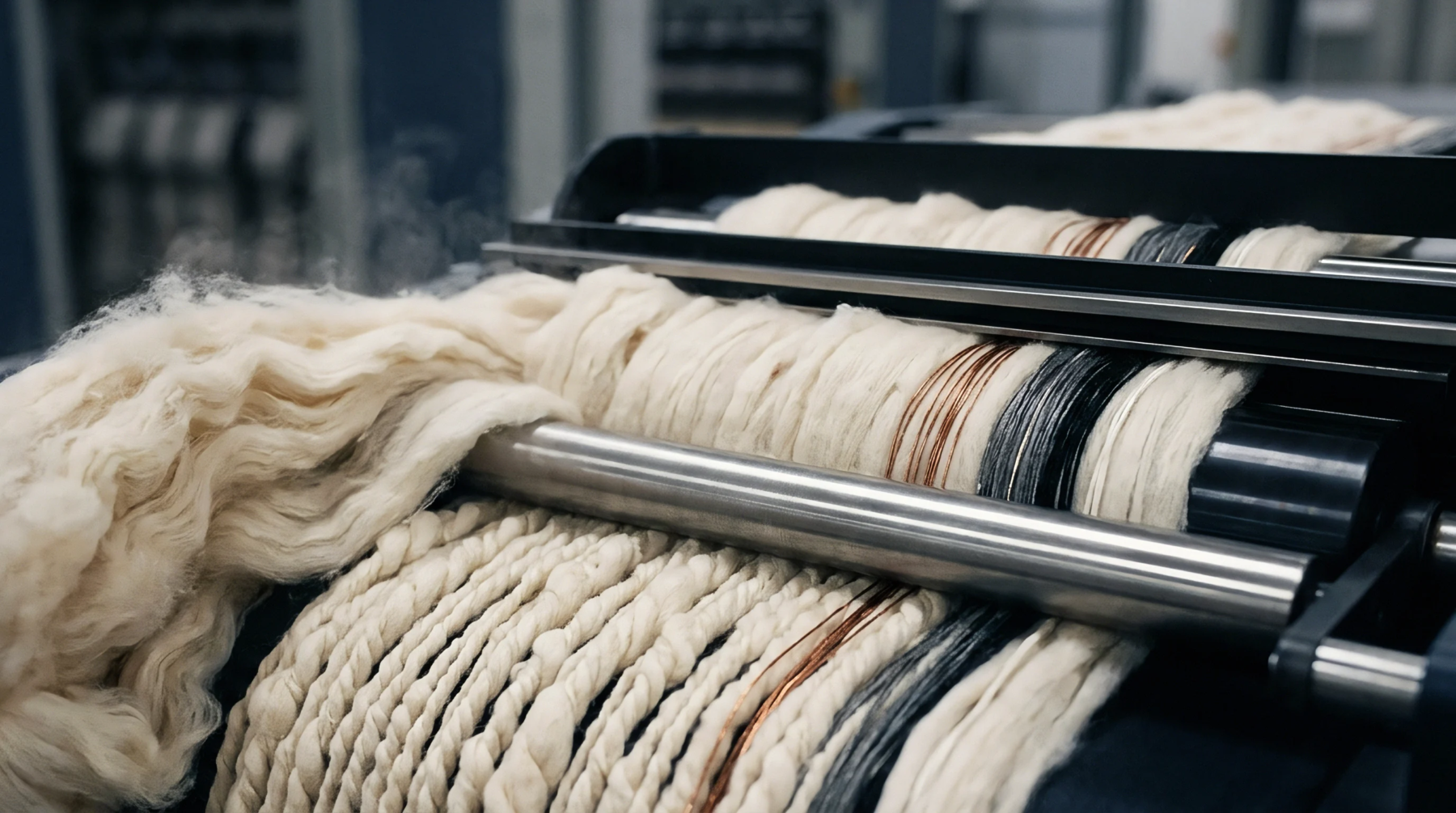
Spinning Threshold
Yarn manufacturing processes have physical boundaries beyond which a particular technology cannot successfully spin fibers into yarn. The threshold known as the rotor spinning limit defines the finest yarn count that can be produced from a given fiber type. It depends heavily on fiber length, fineness and coefficient of friction.
Fiber Fineness
Finer fibers allow more individual strands to be present in the yarn cross-section, which extends this boundaries. When the rotor spinning limit is exceeded, the yarn becomes too weak and breaks during production.
Rotational Constraint
High rotor speeds generate centrifugal forces that demand a minimum yarn strength to withstand tension. Operating near the rotor spinning limit requires spinners to reduce speeds or increase twist levels, both of which affect output. Finding the balance between productivity and yarn count is a primary goal.
Yarn Integrity
Modern spinning mills use these threshold calculations to select appropriate raw materials for open-end yarn production. Knowing the rotor spinning limit prevents the scheduling of unspinnable counts on rotor frames, which saves energy and reduces machine downtime. It ensures that the produced yarn retains adequate tensile strength for downstream knitting and weaving operations.
Mill managers rely on these boundaries to maintain high efficiency and product quality.