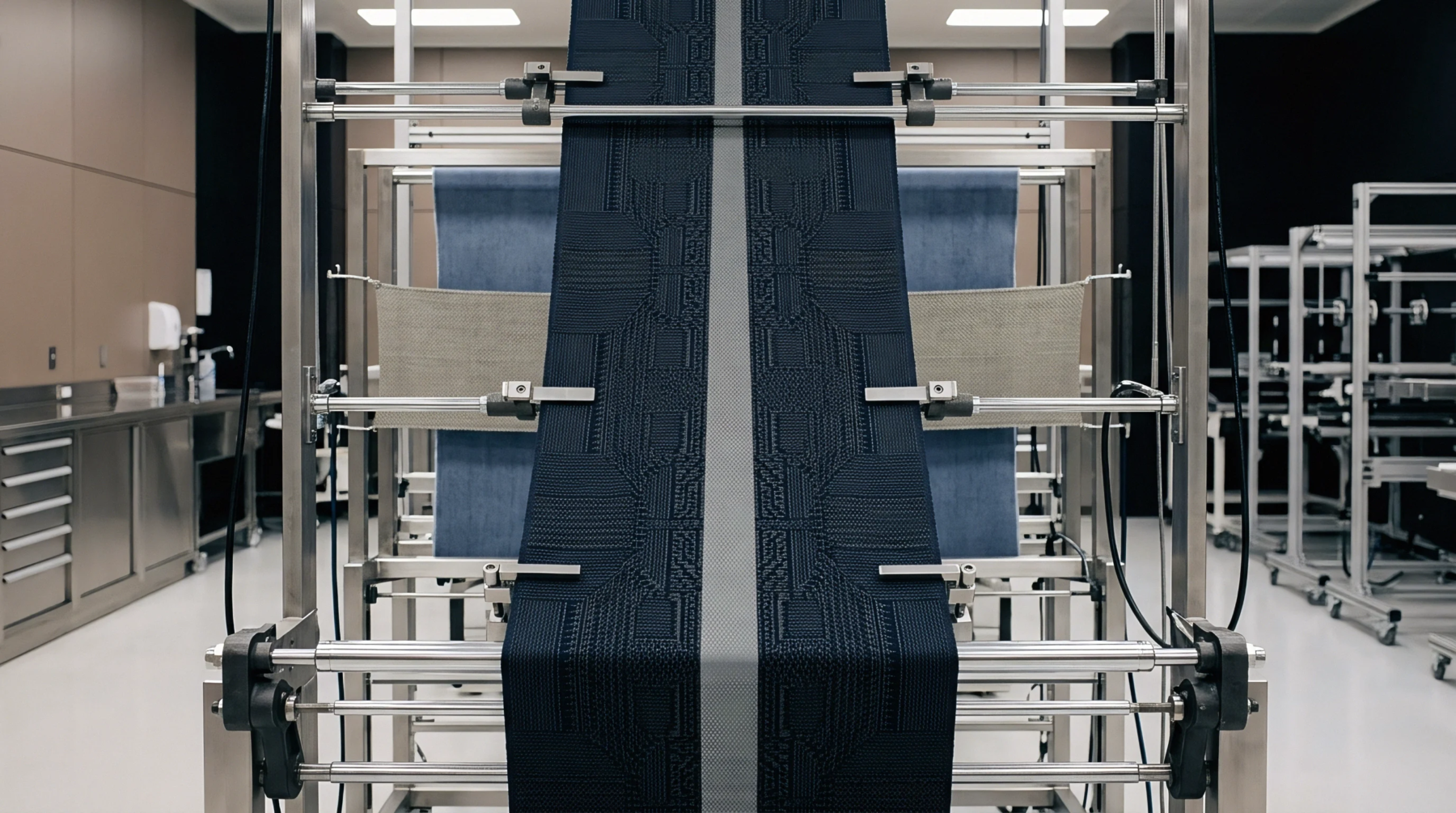
Geometry Setting
Loom setting parameters define the shape and dimensions of the opening created by warp yarns during the weaving process. Proper management of shed geometry determines the clearance available for the weft insertion element and the tension distribution across the fabric width. Technicians at the mill adjust the height of the heald frames and the position of the backrest to optimize this space.
Mechanical Variable
Component alignment influences the angle of the warp sheets relative to the horizontal plane of the loom. Factors such as the shed depth and the length of the shed from the cloth fell to the first heald frame are necessary for a stable pick. These dimensions dictate how much the warp yarns must stretch during each machine cycle.
If the alignment is uneven, the shed fails to open cleanly, leading to entanglement or yarn abrasion.
Quality Impact
Tension variation results from poorly configured geometry. If the shed is too large, the yarns undergo excessive strain, leading to higher breakage rates in delicate silk or fine cotton.
Setting Verification
Measurement occurs at the point of maximum opening during a slow machine rotation. Loom manufacturers provide standard templates for specific fabric weights to guide the initial setup. The geometry must remain consistent across the full width of the loom to prevent side-to-center shading in the finished cloth.