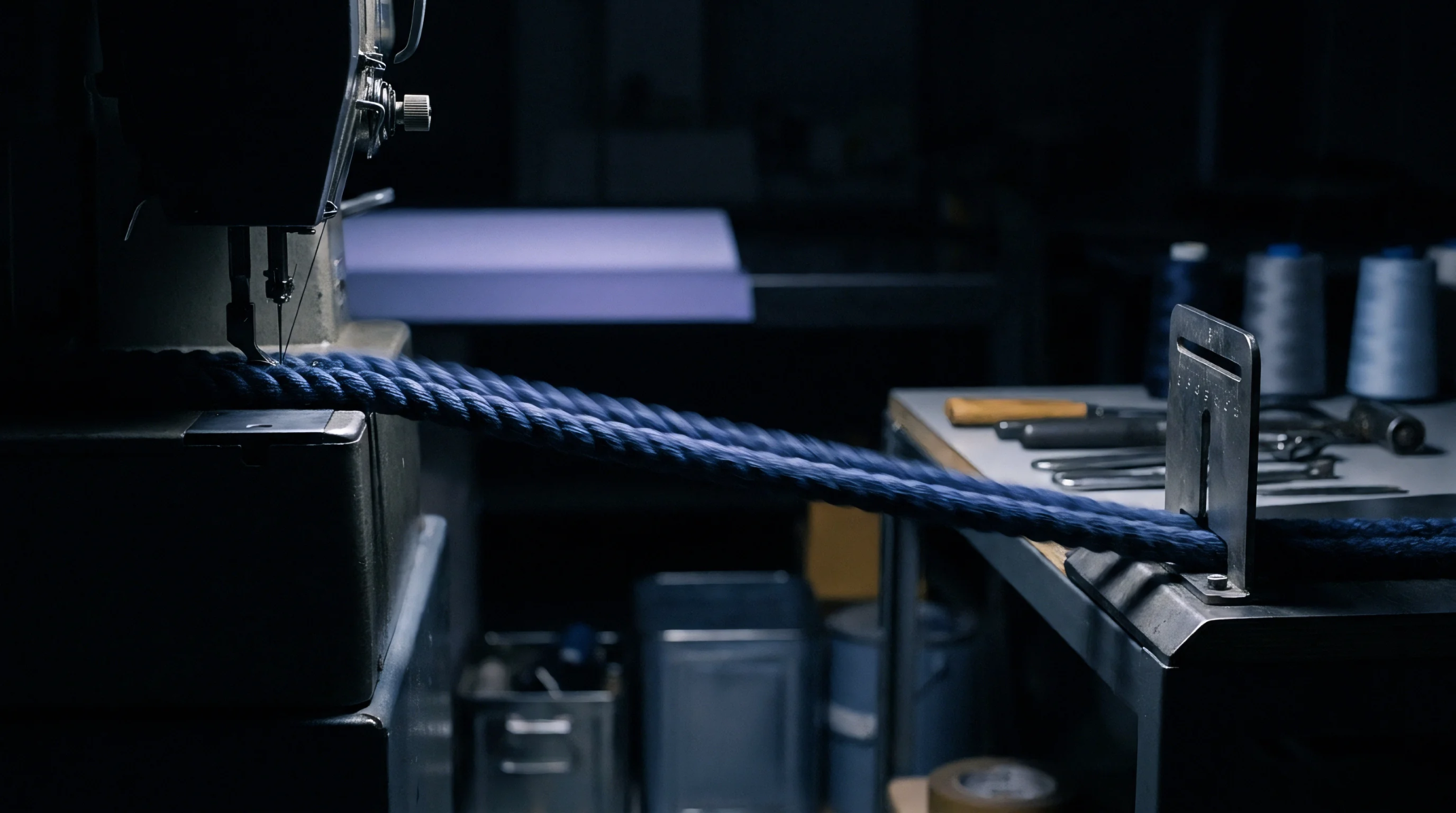
Mechanical Transformation
Short-staple, long-staple, or man-made fibres undergo attenuation and twisting to form a continuous strand of defined linear density. Staple yarn spinning converts discrete fibre masses into a cohesive linear structure through a series of drafting, doubling, and winding operations. The conversion process establishes the uniformity and tensile strength required for downstream weaving or knitting.
Mechanical integrity relies upon the friction generated between fibres when they are twisted around a central axis. Control of the fibre distribution during drafting determines the irregularity of the final product.
Production Sequence
Raw fibre in bale form requires opening and cleaning to remove impurities before passing into the carding zone. Staple yarn spinning continues as this carded web undergoes drafting on draw frames to parallelize the fibres into a sliver. Subsequent operations utilize roving frames to reduce the diameter further before the final twist is applied on ring, rotor, or air-jet machines.
Each transition between these machine stages increases the regularity of the product while reducing the mass per unit length. Modern factories operate these systems under controlled humidity to prevent electrostatic accumulation which degrades fibre orientation.
Output Specification
Quality assessment focuses on the count, twist multiplier, and the presence of imperfections like neps or thick places. Staple yarn spinning results in a commercial product that is evaluated against standard mass per length metrics such as tex or cotton count. Laboratory instruments measure these variables to confirm that the output aligns with the requirements of the end application.
Tension settings during the final take-up affect the packing density and the subsequent performance of the strand in high-speed loom environments.
Commercial Constraint
Economic viability within a mill depends upon the spindle speed and the energy consumption per kilogram of processed material. Staple yarn spinning operates under strict parameters where the cost of raw material conversion must remain below the value added by the transformation of the fibre. Fluctuations in energy prices and mechanical downtime directly influence the margin earned on the finished output.
Efficiency targets define the acceptable breakage rate for each production line. Profitability persists only when machine utilization remains high and waste remains within the defined tolerance for the fibre type.