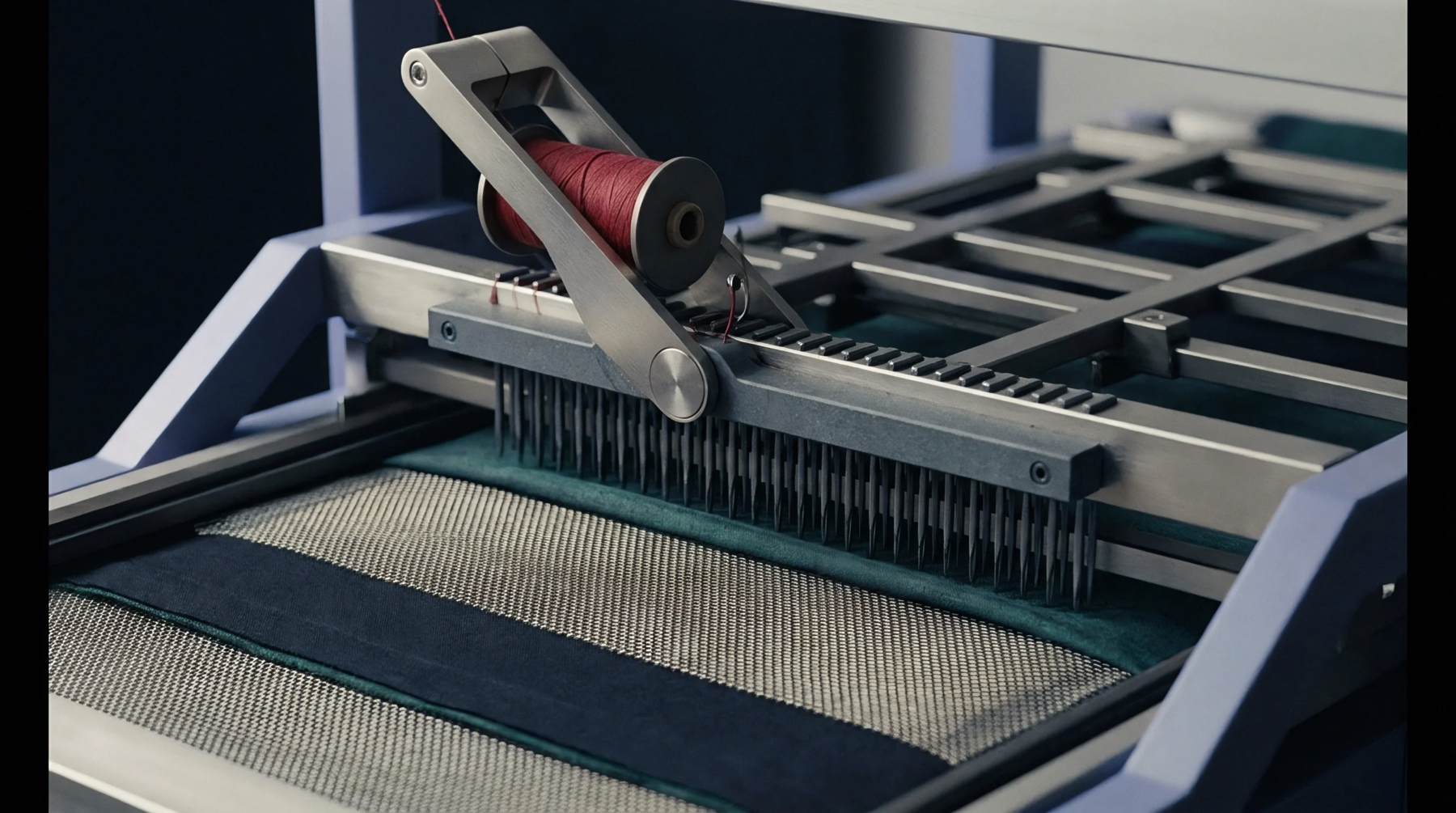
Thermo-Mechanical Finishing
Continuous open-width fabric finishing within a heated, chain-driven convective chamber dries, stretches, cures and heat-sets knitted or woven textiles to controlled dimensional parameters. Executing stenter frame processing aligns fabric grain, sets width dimensions and polymerizes functional chemical finishes such as water repellents, softeners or durable press resins under precise temperature profiles. The finishing technology covers both pin-tenter and clip-tenter transport configurations used across atmospheric oven chambers, but stops where relaxed tumbler drying, continuous rope washing or pressurized autoclave setting process textiles without mechanical edge gripping.
Tension Mechanics
Open-width fabric enters the processing train through centering devices, optical weft straighteners and a chemical padder that meters liquid auxiliaries into the substrate. Endless chain tracks fitted with sharp pin plates or spring-loaded mechanical clips seize both fabric selvages immediately before the entrance to the multi-chamber drying oven. Driven edge-guiding rails adjust the cross-machine distance along the frame length, expanding or narrowing the fabric web to establish the targeted finished width.
Overfeed rollers deliver fabric onto the pin chains at speeds exceeding track velocity, creating deliberate longitudinal slack that permits warp-direction shrinkage relaxation. High-velocity air nozzles blast heated air against both fabric faces simultaneously, floating the suspended material while driving water evaporation and resin curing.
Dimensional Control
Continuous heating and edge tensioning manipulate the internal morphology of synthetic and natural fibres to fix permanent fabric geometries. Heating polyester or polyamide fabrics above their structural glass transition temperatures inside the stenter oven relaxes internal polymer stresses induced by spinning, weaving or knitting. Quenching the heated web with chilled air nozzles immediately upon exit from the final oven zone freezes the stretched molecular chains into stable crystalline networks, locking width and skew resistance.
Cotton and wool fabrics gain critical shrinkage resistance during overfed stenter drying, which allows contracted yarns to settle into balanced structural loops before garments are cut and sewn.
Parameter Calibration
Instrument consoles monitor processing speeds, rail distances, overfeed percentages and multi-zone oven temperatures across varying fabric constructions. Radiometric pyrometers measure actual fabric surface temperatures, verifying that synthetic heat-setting cycles hit target curing windows between one hundred and eighty and two hundred and ten degrees Celsius. Optical sensors track fabric selvages continually, catching unpinned edges that cause tears or sudden dimensional deviations.
Technicians inspect fabric exiting the stenter frame to measure residual moisture percentages, residual warp-weft shrinkage and skew angles against technical order specifications. Accurate thermo-mechanical settings ensure that finished yardage maintains uniform basis weight, stable garment pattern cutting behavior and consistent performance through commercial laundering.