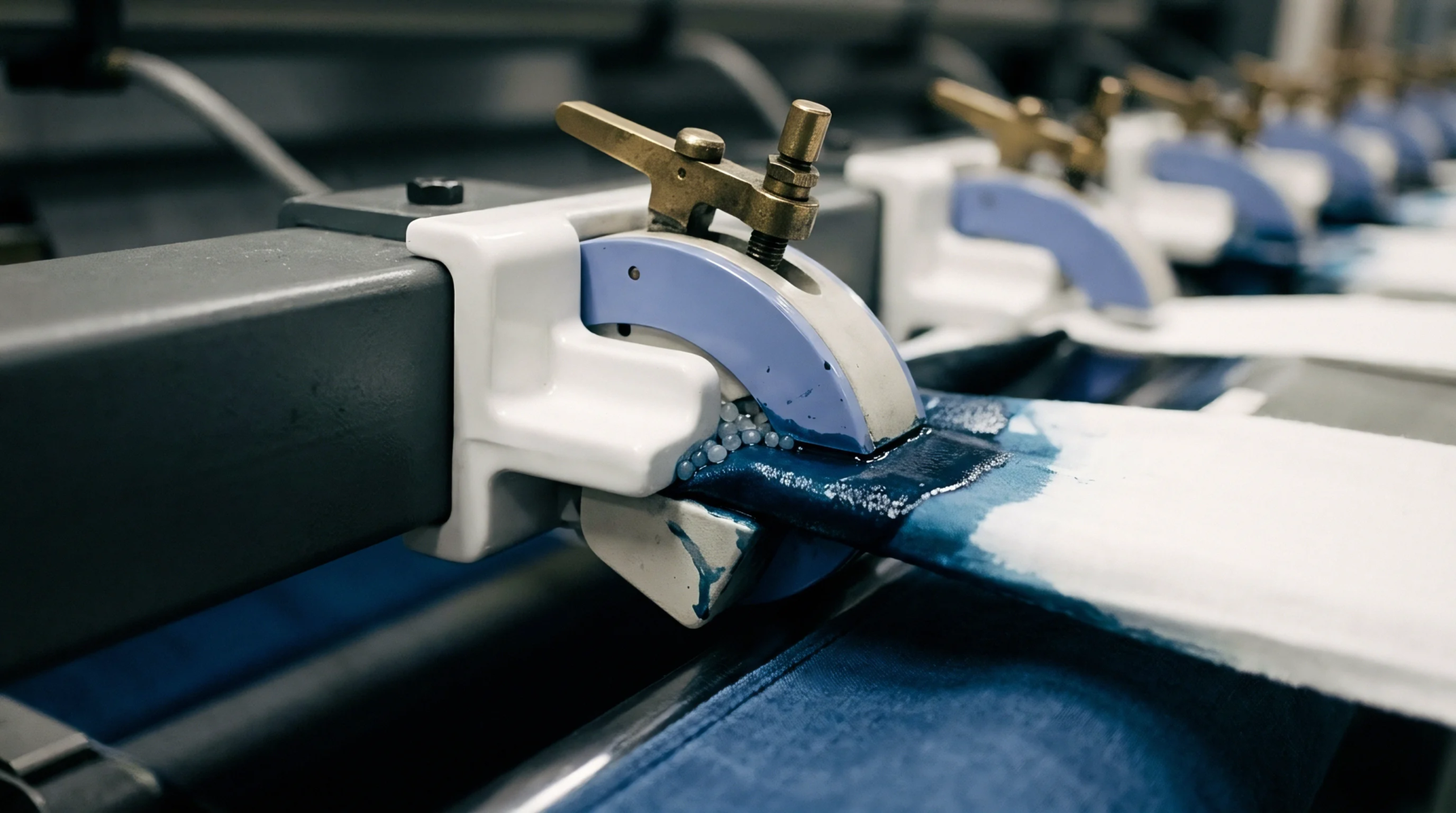
Desiccation Process
Controlled convective heat exposure inside calibrated, ventilated laboratory ovens evaporates free and unbound moisture from a textile substrate until the sample reaches constant dry mass. Testing laboratories employ thermal drying as the core gravimetric mechanism for isolating true bone-dry fiber mass from environmental moisture uptake. The technique governs analytical testing across raw staples, carded slivers, wound yarn packages, and woven textile structures, ending where operational heat triggers polymer oxidation, resin pyrolysis, or fibre degradation.
Chamber Mechanism
Laboratory conditioning ovens circulate clean dry air around open wire specimen baskets at one hundred and five degrees Celsius, plus or minus two degrees. Forced airflow sweeps away moisture escaping from interior fiber pores, preventing humid air pockets from forming around the sample surface. Technicians log sample mass at regular intervals using internal precision balances, avoiding ambient cooling that would trigger instant moisture reabsorption.
Heating runs until successive mass checks spaced fifteen minutes apart show changes under point zero five percent. Natural animal fibers with delicate oil balances require lower oven heat, typically one hundred degrees Celsius, to avoid driving off volatile non-water matter.
Operational Integrity
Inaccurate drying temperatures skew bone-dry mass calculations and disrupt subsequent commercial weight determinations. Setting oven temperatures too high scorches natural cellulosic chains, producing irreversible mass loss through structural degradation that registers incorrectly as water loss. Setting chamber heat too low leaves trapped water inside dense yarn packages, artificially raising the measured dry mass and producing lower calculated regain figures.
Accurate mass calculations require strict adherence to temperature tolerances, clean air circulation, and proper specimen presentation.
Analytical Reference
Desiccated sample mass provides the zero-moisture baseline for all commercial weight reconciliations and quantitative blend calculations. Laboratories record this dry reference mass to compute legal commercial regain allowances and true invoice costs. This repeatable heating process underpins global textile trade contracts by establishing accurate, verifiable mass measurements.