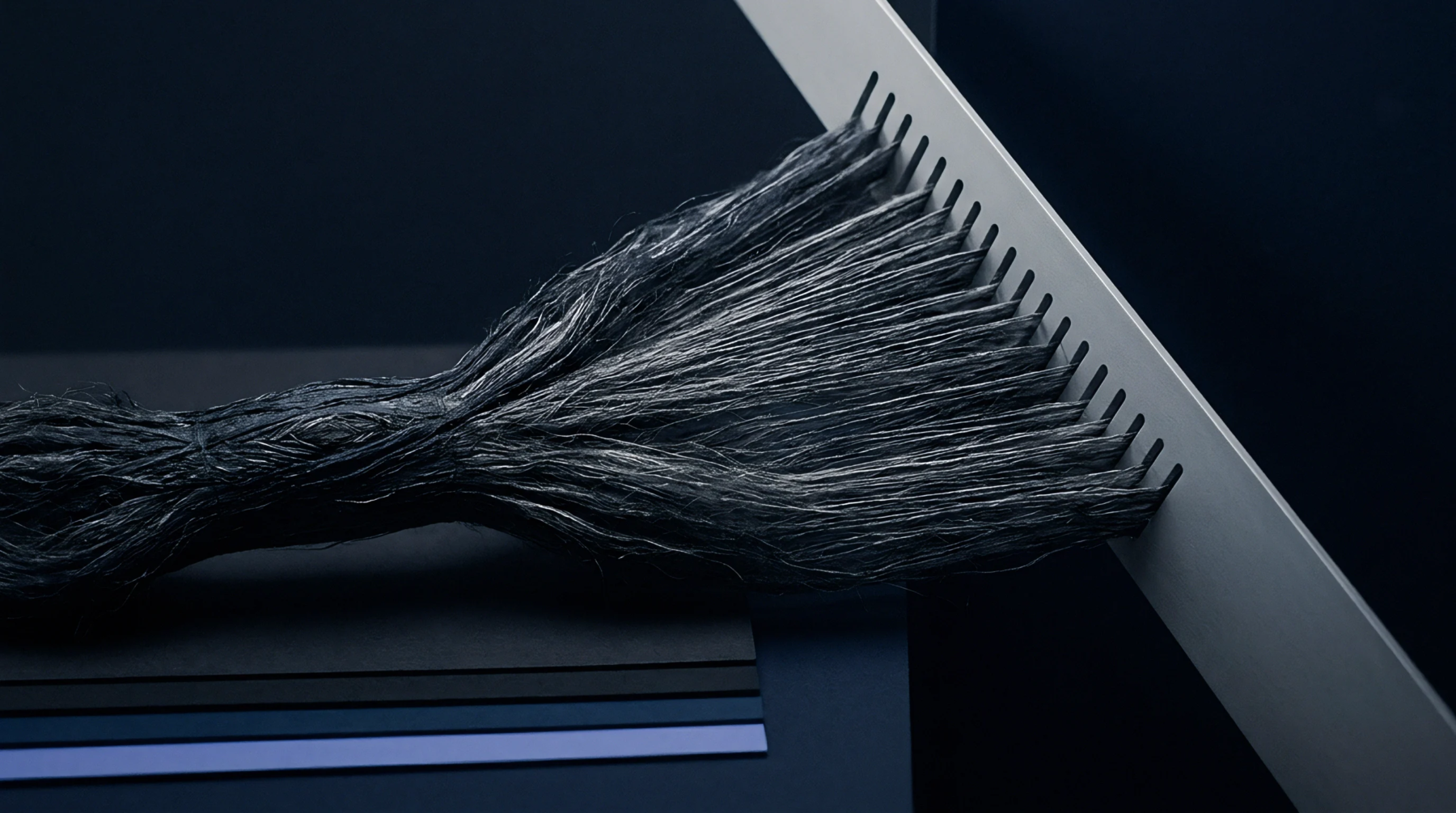
Structural Deformation
Flattening of yarn cross-sections occurs within woven or knitted fabrics under the influence of lateral forces and mechanical pressure. This structural modification, called transverse yarn compaction, reduces fabric thickness while increasing its cover factor and density. The process is caused by the interlocking of warp and weft yarns or the action of heavy finishing rollers during calendering.
It improves the surface smoothness of the textile and modifies its permeability to air and moisture.
Weaving Density
High-density weaving forces yarns closer together. The mechanical contact causes them to deform.
Physical Impact
Compacted yarns present a larger horizontal surface area which alters the visual appearance of the fabric. This transverse yarn compaction reduces the size of the gaps between the yarns, resulting in a tighter and more wind-resistant fabric structure. It also influences the drape of the fabric, making it stiffer and less flexible.
This modification is highly desirable in technical textiles where controlled porosity is necessary.
Testing Procedure
Optical evaluation using scanning electron microscopy or digital image analysis verifies the extent of the compaction. To measure the transverse yarn compaction, technicians compare the aspect ratio of the yarn cross-sections in the finished fabric with those of the raw yarn. This comparison shows how much the yarn has flattened under processing pressure.
The data helps the mill to adjust calender pressure and roll temperatures to achieve the target fabric properties.