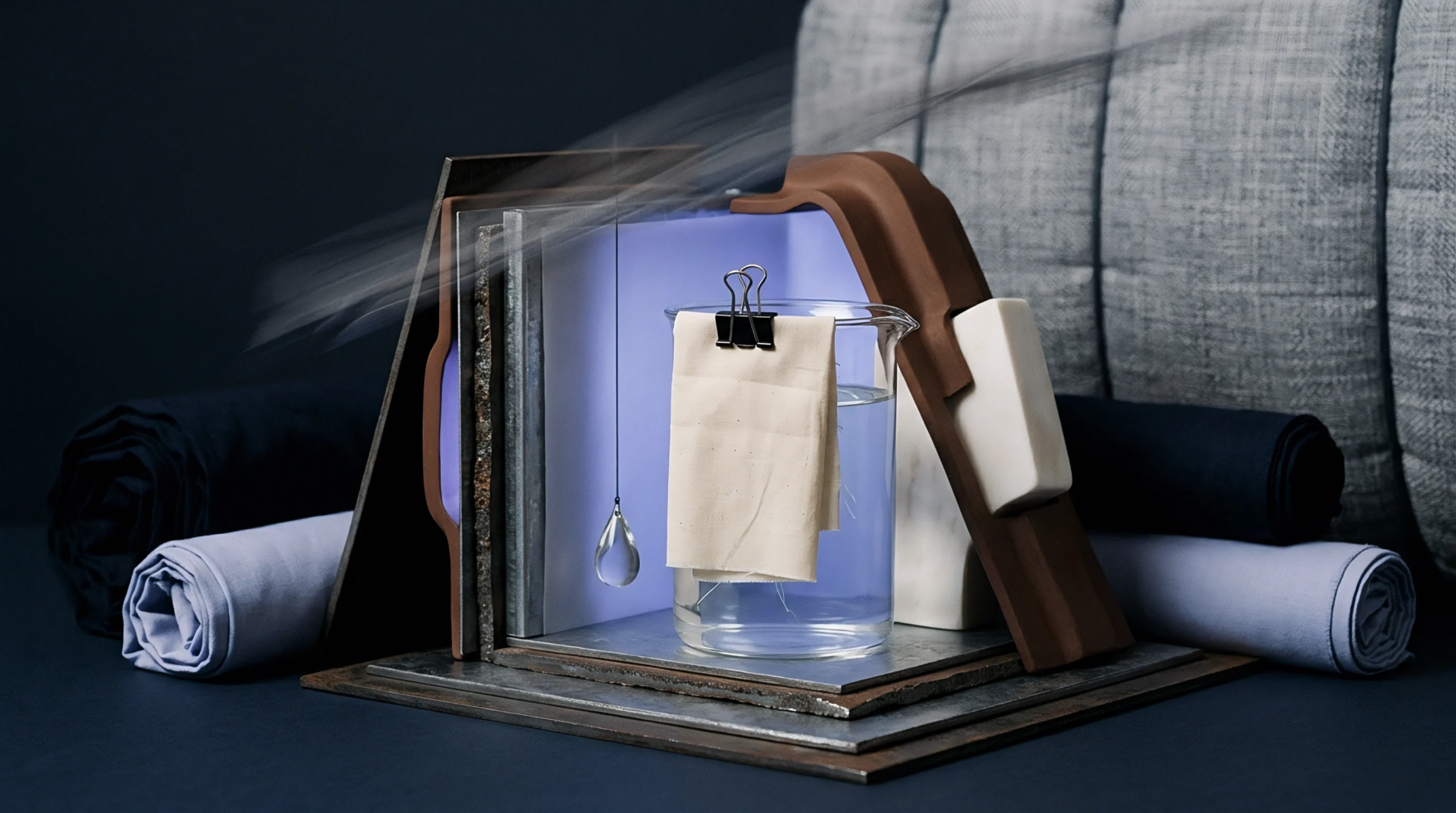
Aqueous Dimensional Shrinkage
Aqueous dimensional shrinkage defines the linear and area reduction that occurs when textile materials undergo liquid immersion, washing, or wet chemical finishing treatments. During scouring, bleaching, or dyeing, yarns and fibers absorb moisture and relax internal stresses, causing fabrics to draw inward before final stabilization. Buyers measure wet processing contraction during pre-production trials in commercial laboratories to adjust pattern grading and achieve specified finished dimensions.
Liquor Ratio Effects
High water volumes in industrial dyeing machines increase fabric mobility and accelerate yarn relaxation during thermal ramps. When liquor ratios drop below optimal thresholds, mechanical friction rises and restricts the natural curling tendency of knitted goods. Operators monitor these bath volumes carefully because restricted movement alters the final density of finished apparel.
Tension Control
Mechanical drag forces exerted by squeeze rollers and guide bars counteract the inward movement of fabric structures during continuous liquid treatment. Excessive machine pull stretches yarns lengthwise, masking true shrinkage potential until the material undergoes a subsequent relaxation tumble. Mills calibrate overfeed devices to permit unrestricted width contraction and prevent permanent distortion in woven piece goods.
Finishing Tolerances
Purchasing contracts establish strict dimensional change limits for finished garments after standardized laundering cycles. Exceeding agreed thresholds results in financial penalties or total shipment rejection at the distribution center. Accurate prediction of relaxation behavior protects brand reputation and ensures consistent fit across mass-produced apparel lines.