Geometric Parameter
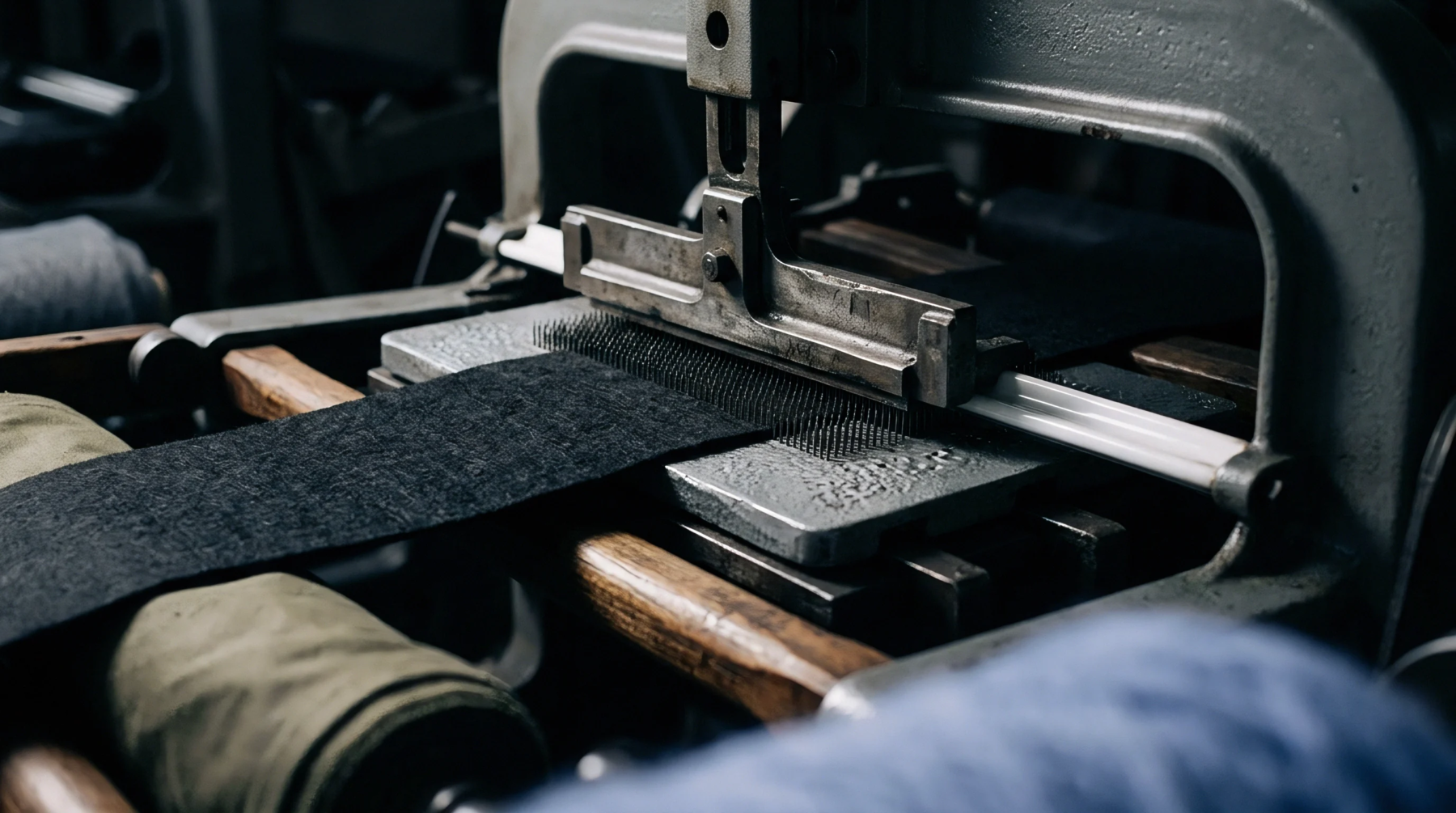
Inclination of the leading edge of a carding tooth relative to the perpendicular plane of the base determines the aggressiveness of the fiber grip. The wire front angle dictates whether the card clothing will mainly transport fibers or perform an intensive opening action. Smaller angles, often called more acute, provide a stronger hold on the fiber, making them suitable for high speed stripping.
Larger angles allow for easier fiber release and are typically found on the worker rollers or the doffer.
Tooth Orientation
Mechanical interaction between the cylinder wire and the flat wire depends entirely on this geometry. If the wire front angle is too aggressive for the fiber type, it can cause excessive breakage or permanent deformation of the filaments. Manufacturers select specific angles based on the micronaire of the cotton or the denier of the synthetic fiber.
Hardened steel wires maintain this angle over millions of revolutions, but abrasive fibers like polyester can eventually dull the point and change the effective angle.
Material Action
Carding efficiency is a direct result of how the teeth penetrate the fiber tufts. Since wire front angle influences the depth of penetration, it is a primary factor in the removal of neps and fine trash.
Usage Limitation
Choosing the wrong angle for a specific application leads to poor sliver quality or mechanical failure. This setting is fixed at the time of the card clothing installation and cannot be adjusted during the production run.