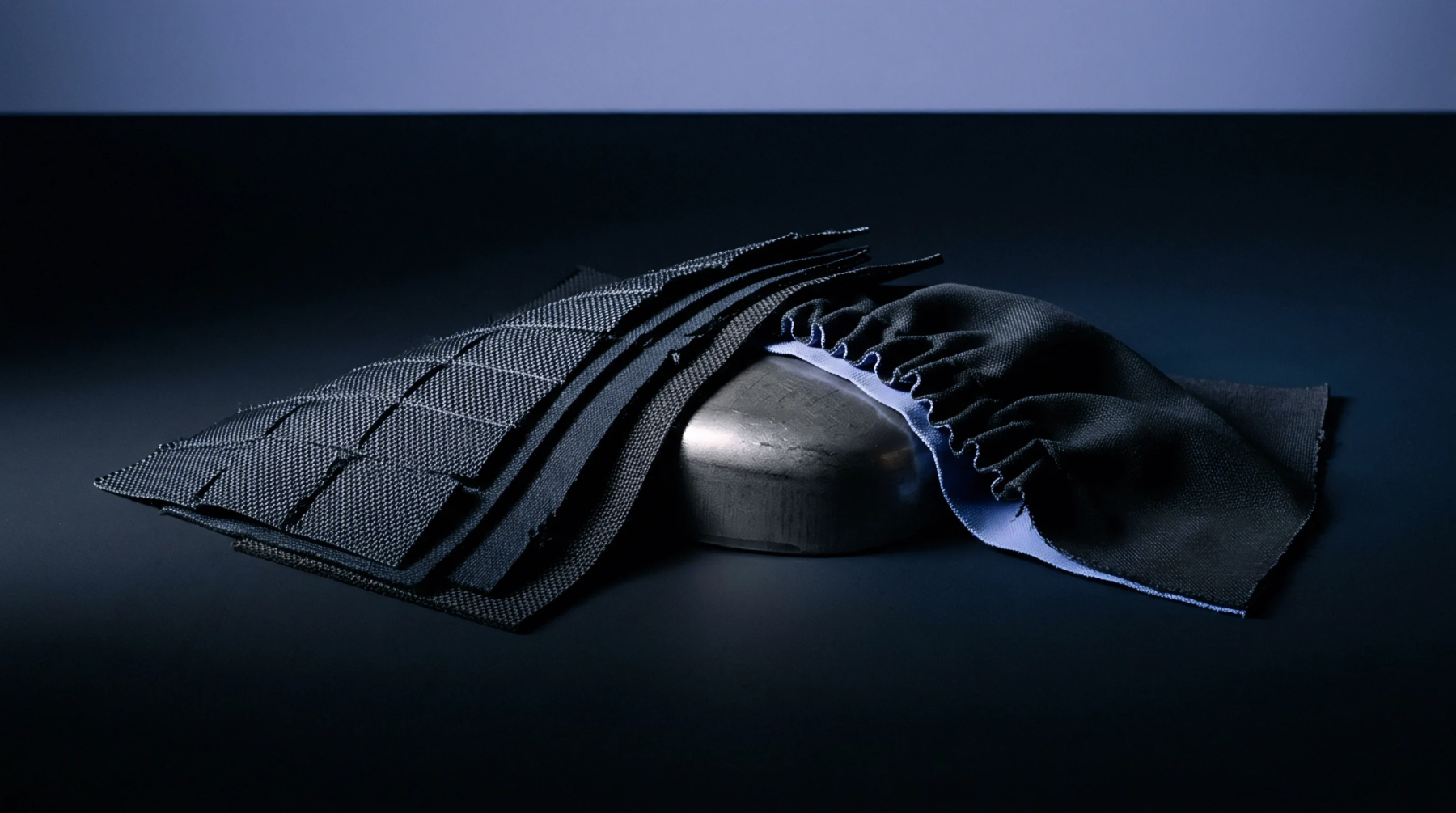
Structural Deformation
Mechanical compression of spun or multifilament yarns during weaving and finishing alters their cross-sectional shape from circular to elliptical. This physical change, known as yarn flattening, reduces the thickness of the fabric while increasing its surface coverage. The reduction in the size of the gaps between yarns is the main outcome of this process, directly decreasing the air permeability of the fabric without requiring a higher yarn count.
Weaving Contact
Tension applied to warp and filling yarns during the weaving cycle forces them against each other at each intersection. In this contact zone, yarn flattening occurs as the yarns are compressed by the reed and the beat-up action. This changes the internal porosity of the woven structure before any subsequent chemical or thermal finishing is applied.
Porosity Alteration
Fluid transport properties are directly influenced by this change in yarn shape because it narrows the channels between yarns. The reduction in pore size increases resistance to air and water penetration, making the fabric more windproof. Wicking speed is also affected as the capillary channels within the yarn are compressed and reorganized.
Finishing Influence
Post-weaving treatments like calendering further compress the flattened yarns to achieve the final fabric density. This makes the flattened state permanent and enhances the overall durability of the fabric barrier.