Substrate Tension Impact on Diffusive Dye Uptake in Mercerized Cotton
Substrate tension during mercerization compresses internal pore volume, decreasing the apparent diffusion coefficient and dye strike while increasing luster.

Draw
Mechanical stretching applied during caustic soda impregnation dictates how cellulose polymer chains reorient under alkali swell. Processing cotton through sodium hydroxide solutions without physical restraint produces massive radial swelling, longitudinal yarn shrinkage up to eighteen percent, and extensive internal pore expansion. Applying axial warp draw or lateral clip restraint alters that response.
Tension forces microfibrils to orient parallel to the fibre axis, suppressing internal cell-wall expansion while compacting the supramolecular structure. This physical compression directly controls the subsequent rate and equilibrium of diffusive dye uptake in the wet-processing mill.
Alkali Swelling Mechanics under Longitudinal Load
Sodium hydroxide solutions between 24 and 28 degrees Baume break intermolecular hydrogen bonds within native cellulose. The crystalline lattice of Cellulose I converts partially into sodium-cellulose complex lattices prior to rinsing. Unrestrained cotton hairs experience inward radial swelling that collapses the central lumen, creating a porous, highly accessible substrate.
Imposing machine-direction tension during caustic immersion and subsequent washing holds the cotton structure under constant elongation. The macroscopic consequence appears on the plant floor as stabilized roll yardage, but the microscopic reality involves tightly restricted internal free volume. The applied load forces polymer chains into tighter parallel packing before the alkali rinses clear.
Caustic swells the microfibrillar lattice.
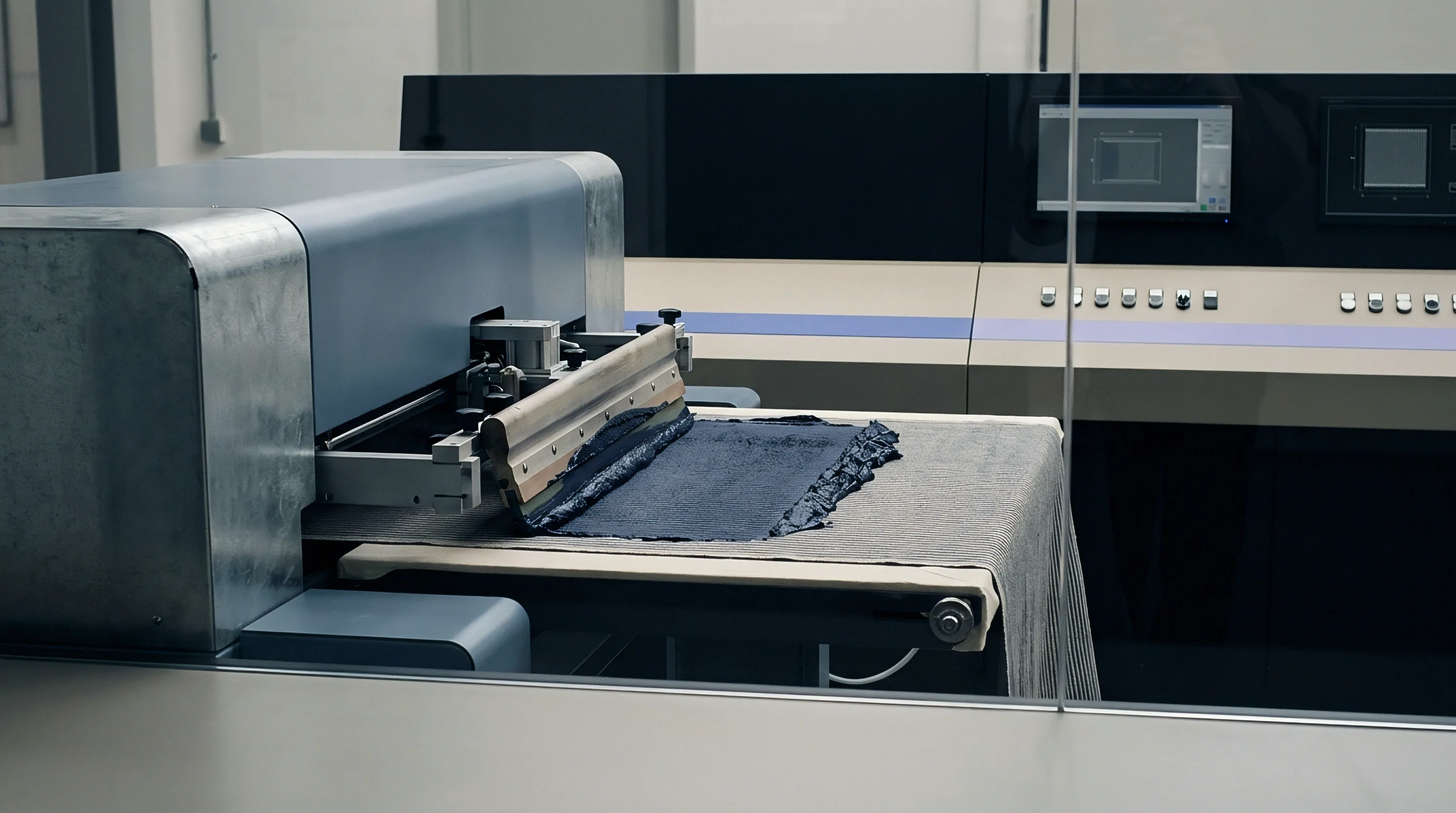
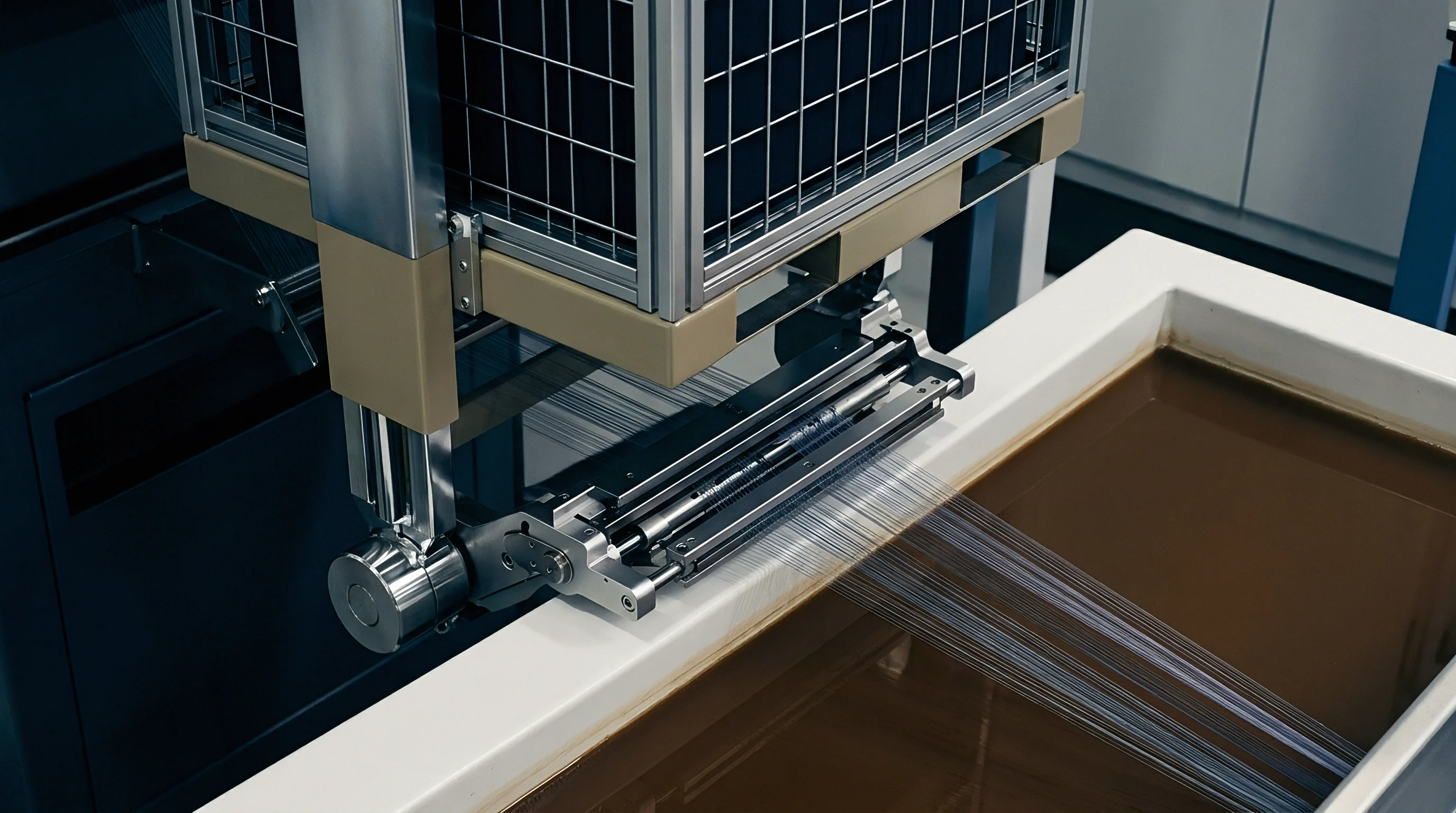
Machine configuration sets the physical limit of this structural transformation. Roller-mercerizing ranges apply pure warp-direction tension via driven iron rolls, stretching the length while leaving the width free to neck inward. Chain mercerizers combine driven rolls with a tenter clip section, allowing independent control over warp tension and weft expansion.
Chainless mercerizers rely on curved expander rollers and grooved drum surfaces, distributing tension through frictional contact. Each configuration delivers a different stress profile across the running web, changing the degree to which local amorphous zones can expand. In continuous pad-steam operations, an increase in warp draw from zero to three percent stretch reduces the initial exhaustion rate of reactive dyes by more than twenty percent.
Mills attempting to maximize yardage recovery inadvertently lock the interior structure of the yarn, forcing colourists to adjust salt, alkali, and fixation hold times.
Warp draw applied during caustic saturation suppresses internal pore volume long before colour chemistry enters the dye vessel.
Chain Alignment versus Radial Expansion
Microfibrils shift toward the fibre axis as axial stress restricts cross-sectional growth. Native cotton fibers exhibit a spiral angle between twenty and thirty degrees relative to the longitudinal axis. Under strong caustic wetting combined with two to four percent mechanical extension, this spiral angle decreases toward fifteen degrees.
The crystalline regions align, increasing intermolecular van der Waals contacts and secondary hydrogen bonding during the washing and neutralizing stages.
Tension suppresses radial pore expansion.
Because the chains pack closely, the specific surface area measured by inert gas adsorption drops compared to slack-treated goods. Denser fibrillar packing creates physical tortuosity for any entering solute. Direct and reactive dye molecules cannot pass through crystalline cellulose; they migrate through the water-filled interstitial voids between crystalline microfibrils.
High longitudinal draw during mercerization compresses these voids, reducing their mean radius below the hydrodynamic radius of large polysulfonated dye aggregates. The technical director observes high surface gloss on finished twills, accompanied by poor dye strike inside yarn bundles.
A plant manager frequently explains that higher processing speed simply required tighter roll nips to prevent fabric slippage through the wash boxes.

Void
Pore volume within the cell wall determines the surface area accessible to aqueous dye solutes. Untreated greige cotton possesses an internal accessible pore volume near 0.25 cubic centimetres per gram, with the majority of pores falling between one and three nanometres in diameter. Slack mercerization expands this pore volume beyond 0.50 cubic centimetres per gram, pushing the dominant pore size distribution toward three to six nanometres.
Imposing high mechanical stress during caustic saturation contracts that distribution, truncating the upper pore diameter limit while preserving total mass per unit area.

Can Mechanical Restraint Inhibit Internal Free Volume?
Cellular pore size distribution shifts toward smaller radii when axial extension prevents contraction. Water retention value measurements reflect this physical restriction directly. Unmercerized combed cotton yarn typically exhibits a water retention value near forty-six percent.
Slack-mercerized yarn treated with twenty-four percent sodium hydroxide reaches a water retention value of ninety-two percent, reflecting an open, sponge-like microfibrillar matrix. Holding that same yarn at three percent positive stretch through the caustic impregnation and rinsing sequence caps the water retention value at sixty-eight percent.
Dye molecules require open volume.
This suppression of accessible internal volume directly restricts dye movement. Reactive dye molecules, especially bifunctional or polyfunctional chemistries such as bis-monochlorotriazine or vinyl sulfone hybrids, possess hydrated molecular diameters between 1.5 and 3.0 nanometres. When the substrate tension truncates the pore network, dye chromophores encounter severe steric exclusion at the outer boundary of the secondary wall.
Transport transitions from rapid convective-capillary intrusion into slow Fickian diffusion through constricted tortuous channels.
| Mechanical Restraint State | Warp Elongation (%) | Water Retention Value (%) | Crystalline Conversion Index (%) | Mean Pore Radius (nm) | Barium Activity Number |
|---|---|---|---|---|---|
| Unmercerized Greige Control | 0.0 | 46.2 | 0.0 | 1.8 | 102 |
| Slack Mercerized Zero Tension | -12.5 | 92.4 | 68.5 | 4.6 | 164 |
| Nominal Constant Length | 0.0 | 77.1 | 54.2 | 3.1 | 138 |
| High Restraint Axial Stretch | +3.0 | 66.8 | 44.0 | 2.2 | 122 |
| Excessive Draw High Stress | +5.5 | 58.3 | 37.5 | 1.9 | 114 |
| Data measured at 20 degrees Celsius after caustic scour with 24% NaOH; water retention value determined via DIN 53814 centrifugation; Barium Activity Number per AATCC Test Method 89. | |||||

Microstructural Barriers in Tensioned Cell Walls
Steric hindrance within the substrate arises from specific geometric transformations across multiple structural levels.
- Microfibrillar Consolidation restricts segmental mobility among cellulose macromolecules, narrowing inter-chain conduits that transport hydrated dye anions into the fiber core.
- Secondary Wall Compaction eliminates interstitial macro-voids, forcing ionic dyestuffs to compete for fewer peripheral coordination sites along exposed fibrillar margins.
- Spiral Angle Flattening aligns individual fibrils parallel to the yarn axis, shifting reflection geometry and presenting an impenetrable physical barrier against rapid transverse liquor migration.
- Pore Neck Narrowing reduces the effective percolation threshold of the microcapillary network, excluding large reactive dye aggregates and hydrolysed colorant complexes from entering the interior cell structure.
Crystalline alignment restricts segmental mobility.
Because these microstructural alterations occur while the cellulose sits saturated in high-molarity caustic, they become locked in place during neutralization. Subsequent hot water rinses, acid souring with acetic acid, and dry-can passes fail to reopen these compressed channels. The finisher who attempts to improve exhaustion by raising dyebath temperatures faces diminished strike yields because the pore boundaries remain rigidly defined by the prior mechanical tensioning line.
Slack conditions yield porous paths while heavy draws lock the internal gates.
Strike
Diffusive transport through the substrate governs dye exhaustion rates during liquor contact. The apparent diffusion coefficient of a dye inside cotton cellulose depends heavily on the internal free volume fraction of the substrate. When mercerization occurs without axial restraint, this diffusion coefficient rises by a factor of three to five compared to unmercerized cotton, explaining why slack-treated goods dye so quickly and deeply.
Restraining the substrate during mercerization suppresses this kinetic acceleration, holding the diffusion coefficient closer to unmercerized baselines.
Apparent Diffusion Coefficients across Tension Gradients
Batch exhaustion kinetics follow Fickian diffusion models inside swollen cellulosic matrices. Using Hill’s diffusion equation for cylindrical substrate geometry, the half-dyeing time serves as an inverse measure of diffusion speed. Slack-swelled fibers exhibit short half-dyeing times due to enlarged microcapillary networks, creating rapid initial strike.
Applying longitudinal draw increases half-dyeing times significantly.
Slack treatment increases dye exhaustion.
In pad-batch and continuous pad-steam operations, contact times are measured in seconds rather than the hours allocated to exhaust dyeing. In a continuous pad-steam range running at seventy metres per minute with a forty-five-second steaming chamber, dye penetration must occur rapidly before steam condensation thins the chemical boundary layer. If a high-tension mercerizing run reduced the apparent diffusion coefficient from 4.8 x 10^-10 square centimetres per second down to 1.6 x 10^-10 square centimetres per second, dye molecules remain pinned near the fiber periphery.
The resulting cross-section reveals ring dyeing, where the outer annular sheath holds high chromophore concentrations while the interior remains undyed.
A two percent increase in longitudinal draw during caustic impregnation lowers the apparent diffusion coefficient of Reactive Black 5 by more than forty percent at sixty degrees Celsius.
| Substrate State | Diffusion Coefficient (x 10^-10 cm2/s) | Half Dyeing Time t1/2 (min) | Equilibrium Exhaustion (%) | Surface Colour Yield (K/S) |
|---|---|---|---|---|
| Unmercerized Control | 0.85 | 28.4 | 62.1 | 12.4 |
| Slack Mercerized (0% Tension) | 4.92 | 6.2 | 88.6 | 21.8 |
| Constant Length (0% Stretch) | 2.74 | 11.5 | 81.4 | 18.9 |
| Axial Tension (+2.5% Stretch) | 1.58 | 18.7 | 74.2 | 16.1 |
| High Axial Tension (+4.5% Stretch) | 1.02 | 24.6 | 68.9 | 14.3 |
Worked Model of Half Dyeing Kinetics
Consider a reactive dyeing scenario evaluated at 60 degrees Celsius using a vinyl sulfone chromophore. Assume a 500-kilogram lot of combed cotton sheeting processed across two distinct mercerizing machines before exhaust dyeing in an identical soft-flow jet machine. Machine A operated slack through the stabilization box, allowing ten percent length shrinkage.
Machine B operated under heavy warp draw, producing two percent stretch beyond greige dimensions. Liquor ratio sits at 8:1 with sixty grams per litre sodium sulfate and twenty grams per litre sodium carbonate.
- Electrolyte Addition Stage initiates dye migration from solution toward the fiber perimeter, where Machine A goods adsorb fifty-eight percent of available dye within eight minutes due to enlarged pore volume.
- Alkali Dosing Phase triggers covalent bonding between the cellulosate anions and the vinyl sulfone active group, rapidly consuming dye from the liquor surrounding Machine A fibers while Machine B goods have adsorbed only thirty-one percent of the bath.
- Diffusive Penetration Window extends across twenty-five minutes of holding at sixty degrees Celsius, during which Machine A achieves complete cross-sectional penetration with an apparent diffusion coefficient of 3.8 x 10^-10 square centimetres per second.
- Boundary Layer Depletion starves Machine B goods of uniform interior colouration because its suppressed diffusion coefficient of 1.4 x 10^-10 square centimetres per second forces surface fixation before core diffusion finishes.
Slower strike improves levelness.
Fast strike rates are not inherently advantageous. Rapid surface adsorption outpaces diffusion into the yarn core, causing unlevelness when liquor circulation cannot supply dye to all parts of the textile at equal rates. Highly tensioned cotton goods, possessing lower strike rates and smaller apparent diffusion coefficients, yield superior levelness across the face of tightly woven fabrics, provided the mechanical tension remains completely uniform across the roll width.
When tension fluctuates between yarn packages, strike rates diverge, producing streakiness that no dyehouse levelling agent can correct.
Whether this diffusive suppression can be reversed by subsequent high-pressure liquid ammonia processing remains an active debate among plant chemists.
Shade
Visual colour yield depends upon both dye mass uptake and substrate optical scattering. Mercerizing under tension produces two opposing optical and physical phenomena. First, higher tension reduces internal pore volume, lowering total chemical dye sorption during fixed-time dyeing cycles.
Second, high tension straightens the fibers, untwists natural convolutions, and creates a circular cross-section with a smooth outer surface. This smooth geometry lowers the Kubelka-Munk scattering coefficient S while increasing specular surface gloss. A lower scattering coefficient causes incoming light to penetrate deeper into the dyed layer rather than scattering off rough surface irregularities, producing a visually darker, richer shade at the exact same internal dye mass concentration.
Optical Depth versus Chemical Exhaustion
Reflectance spectrophotometry records lower light scattering coefficients on flattened circular fibre profiles. When light strikes an unmercerized or slack-mercerized fiber, irregular bean-shaped cross-sections and rough surface crenulations reflect light diffusely in all directions. This high diffuse reflectance washes out deep tones, creating a pale, milky visual cast.
Tension-mercerized cotton reflects light specularly, behaving like a polished cylinder.
The tenter frame sets width.
Spectrophotometric evaluation using CIELAB coordinates demonstrates that tension-mercerized cloth yields higher K/S values than unmercerized cloth, even when total chemical dye exhaustion remains modest. If tension is raised too far, the loss of chemical dye uptake overwhelms the optical benefit. Total dye absorption drops drastically, and the finished cloth emerges visually lighter despite its high surface gloss.
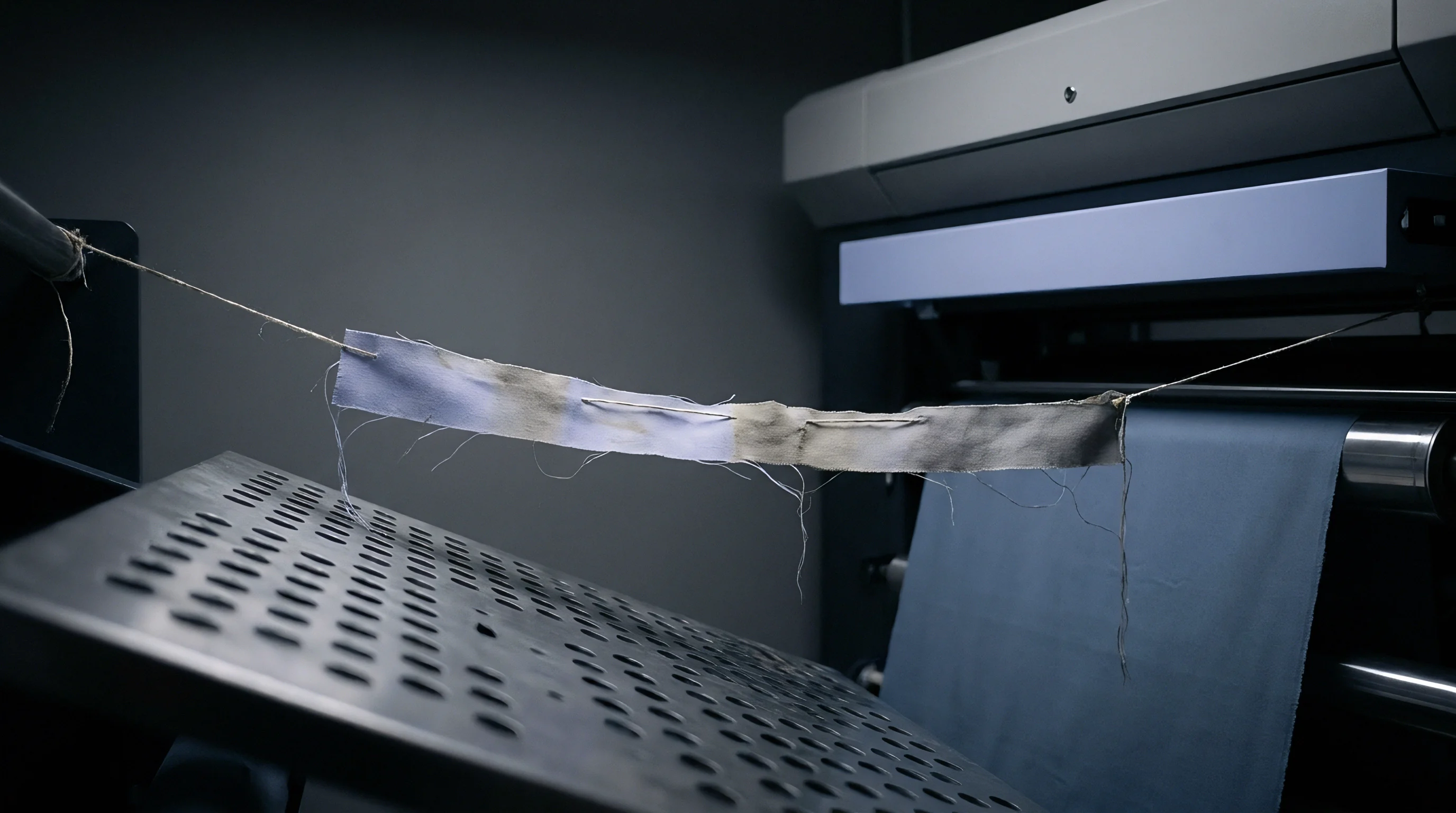
Sourcing managers examining lab dips frequently confuse high surface luster with deep dye penetration, accepting submissions that show severe ring dyeing and compromised wet-rub fastness.
Smooth cylindrical fibers produce high specular gloss that masks an internal deficit of absorbed dye mass until abrasive wear breaks the surface.
Is Lateral Stretching Sufficient for Levelness?
Tenter frames introduce edge-to-centre disparities in transverse holding force. Heavy mechanical tension applied along the warp direction in a roller mercerizer causes the textile to neck down, stretching the centre while the selvedges experience compressive inward curling. In a chain mercerizer, heavy tenter clips grasp the selvedges, pulling the fabric out to width.
The yarns adjacent to the clips experience intense lateral tension, while the central third of the web sags, absorbing significantly less transverse stress. This difference creates widthwise variance in cell-wall compaction.
Warp ends carry unequal load.
Uneven mechanical load translates directly into side-centre-side colour shading, known commercially as listing. When the dyed goods emerge from the padder, the centre of the roll displays a different depth of shade than the selvedges. A plant operating without automated widthwise load-cell monitoring typically generates defects that become visible only after garment assembly.
- Clip Gripper Slippage allows selective weft relaxation near one selvedge, causing asymmetrical dye strike and an uncorrectable left-to-right shade slope.
- Bow Roller Deflection exerts uneven warp-direction drag across the midsection of broadcloth yardage, creating a dark central band where lower tension allowed higher pore expansion.
- Expander Crown Distortion concentrates axial strain on the centre picks, yielding pale streaks along the warp axis in solid dark shades.
- Uneven Caustic Squeeze Nips combine unequal chemical mass transfer with local tension spikes, producing mottled dye penetration across the entire piece.
Uneven draw produces side-to-centre listing.
Failing to control these mechanical variables creates irreparable colour listing across thousands of metres, resulting in rejected cutter lots, non-negotiable chargebacks, and complete commercial forfeiture of finished goods.

Allowance
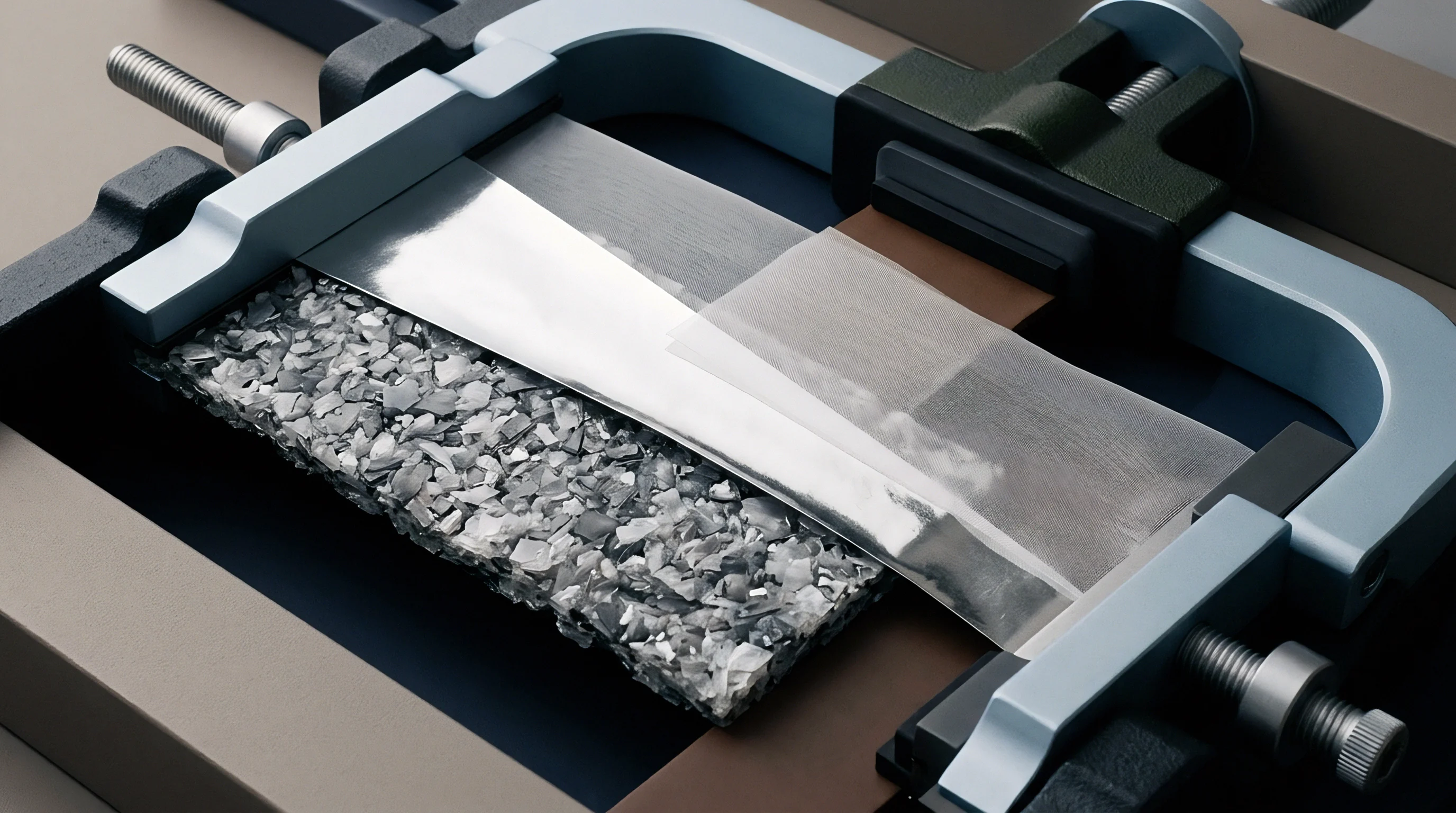
Commercial purchase contracts govern acceptable colour variation across finished roll yardage. Sourcing specifications that define shade tolerance purely by Delta E CMC or CIEDE2000 metrics without constraining mercerizing conditions leave buyers exposed to invisible fastness failures. Fabric that meets an optical tolerance of Delta E below 0.6 in a spectrophotometer may conceal substantial ring dyeing caused by excessive tensioning during caustic treatment.
When garments undergo commercial laundering or abrasion testing, the thinly dyed outer sheath abrades away, exposing the white cellulosic core and failing consumer expectations.
Barium Activity Metrics and Dyehouse Variance
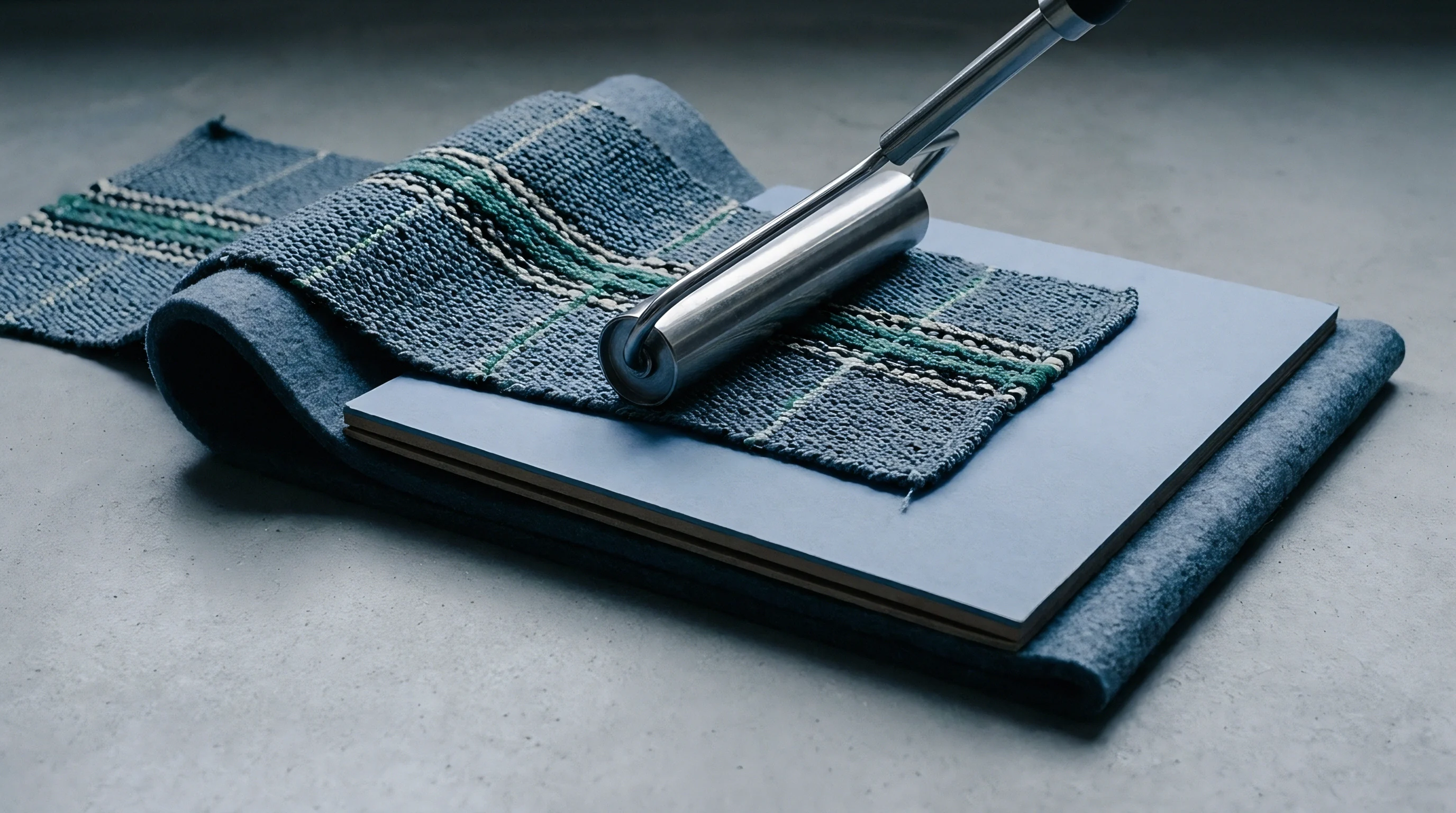
AATCC Test Method 89 quantifies cellulose conversion through selective alkaline absorption. Unmercerized cotton yields a Barium Activity Number between 100 and 105. High-quality slack mercerization achieves numbers from 150 to 165.
Fully tensioned mercerized poplins and twills typically achieve Barium Activity Numbers between 120 and 135, reflecting the suppression of accessible sorption sites under physical restraint.
Barium activity numbers record conversion.
A variation of more than five Barium Activity units across a single master roll signals severe tension instability across the mercerizing range. When a finishing mill attempts to dye goods with such internal variance, no combination of dyehouse auxiliaries can maintain a stable shade from roll head to roll tail. The buyer who audits the finishing plant must inspect the Barium Activity Number records alongside tensile and tear data before approving grey fabric conversion.
Relying strictly on post-dyeing visual inspection leaves the root cause of shade rejection unaddressed.
A Barium Activity Number variation exceeding five units across the width of a piece guarantees failure of side-to-centre shade tolerances under ISO 105-J03.
Contract Clauses for Widthwise Uniformity
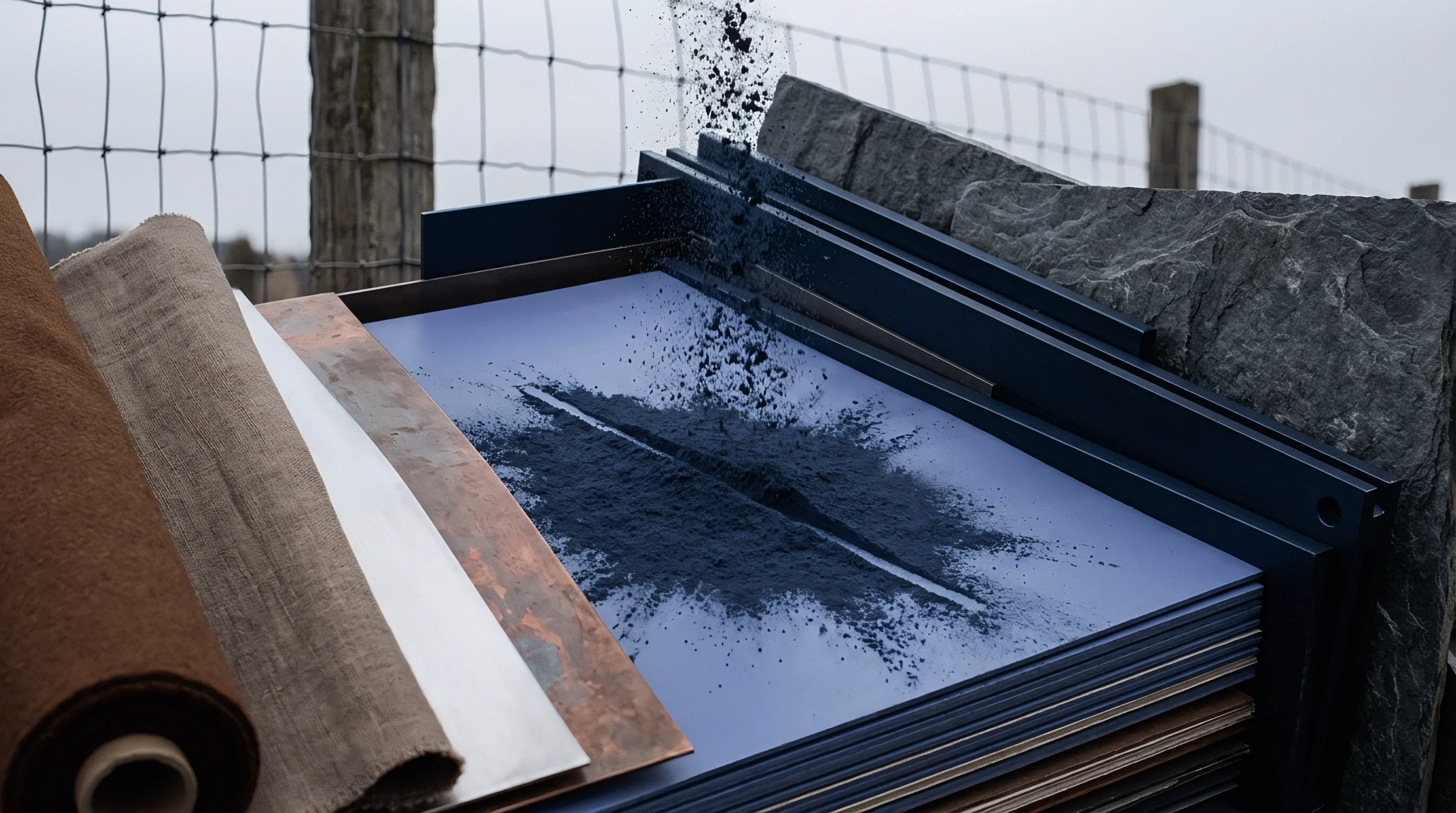
Specification sheets establish binding tolerance limits for CIE L a b coordinates. Mill contracts must explicitly state maximum permissible warp elongation during wet caustic impregnation, restricting length stretch to a defined band, typically between 1.0 and 2.5 percent. Allowing the mill unmonitored tension control invites process drift aimed at maximizing yardage yield at the expense of dye diffusion integrity.
Bulk lots expose process drift.
Incorporating ASTM D3774 for fabric width along with ISO 105-X12 for crocking fastness establishes a verifiable baseline for mechanical stability. A supplier delivering goods that show acceptable shade depth but fail wet crocking at grade 3 instead of grade 4-5 often suffers from over-tensioned mercerization that blocked dye penetration into the fiber core. The technical auditor links fastness failure directly to the tension gauges on the mercerizing range, turning what looks like a dyehouse chemistry dispute into an objective mechanical calibration audit.
Under Section 8 of the standard master finishing agreement, verified variance in Barium Activity Numbers exceeding four percent between selvedge and centre positions automatically reallocates the landed cost of rejected cutter rolls to the wet-processing subcontractor.