Quantifying Recycled Polyester Mass Loss Variance during Alkaline Keratin Separation
Alkaline keratin digestion causes up to 4% mass loss in rPET due to low intrinsic viscosity and structural micro-voids, requiring calibrated d-factors.


Hydrolysis
Quantitative separation of animal protein fibres from synthetic polymers relies on selective chemical degradation. When an alkaline reagent breaks down keratin disulfide bonds in wool, cashmere, or mohair, the hydroxide ions attack the peptide linkages. At the same time, hydroxide attack occurs along ester linkages in polybutylene or polyethylene terephthalate polymer chains.
Virgin polyester resists brief hot alkaline immersion because high molecular weight and dense crystalline packing shield internal ester bonds. Recycled polyester synthesized from post-consumer mechanical flake has compromised chain integrity, accelerating ester cleavage during standard keratin extraction routines.
Chemical attack occurs predominantly at the fibre surface through saponification, stripping terephthalate anions and ethylene glycol units into the liquid bath. Lower average molecular weight in mechanically recycled staple yarns increases the frequency of terminal carboxyl chain ends per unit mass. These terminal groups enhance surface wetting and local hydroxyl ion concentration.
Standard gravimetric protocols assume a uniform polyester mass correction factor of one percent to account for baseline dissolution, but recycled feedstocks routinely display mass losses between two and four percent under identical reagent concentrations and thermal exposure. Treating recycled polyester under virgin quantitative standards generates systematic overestimation of the natural fibre component in mixed spinning lots.
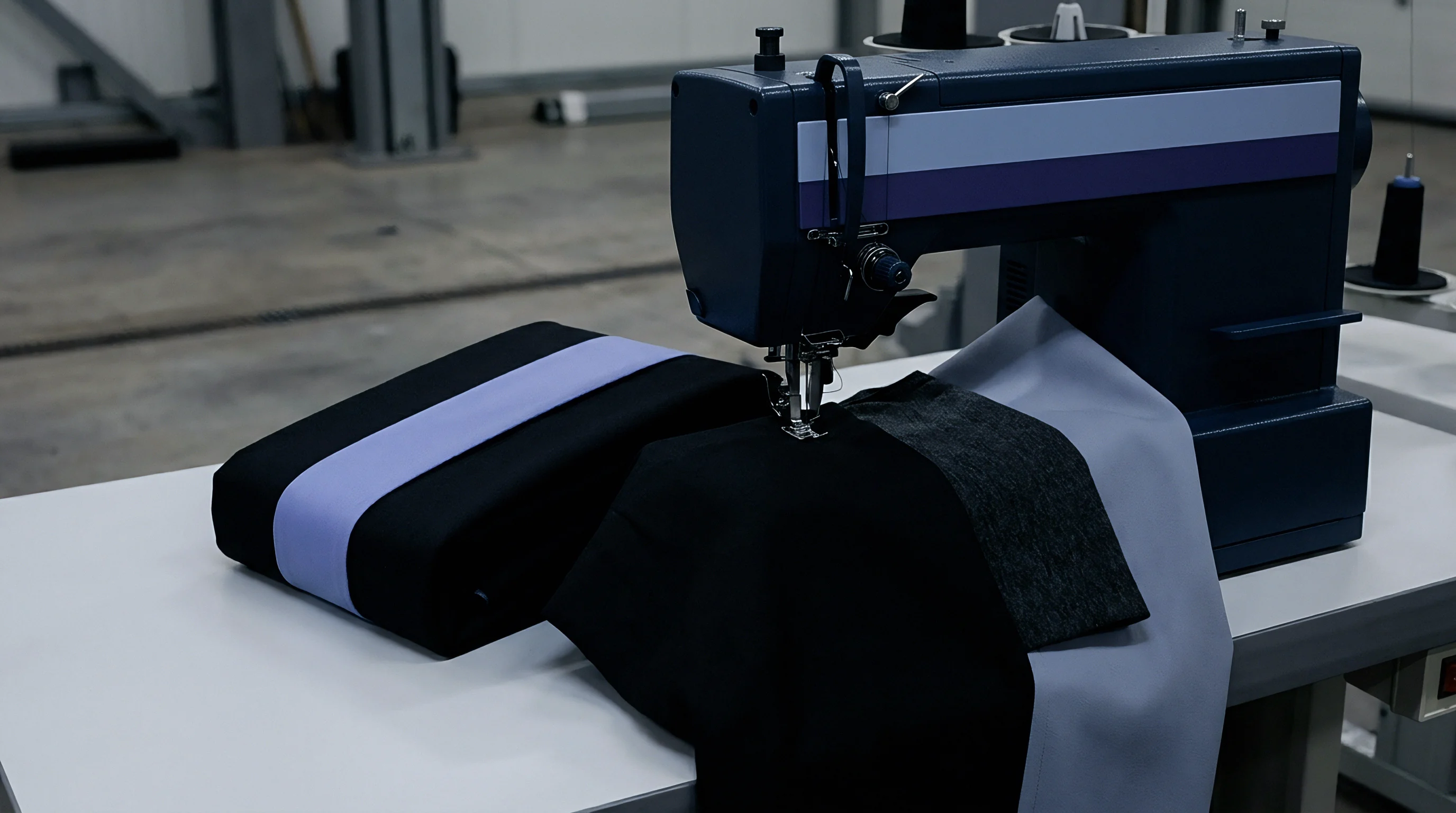
Chemical Degradation Pathways in Recycled Ester Matrices
The rate of ester bond cleavage depends on reagent concentration, temperature, exposure duration, and structural defects in the synthetic filament. Mechanically reprocessed polyethylene terephthalate contains elevated diethylene glycol content and random micro-voids resulting from crushed delustrant agglomerates. These structural irregularities create localized access channels for aqueous sodium hydroxide.
- Chain End Density Higher concentrations of carboxylic end groups in reprocessed polymer melt streams lower the activation energy required for surface saponification.
- Diethylene Glycol Inclusions Elevated ether linkages within the recycled polymer backbone increase hydrophilic segment swelling during hot aqueous alkali immersion.
- Surface Micro-Fissures Mechanical shredding and carding stress create longitudinal fractures that double the effective surface area exposed to chemical attack.
- Thermal History Degradation Previous thermal cycles during pelletizing leave residual internal stress that speeds up solvent penetration into amorphous regions.
A higher ratio of surface area to mass in fine recycled staple yarn accelerates alkaline reagent penetration.
Quantifying the true blend balance demands isolating polyester degradation kinetics from the primary keratin dissolution curve. Keratin breaks down rapidly as hydroxide ions hydrolyze cystine cross-links, forming soluble lanthionine derivatives within fifteen minutes at boiling temperature. Polyester mass loss proceeds at a steady linear rate throughout this period, then accelerates once protective protein coatings disappear from the yarn structure.
When test technicians extend digestion times to clear persistent coarse wool guard hairs, the synthetic residue suffers progressive mass attrition. Standard laboratory procedures lack dynamic timing adjustments based on the mechanical origin of the synthetic component.
Uncertainty remains regarding whether chemical recycling through monomer depolymerization fully restores the alkaline resistance observed in virgin polyester matrixes.


Crystallinity
Solid-state structural ordering governs the physical barrier properties of synthetic filaments under chemical stress. Dense crystalline domains prevent hydroxide ion diffusion into the polymer interior, confining chemical attack to the exposed outer boundary. Amorphous regions lack this tight molecular packing, allowing solvent molecules to penetrate between disordered chains.
Post-consumer recycled polyester staple exhibits lower overall volumetric order than prime virgin staple due to thermal degradation during re-extrusion. Mechanical draw ratios applied during staple yarn spinning fail to fully restore the uniform crystalline alignment found in virgin synthetic fibres.
Differences in intrinsic viscosity serve as an indicator of expected chemical mass loss variance. Commercial virgin polyester staple intended for wool blending typically measures an intrinsic viscosity between 0.64 and 0.68 decilitres per gram. Recycled staple derived from bottle flake often enters spinning mills with intrinsic viscosity values ranging from 0.58 to 0.62 decilitres per gram.
This lower molecular weight reflects shorter polymer chains that dissolve more readily when exposed to hot alkaline reagents. Solvent molecules detach short-chain oligomers from amorphous zones long before complete surface saponification occurs.

Structural Differences between Synthetic Feedstocks
Titanium dioxide delustrant particles alter the crystalline continuity within recycled filaments. Recycled melt streams frequently combine polymer source lots carrying variable titanium dioxide loading levels, ranging from bright to extra-dull configurations. Particle agglomeration during re-melting creates boundary voids where the polymer matrix detaches from the inorganic pigment.
Hydroxide ions migrate into these micro-voids, initiating internal saponification alongside primary surface attack.
Heat-setting temperatures during fiber manufacturing fix the final crystalline fraction. Virgin fibers undergo controlled thermal annealing under uniform tension, reaching crystal fractions above forty percent. Recycled staple processing often operates under wider thermal windows to accommodate variable feedstock viscosity.
Lower annealing temperatures leave larger amorphous fractions that succumb rapidly to chemical digestion.
Recycled polyester staple measuring an intrinsic viscosity of 0.58 decilitres per gram loses 2.8 percent mass during standard wool dissolution at ninety degrees.
Spinning mill draw ratios directly alter the chemical durability of recycled yarns. High draw ratios align amorphous polymer chains parallel to the fiber axis, creating stress-induced crystalline structures. Low draw ratios leave disordered amorphous zones accessible to chemical reagents.
Yarns spun from recycled bottle flake require specific draw ratio adjustments to maintain dimensional stability and chemical resistance across subsequent wet processing steps.
Lower intrinsic viscosity in recycled synthetic staple yields proportionally greater mass loss under aggressive chemical digestion.


Digestion
Laboratory procedures for quantitative blend analysis require strict control over reagent temperature and digestion duration. Standard test methods specify dissolving keratin using sodium hydroxide or potassium hydroxide solutions heated to elevated temperatures. Variations of two degrees Celsius during reagent heating shift the polyester mass loss rate by measurable margins.
Technician manual handling during agitation also introduces variability in reagent contact intensity.
Standardizing the separation sequence isolates keratin mass while accounting for synthetic residue degradation.
- Dry the mixed wool and recycled polyester specimen in a ventilated oven at one hundred five degrees Celsius until constant mass is attained.
- Weigh exactly two grams of the dried specimen on an analytical balance reading to four decimal places.
- Transfer the specimen into a glass reaction vessel containing one hundred millilitres of five percent sodium hydroxide solution pre-heated to ninety-five degrees Celsius.
- Maintain the bath temperature at ninety-five degrees Celsius for twenty-five minutes while stirring at sixty revolutions per minute.
- Filter the contents through a tared fritted glass crucible using low vacuum assistance.
- Rinse the residual polyester five times with distilled water heated to sixty degrees Celsius to remove saponification products.
- Neutralize residual alkali by soaking the polyester residue in dilute acetic acid solution for five minutes at room temperature.
- Rinse the residue with cold distilled water until washings yield neutral pH readings on standard indicators.
- Dry the residue at one hundred five degrees Celsius to constant mass and weigh the recovered synthetic material.

Digestion Parameters and Mass Attrition Rates
Digestion kinetics vary significantly between virgin and recycled synthetic blends under standard testing conditions, with mass loss shifting across reagent concentrations, temperatures, and exposure periods.
| Reagent Type | Concentration (% w/v) | Temperature (°C) | Duration (min) | Virgin PET Mass Loss (%) | rPET Mass Loss (%) |
|---|---|---|---|---|---|
| Sodium Hydroxide | 2.5 | 90 | 30 | 0.85 | 1.92 |
| Sodium Hydroxide | 5.0 | 90 | 30 | 1.10 | 2.65 |
| Sodium Hydroxide | 5.0 | 98 | 30 | 1.45 | 3.80 |
| Potassium Hydroxide | 5.0 | 95 | 25 | 1.20 | 2.95 |
| Sodium Hydroxide | 10.0 | 85 | 45 | 1.60 | 4.15 |
Failure to control test solution temperatures causes significant errors in calculated commercial blend ratios. An uncorrected mass loss of three percent on the polyester fraction artificially inflates the recorded wool content. A declared 50/50 wool and recycled polyester blend would test as 51.5 percent wool and 48.5 percent polyester under unadjusted laboratory procedures.
Buyers accepting these raw laboratory figures risk declaring non-compliant fibre compositions to customs authorities.
Deviations in digestion temperature alter mass loss figures and lead to incorrect customs classification decisions.

Sieve
Gravimetric residue recovery depends on matching filter pore size to fragment dimensions generated during chemical separation. Fritted glass crucibles with pore sizes between forty and one hundred micrometres represent standard laboratory equipment. Alkaline digestion breaks recycled polyester into fine surface fragments and short oligomer fibrils alongside intact staple fibers.
Filtering through coarse crucibles allows micro-fragments to pass into liquid waste, producing an artificial elevation in recorded synthetic mass loss.
Crucible porosity selection alters the retention threshold for degraded synthetic particles. Fine pore crucibles measuring ten to sixteen micrometres capture microscopic oligomer precipitates but slow down wash fluid passage. Prolonged washing times allow residual alkali to remain in contact with the wet polyester cake, causing continued room-temperature saponification.
Laboratory auditors must specify filtration media porosity alongside chemical reagent parameters.

Filtering Efficiency and Equipment Standards
Crucible selection directly impacts the repeatability of quantitative composition testing across common filtration media.
| Crucible Grade | Pore Size Rating (µm) | Filtration Speed | Oligomer Retention (%) | Mass Error Variance (%) |
|---|---|---|---|---|
| P100 (Coarse) | 90 ~ 110 | Very Fast | 62.4 | +1.85 |
| P40 (Medium) | 40 ~ 50 | Fast | 84.1 | +0.65 |
| P16 (Fine) | 10 ~ 16 | Moderate | 97.8 | -0.12 |
| P4 (Ultra-Fine) | 1.6 ~ 4.0 | Slow | 99.5 | -0.45 |
Audit procedures require checking equipment cleanliness and calibration before running quantitative analyses.
- Crucible Tare Verification Clean crucibles must undergo blank heating cycles at one hundred five degrees to verify weight stability prior to sample loading.
- Vacuum Pressure Calibration Vacuum pump extraction pressure must not exceed two hundred millibars to avoid pulling soft, degraded synthetic fibrils through the filter disk.
- Rinse Fluid Neutrality Wash water exiting the crucible base requires digital pH meter monitoring to confirm absolute removal of alkaline chemical residues.
- Desiccator Cooling Protocol Dried crucibles containing warm residue must cool inside sealed desiccators over active silica gel for forty-five minutes before balance weighing.
Standard ISO 1833 procedures require applying a specific d-factor correction to offset solvent-induced mass loss during chemical fibre separation.
Composition discrepancies can stem from ambient moisture regain shifts rather than chemical over-digestion.


Calibration
Accurate quantitative analysis requires establishing calibrated mass correction factors tailored to specific recycled polyester grades. The standard d-factor represents the ratio of initial dry synthetic mass to recovered dry synthetic mass following chemical separation of the companion fiber. International standards assign a fixed d-factor of 1.01 for virgin polyester treated in alkaline keratin digestion baths.
Applying this static multiplier to recycled fibers introduces systematic calculation errors proportional to the feedstock degradation state.
Empirical calibration requires measuring the mass loss of pure recycled polyester staple under identical laboratory conditions used for blend separation. Running control specimens alongside production samples generates lot-specific correction values. Technical buyers write these custom correction factors into laboratory testing protocols to protect composition declarations.

Worked Mass Calibration Model
Calculating the true fibre composition of a wool and recycled polyester blend yarn demonstrates the impact of d-factor calibration choices. Assume a test sample with an initial dry mass of 2.0540 grams is subjected to five percent sodium hydroxide digestion at ninety-five degrees for twenty-five minutes. The dry residue recovered on a fine fritted crucible weighs 1.0020 grams.
Control testing of the pure recycled polyester fiber lot establishes an empirical mass loss of 3.20 percent, yielding a calculated d-factor of 1.0331.
Using default virgin d-factor parameters, the calculation proceeds:
Corrected synthetic mass equals dry residue mass multiplied by standard d-factor: 1.0020 grams times 1.0100 equals 1.01202 grams.
Wool mass equals initial specimen mass minus corrected synthetic mass: 2.0540 grams minus 1.01202 grams equals 1.04198 grams.
Calculated wool percentage equals 1.04198 divided by 2.0540 times one hundred, yielding 50.73 percent wool.
Calculated polyester percentage equals 1.01202 divided by 2.0540 times one hundred, yielding 49.27 percent polyester.
With the empirical recycled d-factor, the calculation shifts:
Corrected synthetic mass equals dry residue mass multiplied by empirical d-factor: 1.0020 grams times 1.0331 equals 1.03517 grams.
Wool mass equals initial specimen mass minus corrected synthetic mass: 2.0540 grams minus 1.03517 grams equals 1.01883 grams.
Calculated wool percentage equals 1.01883 divided by 2.0540 times one hundred, yielding 49.60 percent wool.
Calculated polyester percentage equals 1.03517 divided by 2.0540 times one hundred, yielding 50.40 percent polyester.
Applying an empirical correction factor of 1.0331 shifts the calculated blend ratio by 1.13 percentage points compared to default virgin standards.
The difference of 1.13 percentage points determines whether a commercial yarn shipment meets strict contractual composition tolerances. Sourcing contracts specify that composition tolerances must comply with ISO 1833 testing provisions using lot-validated correction factors.


Margin
Blend percentage variations directly alter landed fabric costs and customs classification lines. European Union regulations and United States Federal Trade Commission rules allow a strict three percent tolerance on fiber composition claims for blended textiles. Systematic testing errors caused by uncalibrated alkaline mass loss push marginal blend formulations outside legal limits.
A blend sold as fifty percent wool and fifty percent recycled polyester risks reclassification if customs testing returns fifty-two percent wool due to over-dissolved synthetic residue.
Customs authorities assess import duties based on the chief weight material in mixed fiber fabrics. Woven fabrics containing predominantly wool by weight fall under higher tariff rates than fabrics dominated by synthetic staple. A blend miscalculated due to recycled polyester digestion loss can trigger unintended tariff category jumps at port entry points.
Importers incur duty adjustments, administrative fines, and clearance delays when laboratory testing returns inaccurate composition percentages.

Commercial Risk Mitigation Parameters
Sourcing practices must manage composition verification as a financial risk control process, accounting for landed cost exposure across major trade categories.
| Declared Blend | Tested Blend (Uncalibrated) | Customs Impact | Duty Rate Shift | Financial Exposure per 10,000m |
|---|---|---|---|---|
| 50% Wool / 50% rPET | 52.5% Wool / 47.5% rPET | Reclassified to Chief Weight Wool | +4.2% Ad Valorem | $6,300 Customs Duty Increase |
| 30% Cashmere / 70% rPET | 33.1% Cashmere / 66.9% rPET | Label Non-Compliance Fine | 0% (Unchanged) | $4,500 Administrative Penalty |
| 65% rPET / 35% Wool | 62.8% rPET / 37.2% Wool | Commercial Spec Breach | 0% (Unchanged) | $3,800 Client Claim Discount |
Mill purchase specifications must mandate lot-specific chemical testing prior to bulk yarn production. Writing exact d-factor correction requirements into supply agreements prevents disputes over tested blend ratios. Quality assurance teams audit independent laboratory test reports to confirm that chemical digestion parameters match established recycled fiber characteristics.
Modern sourcing operations integrate empirical mass loss testing into standard material qualification workflows.