Isotopic Verification Protocols for Multi-Country Fiber Blends under Customs Enforcement Audits
Enforcing border compliance for multi-country fiber blends requires combining multi-element isotope ratio mass spectrometry with Bayesian linear mixing models.


Isotope
Geographic origin signals locked within natural cellulose and protein matrices reflect local meteoric water, atmospheric carbon dioxide, and bed soil geochemistry. Plants assimilate environmental elements during growth, fixing stable isotope ratios of carbon, oxygen, hydrogen, nitrogen, and strontium into physical fiber structures. Carbon-13 to Carbon-12 ratios, expressed as delta Carbon-13 (δ13C), vary according to photosynthetic metabolic pathways.
Cotton, flax, and silk originate from C3 photosynthetic plants, exhibiting δ13C values ranging between negative twenty-three per mil and negative thirty-two per mil. Maize or sugar cane derived fibers follow C4 pathways, yielding enriched δ13C signals between negative nine per mil and negative fifteen per mil. Organic agricultural practices, synthetic fertilizer applications, and soil moisture stress further modulate delta Nitrogen-15 (δ15N) values across cultivation zones.
Oxygen and hydrogen stable isotopes track continental precipitation patterns governed by Rayleigh distillation processes. Precipitation isotope ratios, measured as delta Oxygen-18 (δ18O) and delta Hydrogen-2 (δ2H), become lighter with increasing distance from coastlines, higher geographical latitudes, and elevated topography. Cotton cellulose synthesized in coastal river deltas exhibits enriched δ18O signatures due to elevated relative humidity and heavy ocean precipitation.
Rainfed inland crops incorporate depleted groundwater isotopes. Cellulose carries regional water signals. Keratin reflects animal diet.
Wool protein derived from sheep grazing in arid continental interiors demonstrates distinct isotopic enrichment in δ18O and δ2H relative to temperate maritime pastures.
| Geographic Sourcing Region | Primary Fiber Type | Mean δ13C (per mil VPDB) | Mean δ18O (per mil VSMOW) | Mean δ2H (per mil VSMOW) | Typical 87Sr/86Sr Ratio |
|---|---|---|---|---|---|
| Tarim Basin (Xinjiang, China) | Gossypium barbadense | -24.2 to -25.8 | +31.5 to +35.2 | -45.0 to -62.0 | 0.7115 to 0.7142 |
| San Joaquin Valley (California, USA) | Gossypium hirsutum | -25.5 to -27.1 | +24.1 to +27.8 | -72.0 to -88.0 | 0.7068 to 0.7089 |
| Punjab Plain (Pakistan) | Gossypium hirsutum | -23.8 to -25.2 | +28.0 to +31.4 | -52.0 to -68.0 | 0.7180 to 0.7225 |
| Cerrado Region (Brazil) | Gossypium hirsutum | -26.2 to -28.0 | +22.5 to +25.3 | -38.0 to -54.0 | 0.7250 to 0.7310 |
| Inner Mongolia (China) | Capra hircus (Cashmere) | -21.5 to -23.0 | +12.8 to +15.4 | -95.0 to -115.0 | 0.7135 to 0.7160 |

Photosynthetic Fractionation and Climate Signals
Cellulose biosynthesis involves enzyme-driven isotope fractionation that creates permanent chemical fingerprints within plant tissues. Carbon fixation by ribulose-1,5-bisphosphate carboxylase-oxygenase discriminates against Carbon-13, depleting plant tissue relative to atmospheric carbon dioxide. Stomatal conductance influences this fractionation rate under varying vapor pressure deficits.
Arid growing conditions force stomatal closure, reducing internal carbon dioxide concentration and yielding enriched δ13C values within harvested cotton bolls. Precipitation determines hydrogen values.
Evapotranspiration at the leaf surface concentrates heavy oxygen and hydrogen isotopes in leaf water before cellulose polymerization. Water uptake through plant root systems absorbs un-fractionated groundwater, but leaf water enrichment imparts a heavy oxygen signal into synthesized glucose molecules. The magnitude of leaf water isotope enrichment correlates directly with atmospheric relative humidity deficits during boll development.
Analytical testing isolates alpha-cellulose from raw or processed fibers to remove volatile extractable compounds, waxes, and synthetic finishes that distort raw isotopic readings.
Oxygen isotope ratios in cotton cellulose shift by 0.45 per mil for every 100 meters of elevation increase across inland river basins.

Regional Geochemical Baselines and Database Mapping
Verifying fiber origin requires matching multi-element isotopic data against authentic spatial baselines built from reference samples collected at ginneries and farms. Multi-isotope maps combine spatial interpolation algorithms with regional meteoric water data to generate isotopic predictive surfaces. Regional geology contributes distinct radiogenic strontium ratios (87Sr/86Sr) transferred directly from soil minerals to plant roots without biological isotope fractionation.
Ancient granitic cratons yield high 87Sr/86Sr ratios exceeding 0.7200, whereas young volcanic basalt terranes display low 87Sr/86Sr values below 0.7050. Fibers harvested from coastal river basins consistently reflect enriched deuterium values compared to inland mountain crops.


Strand
Multi-country textile blend analysis begins with the physical separation of discrete yarn components prior to elemental combustion. Spinning mills routinely mix fibers from multiple geographic origins, or combine natural cellulose with synthetic polymers like polyester, polyamide, and elastane, to reach targets for yarn tenacity and cost. Intimacy blends created during carding or drawing intermingle fibers from different countries at the staple level.
Physical separation of such intimate blends into pure single-origin fiber populations proves mechanically impossible, forcing laboratory analytical protocols to rely on selective chemical digestion and mathematical deconvolutions.
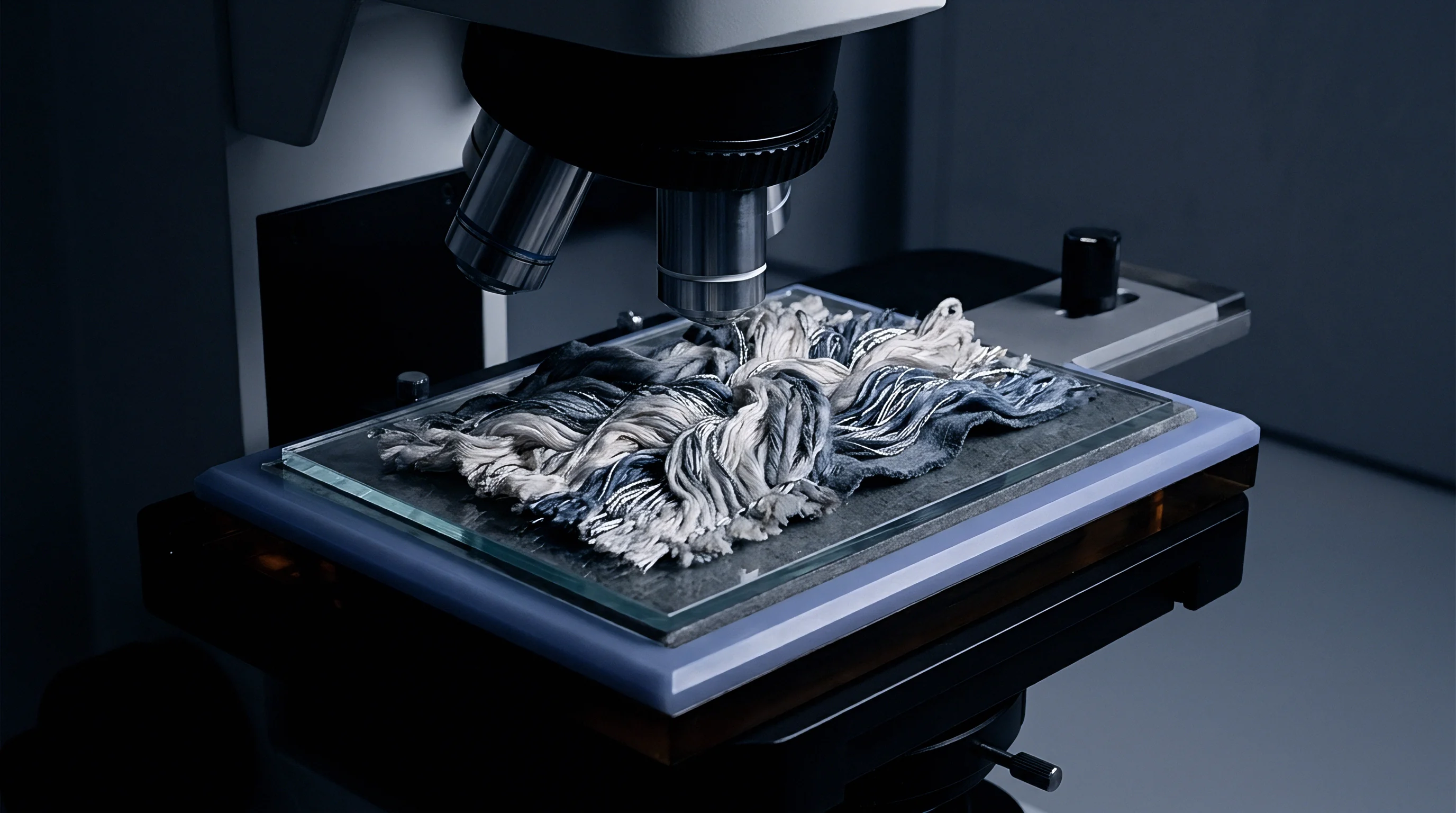
Mechanical blends involving plied, core-spun, or filament-wrapped yarns permit physical disassembly under high-magnification stereomicroscopy. Technicians isolate individual plies or core filaments, allowing independent isotopic assay of each component. Solvent extraction strips sizing agents, spinning oils, softeners, and functional coatings that add non-indigenous carbon and hydrogen to raw fiber samples.
Processing chemicals derived from petrochemical feedstocks introduce depleted δ13C and altered δ2H signals, corrupting the native isotopic identity of the agricultural fiber.
Chemical Extraction and Preparation Mechanics
Standardized solvent extraction procedures clean yarn swatches using sequential washes of petroleum ether, ethanol, and deionized water. Removing hydrophobic wax layers and synthetic finishing agents isolates pure structural cellulose or keratin proteins. Dye removal protocols target reactive, direct, and disperse colorants without altering the underlying covalent matrix of the fiber.
Heavy shade dyed goods contain significant organic carbon loads within azo, phthalocyanine, or anthraquinone dye molecules. Solvents strip surface finishes. Failure to strip colorants alters measured δ13C values by up to 1.2 per mil, corrupting origin verification models.
- Residual Sizing Contamination introduces corn or wheat starch carbon signals that alter cellulose δ13C ratios toward C4 plant baseline signatures.
- Dye Molecule Fractionation shifts light element isotope values when nitrogen-heavy reactive dyes remain bound to cotton hydroxyl groups during elemental analyzer oxidation.
- Keratin Digestion Degradation occurs when harsh alkaline chemical washes hydrolyze wool cystine bonds, selectively leaching light isotopes into wash effluents.
- Cellulose Hemicellulose Co-Extraction alters native oxygen isotope values if aggressive acid purifications remove non-cellulosic polysaccharides unevenly across blend components.

Matrix Effects in Protein and Cellulose Composites
Textile blends containing both animal proteins and plant cellulose demand dual-preparation pathways due to differing chemical sensitivities. Keratin in wool and cashmere dissolves in alkaline solutions that leave cotton cellulose intact, enabling chemical phase separation of intimate animal-vegetable fiber mixtures. Technicians weigh the dry residual cellulose phase to calculate blend proportions before converting each phase to pure gas for mass spectrometry.
Dyes alter elemental carbon ratios. Combining physical mass balances with elemental analyzer gas yields provides a check against declared fiber content percentages.
Synthetic fiber inclusions alter isotopic combustion dynamics within high-temperature elemental analyzers. Polyester (polyethylene terephthalate) burns at higher temperatures than cellulose, requiring optimized oxygen injection timing to achieve complete conversion to carbon dioxide. Incomplete combustion generates carbon monoxide artifacts, causing isotope ratio mass spectrometry (IRMS) detectors to record artificial fractionation signals.
Automated pyrolytic reactors operating at fourteen hundred degrees Celsius ensure full conversion of structural oxygen to carbon monoxide gas, avoiding thermal breakdown variance during mass separation. Suppliers frequently maintain that post-spinning chemical washes fully eliminate foreign organic carbon signals introduced during sizing.

Silt
Bedrock geochemistry governs the uptake of heavy alkaline earth elements into root systems during plant growth cycles. Unlike light elements such as carbon, oxygen, hydrogen, and nitrogen, heavy radiogenic isotopes do not undergo measurable biological fractionation during plant transport. The ratio of Strontium-87 to Strontium-86 (87Sr/86Sr) in plant tissue directly mirrors the bioavailable strontium ratio of the supporting soil substrate.
Weathered soil minerals leach soluble strontium ions into groundwater, where agricultural plants absorb them alongside calcium ions during transpiration.
Geochemical mapping uses heavy isotope ratios to establish unambiguous physical boundaries between fiber production zones. Neodymium isotope ratios, expressed as epsilon Neodymium (εNd), and lead isotope ratios (206Pb/207Pb, 208Pb/206Pb) supplement strontium analysis to form multi-dimensional geochemical matrices. Heavy elements do not fractionate.
Trace mineral concentrations combined with radiogenic isotope ratios identify specific geological provinces, separating ancient cratonic soils from geologically young volcanic formations or alluvial floodplains.
| Analytical Method | Target Isotope System | Sample Mass Requirement | Analytical Precision (1-Sigma) | Primary Instrument Configuration |
|---|---|---|---|---|
| EA-IRMS | δ13C, δ15N | 0.5 to 1.5 mg | ± 0.10 per mil | Elemental Analyzer – Continuous Flow IRMS |
| HT-Pyrolysis-IRMS | δ18O, δ2H | 0.3 to 0.8 mg | ± 0.30 per mil (O), ± 1.5 per mil (H) | High-Temperature Conversion Elemental Analyzer – IRMS |
| MC-ICP-MS | 87Sr/86Sr | 50.0 to 200.0 mg | ± 0.00002 ratio units | Multi-Collector Inductively Coupled Plasma Mass Spectrometer |
| TIMS | 143Nd/144Nd | 100.0 to 500.0 mg | ± 0.00001 ratio units | Thermal Ionization Mass Spectrometer |
| LA-MC-ICP-MS | 206Pb/207Pb | Single Fiber Strand | ± 0.0005 ratio units | Laser Ablation Multi-Collector ICP-MS |

Inductively Coupled Plasma Mass Spectrometry Protocols
High-precision measurement of heavy radiogenic isotopes requires acid digestion of fiber swatches followed by chromatographic matrix separation. Concentrated nitric acid and hydrogen peroxide digest organic fiber matrices inside microwave digestion vessels at two hundred degrees Celsius. Digested liquid solutions pass through cation-exchange chromatography columns packed with strontium-specific crown ether resin.
Isolating pure elemental strontium prevents isobaric interference from Rubidium-87 during mass spectrometry analysis. Trace elements identify exact soil.
Multi-Collector Inductively Coupled Plasma Mass Spectrometry (MC-ICP-MS) delivers the high analytical precision needed to resolve small differences in 87Sr/86Sr ratios across adjacent farming regions. Instrument calibration relies on certified reference materials such as NIST SRM 987 strontium carbonate standards. Measuring 87Sr/86Sr down to the fifth decimal place enables verification desks to distinguish cotton grown in the alluvial soils of the Mississippi Delta from cotton grown in the high plains of Texas or the irrigated basins of Central Asia.
Failure to submit ISO 17025 accredited laboratory test reports for strontium isotope ratios results in immediate detention under customs enforcement directives.

Soil Mineral Leaching and Bioavailability Shifts
Agricultural inputs like groundwater irrigation, mineral fertilizers, and lime applications introduce external strontium sources into farm soils. Deep groundwater wells drilled into underlying aquifers tap ancient mineral signatures that differ from surface rainwater runoff. Long-term application of rock phosphate fertilizers introduces distinct heavy metal signatures, altering the bioavailable strontium pool within topsoil layers.
Testing procedures isolate the bioavailable soil extract using weak ammonium acetate washes rather than total hydrofluoric acid digestion, targeting only the mineral fraction accessible to crop roots during the growing season. The degree to which synthetic fertilizer applications alter natural soil radiogenic isotope ratios in long-term monoculture fields remains unsettled across international testing bodies.

Crate
Customs authorities targeting illegal forced labor products enforce physical container inspections based on statistical risk algorithms at commercial entry points. Customs enforcement actions under statutes like the United States Uyghur Forced Labor Prevention Act (UFLPA) or the European Union Forced Labor Regulation establish a rebuttable presumption of illegality for targeted supply chains. Importers facing supply chain audits must present physical proof tracing every component of a shipment back to certified farm locations.
Static baselines cause audit failures. Isotopic testing of landed cargo provides direct physical evidence that validates or refutes paper transaction certificates.
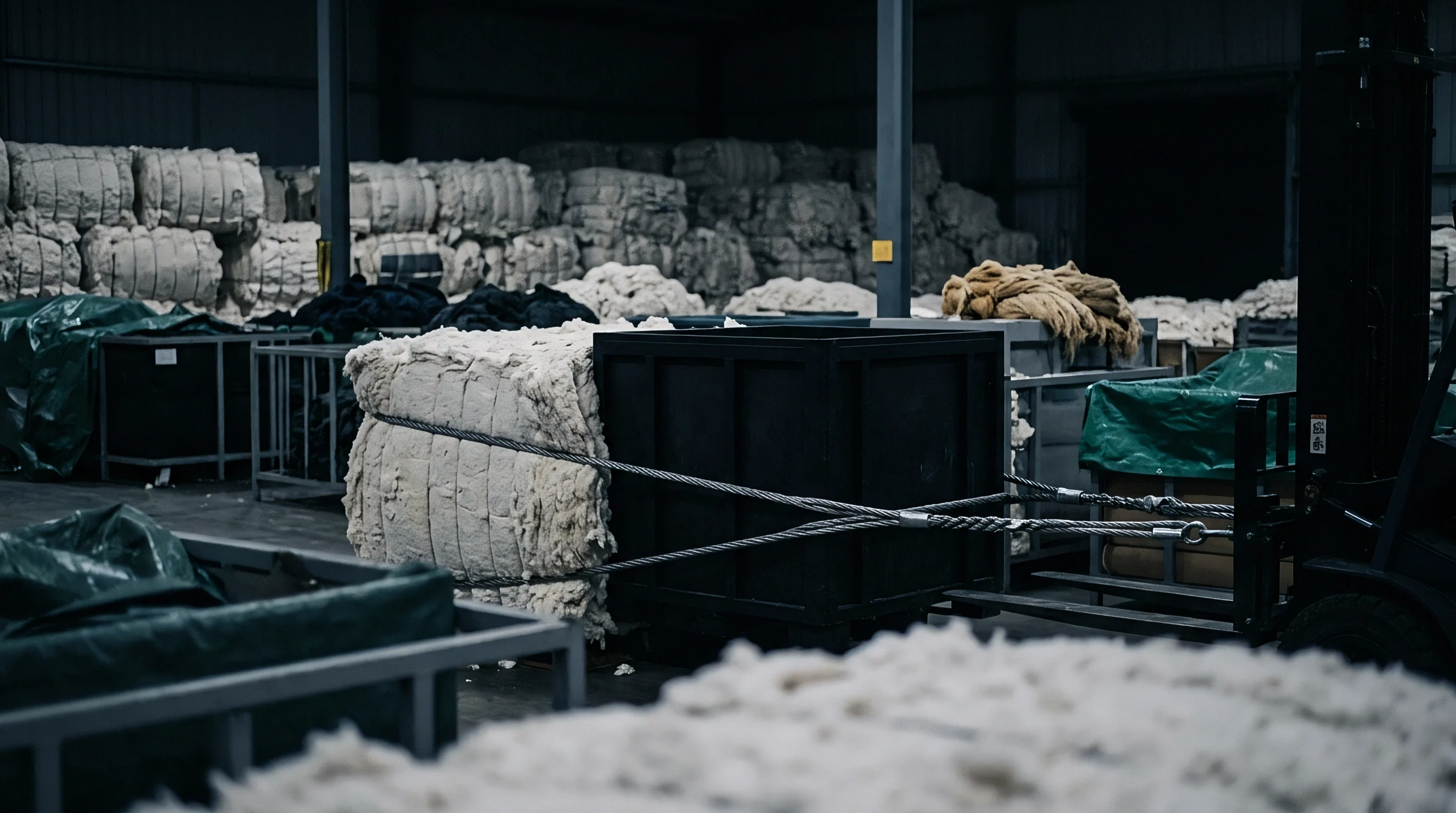
Customs sampling directives dictate strict physical chain-of-custody protocols during border examinations. Importers cannot select swatches for enforcement testing; customs officers pull samples directly from detained shipping containers at port warehouses. Seizing representative swatches across multiple cartons prevents commercial fraud and ensures analytical testing reflects the true spatial distribution of the shipment mass.

Border Sampling Protocols and Legal Chain of Custody
- Customs officers isolate container lots and extract three representative swatches from separate rolls per shipping unit.
- Samples enter sealed tamper-evident security bags under full chain-of-custody log signatures.
- Primary swatches undergo elemental analyzer isotope ratio mass spectrometry at accredited government reference laboratories.
- Isotopic spectrum output compares against national database baselines for high-risk regions.
- Analytical findings generate a compliance report issued directly to the port Director within thirty days.

Enforcement Audits and Proof Burdens
Customs enforcement audits operate under asymmetrical standards of evidence that prioritize physical testing over paper records. Paper document trails consisting of invoices, bills of lading, and scope certificates prove vulnerable to secondary market substitution or fraudulent re-labeling during transshipment. Isotopic verification acts as an independent physical audit of the paper record.
Customs enforcement delays cost money. If isotopic laboratory results reveal signatures consistent with restricted regions, paper compliance files fail to secure container release.
Submitting counter-evidence requires importers to deploy ISO 17025 accredited laboratories capable of executing identical multi-isotope testing protocols. Split-sample testing allows defense laboratories to analyze duplicate swatches drawn during the initial customs seizure. Standard commercial purchase contracts incorporating Customs Compliance Clause 14-B transfer all demurrage, testing, and destruction expenses directly to the seller upon issuance of an enforcement detention notice.


Model
Quantitative deconvolution of multi-origin fiber blends uses probabilistic statistical systems to resolve mixing ratios from observed stable isotope measurements. When a yarn consists of fibers harvested from two or more geographic regions, the bulk isotope value represents the linear mass-weighted average of the constituent signatures. Mathematical algorithms solve linear mixing equations by incorporating isotope variance across candidate origin regions.
Resolving complex multi-fiber and multi-country mixtures requires multi-element isotopic vectors that integrate carbon, oxygen, hydrogen, and radiogenic strontium data into single analytical frameworks.
Bayesian mixing models execute iterative Markov Chain Monte Carlo (MCMC) simulations to estimate the relative contribution of each source region within a blend sample. Models incorporate natural isotopic variation within regional baselines, generating probability density functions for calculated blend ratios rather than single point estimates. End-member baseline variability, analytical measurement uncertainty, and post-harvest mill processing shifts feed directly into the statistical calculations, producing realistic confidence intervals for customs audit evaluations.

What Criteria Determine Isotopic Shift Thresholds?
Establishing baseline boundaries requires statistical confidence thresholds that account for seasonal weather variation across agricultural zones. Boundary limits set at two standard deviations from the regional mean capture ninety-five percent of natural isotopic variation within a single crop year. Drought conditions shift oxygen isotopes toward enriched values, requiring annual baseline updates to prevent false-positive classifications during customs audits.
Isotopic shift thresholds expand when processing mills blend raw cotton from multiple ginning lots within the same farming valley.
| Declared Blend Ratio (Region A / Region B) | Target Geographic Pair | Input Isotope Systems | Model Calculated Mean Ratio | 95% Credible Interval |
|---|---|---|---|---|
| 80% USA / 20% Xinjiang | San Joaquin Valley / Tarim Basin | δ13C, δ18O, δ2H | 78.4% / 21.6% | 73.2% to 83.5% (Region A) |
| 50% Brazil / 50% Pakistan | Cerrado / Punjab Plain | δ13C, δ18O, 87Sr/86Sr | 51.2% / 48.8% | 46.8% to 55.4% (Region A) |
| 70% Greece / 30% Xinjiang | Thessaly / Tarim Basin | δ18O, δ2H, 87Sr/86Sr | 68.9% / 31.1% | 63.5% to 74.1% (Region A) |
| 90% Australia / 10% India | New South Wales / Gujarat | δ13C, δ18O, δ2H, 87Sr/86Sr | 91.5% / 8.5% | 87.1% to 94.8% (Region A) |

Worked Calculation of a Binary Cotton Blend
Evaluating a multi-country yarn lot under customs enforcement requires walking through a dual-isotope linear mass-balance system with stated analytical assumptions. Take a 40-tonne commercial yarn lot declared as a 70/30 blend of Brazilian (Region A) and Xinjiang (Region B) cotton. Laboratory high-temperature pyrolysis-IRMS and MC-ICP-MS testing of the cleaned, de-sized cellulose yarn yields a measured bulk value of +27.8 per mil for δ18O and 0.7185 for 87Sr/86Sr.
Assume baseline values for Region A carry a mean δ18O of +23.9 per mil (standard deviation 0.6) and an 87Sr/86Sr ratio of 0.7280 (standard deviation 0.0020). Assume baseline values for Region B carry a mean δ18O of +33.4 per mil (standard deviation 0.8) and an 87Sr/86Sr ratio of 0.7125 (standard deviation 0.0015). The linear mass balance equations for fraction f_A (Region A) and fraction f_B (Region B) are:
Equation 1: f_A + f_B = 1
Equation 2: Bulk_δ18O = (f_A δ18O_A) + (f_B δ18O_B)
Substituting the mean oxygen isotope baseline values into Equation 2 yields:
27.8 = (f_A 23.9) + ((1 – f_A) 33.4)
27.8 = 23.9 f_A + 33.4 – 33.4 f_A
-5.6 = -9.5 f_A
f_A = 0.589 (58.9 percent Region A)
f_B = 0.411 (41.1 percent Region B)
Now verify the calculated fraction against the independent 87Sr/86Sr linear mass balance equation:
Equation 3: Bulk_Sr = (f_A Sr_A) + (f_B Sr_B)
0.7185 = (f_A 0.7280) + ((1 – f_A) 0.7125)
0.7185 = 0.7280 f_A + 0.7125 – 0.7125 f_A
0.0060 = 0.0155 f_A
f_A = 0.387 (38.7 percent Region A)
f_B = 0.613 (61.3 percent Region B)
The mathematical divergence between the oxygen-derived fraction (58.9% Region A) and the strontium-derived fraction (38.7% Region A) signals a violation of the two-source mixing assumption. Uncertainty grows with added origins. Incorporating a third candidate origin region, such as Pakistani cotton (Region C), or accounting for non-uniform agricultural irrigation shifts resolves the statistical discrepancy within a Bayesian MCMC model.
The multi-isotope system proves the declared 70/30 blend ratio false, demonstrating a higher proportion of non-compliant fiber than stated on the commercial customs declaration.
Uncertainty in end-member isotopic baselines expands the credible interval of calculated blend proportions.
Miscalculating constituent fiber ratios in multi-origin yarns exposes importers to false declaration fines and permanent blacklisting from international supply chains.

Defense
Importers contesting customs detentions present technical compliance files that link physical shipment lots directly to certified origin analytical test data. Rebutting a border detention under forced labor enforcement regulations demands clear physical evidence that overrides legal presumptions of non-compliance. Paper paperwork alone fails during technical customs audits; legal defense files must integrate laboratory test reports, batch-level transaction records, and verified geographic baselines.
Demurrage charges accrue daily.
Assembling a defensible compliance file requires establishing an unbroken link between the tested physical swatches and the specific container bill of lading. Audit dossiers match lot numbers, yarn spinning specifications, and ginnery receipts to isotopic analytical outputs. Lab reports supersede paper claims.
Discrepancies between declared shipping weights and ginnery output capacities trigger immediate rejection by customs enforcement reviewers.

Auditing Retest Mechanics and Counter-Evidence Protocols
Enforcement authorities allow importers specified timeframes to challenge detention orders using independent scientific retests. Technicians execute split-sample protocols at accredited secondary laboratories to verify initial government findings. Preserving legal challenge rights requires strict adherence to standardized retest procedures that prevent sample substitution disputes during administrative appeals.
Split samples preserve legal rights.
- Isotopic Baseline Certificate documents regional stable isotope and radiogenic strontium boundaries for all declared source farms using ISO 17025 accredited laboratory data.
- Chain of Custody Dossier maps physical yarn lot movement from farm ginneries through spinning facilities to final export loading ports with matched bills of lading.
- Split-Sample Retest Audit provides independent dual-laboratory validation of stable isotope values drawn from duplicate container swatches held under seal.
- Mill Processing Ledger records daily fiber consumption, machine allocation schedules, and bale consumption logs proving segregation of compliant raw stocks.

Contractual Risk Allocation in Multi-Tier Sourcing
Cross-border purchase agreements must incorporate explicit scientific compliance clauses to protect downstream brand owners from supply chain enforcement detentions. Standardized purchase orders require spinning mills to maintain isotopic qualification profiles for all incoming fiber bales before blending. Indemnification provisions shift financial liabilities, including testing costs, container demurrage, legal fees, and cargo destruction expenses, back to upstream vendors upon analytical failure.
Demurrage charges accumulate rapidly while goods sit in port storage.
Customs enforcement authorities prioritize laboratory isotope data over paper transaction certificates during detention reviews.
Establishing continuous isotopic sampling at the spinning mill level provides verifiable proof of fiber origin before containers arrive at destination customs ports.