Thermodynamic Plasticizer Solubility Limits in Flexible Polymer Compounds
Thermodynamic solubility limits set the concentration threshold where plasticizer exudation begins, governed by Hansen parameters and storage temperatures.


Phase
Thermodynamic compatibility dictates whether a flexible polymer compound retains its softness or suffers surface breakdown over time. In flexible polyvinyl chloride, polyurethane, and synthetic rubber compounds, plasticizers operate by interposing small ester molecules between resin chains, increasing free volume and suppressing the glass transition temperature. Solvation occurs when the free energy of mixing, expressed as ΔG_m = ΔH_m – TΔS_m, remains negative.
Because the combinatorial enthalpy of mixing high polymers with low-molecular-weight liquids is inherently small, overall solubility depends heavily on the enthalpy of mixing, ΔH_m. When additive loading exceeds the thermodynamic capacity of the matrix, the system shifts into a metastable or unstable state, driving phase separation and subsequent surface exudation.
Lattice Theory and Free Volume Dynamics
Flory-Huggins thermodynamic calculations model the Gibbs free energy of mixing when low-molecular-weight esters disperse within high-polymer matrices. The dimensionless Flory-Huggins interaction parameter, χ, quantifies the interaction energy between resin segments and plasticizer molecules. Values of χ below 0.5 indicate complete miscible dissolution across all concentration ranges at standard room temperature.
The solubility equilibrium dictates compound stability. As χ rises above 0.5, the binodal curve defines a threshold beyond which the polymer compound splits into a polymer-rich phase and a plasticizer-rich phase. Temperature drops reduce solubility limits.
Lowering ambient temperature decreases the entropic driving term TΔS_m, shifting previously stable homogeneous compounds past their Upper Critical Solution Temperature boundary and triggering liquid-liquid phase separation.
Free volume expansion operates alongside lattice energetics. Inserting ester branches between rigid polymer segments creates structural void spaces, lowering the activation energy for segment mobility. Small ester molecules possess higher mobility than the polymer backbone, migrating freely through these free volume pockets.
If the concentration of ester molecules saturates available sorption sites within the polymer matrix, excess additive molecules segregate into micro-domains. Phase separation occurs rapidly. These micro-domains coalesce into continuous capillary channels that route liquid additive outward toward the surface of the article.
Exudation of monomeric phthalate occurs when plasticizer loading exceeds 38 parts per hundred resin at storage temperatures below 15 degrees Celsius.
Spinodal Decomposition in Saturated Matrices
Exceeding the thermodynamic saturation threshold forces the homogeneous polymer-plasticizer solution past its binodal solubility boundary. Between the binodal curve and the inner spinodal curve, phase separation proceeds through nucleation and growth, requiring an activation energy barrier to form discrete droplets of exudate. Once the plasticizer concentration crosses the spinodal boundary where the second derivative of free energy with respect to concentration becomes zero or negative, spinodal decomposition occurs spontaneously without nucleation.
Spontaneous phase separation yields interconnected bicontinuous structures that rapidly transport liquid plasticizer to the polymer compound boundary.
| Polymer Matrix | Plasticizer Type | Solubility Parameter (MPa^0.5) | Interaction Parameter (χ) | Upper Critical Temp (°C) |
|---|---|---|---|---|
| Polyvinyl Chloride (PVC) | Diisononyl Phthalate (DINP) | 19.2 | 0.38 | -12 |
| Polyvinyl Chloride (PVC) | Di-2-ethylhexyl Terephthalate (DOTP) | 18.6 | 0.44 | -4 |
| Thermoplastic Polyurethane (TPU) | Acetyl Tributyl Citrate (ATBC) | 20.1 | 0.49 | 8 |
| Nitrile Rubber (NBR, 33% ACN) | Trioctyl Trimellitate (TOTM) | 18.1 | 0.56 | 22 |
| Ethylene-Vinyl Acetate (EVA) | Polymeric Polyester Adipate | 17.8 | 0.62 | 35 |
Compounding flexible polymers near their thermodynamic equilibrium boundary requires secondary compatibilizers to maintain ester dispersion during cold temperature storage.


Cohesion
Hansen solubility parameters break down intermolecular attractions into three distinct electrostatic forces to evaluate polymer additive compatibility. The dispersion parameter δ_d measures non-polar van der Waals interactions, the polar parameter δ_p quantifies permanent dipole-dipole forces, and the hydrogen bonding parameter δ_h measures electron exchange capabilities. Hansen parameter calculations guide formulation.
The total solubility parameter δ_t equals the square root of the sum of squares of these three components. Polymer-plasticizer compatibility improves as the distance Ra between their three-dimensional Hansen coordinates decreases in cohesive energy density space.
Hansen Solubility Parameter Radii
Dispersive, polar, and hydrogen-bonding energy densities define a three-dimensional thermodynamic sphere for every polymer resin. The interaction radius R_o marks the boundary of the polymer solubility sphere. A plasticizer located inside this sphere exhibits a Relative Energy Difference, calculated as RED = R_a / R_o, of less than 1.0, signifying thermodynamic solubility.
When RED equals zero, cohesive energy densities match perfectly, maximizing plasticizer uptake. When RED exceeds 1.0, the additive sits outside the interaction sphere, inducing physical expulsion over time. Linear polymers exhibit lower retention.
Calculating R_a utilizes a weighted distance formula in cohesive space:
R_a^2 = 4(δ_d1 – δ_d2)^2 + (δ_p1 – δ_p2)^2 + (δ_h1 – δ_h2)^2
The weighting factor of 4 applied to the dispersive axis corrects for the asymmetric shape of polymer solubility domains. Esters possessing strong polar functionality, such as phthalates and citrates, match the high polar parameter δ_p of polyvinyl chloride (δ_p = 7.8 MPa^0.5). Non-polar aliphatic plasticizers exhibit low polar values (δ_p < 3.0 MPa^0.5), resulting in R_a values above 8.0 MPa^0.5 and rapid phase separation when incorporated into polar resins.

Molecular Weight Effects on Energy Difference
Increasing the spatial length of ester chains elevates steric hindrance while suppressing rotational entropy during dissolution. Low-molecular-weight monomeric plasticizers like dibutyl phthalate (312 g/mol) diffuse rapidly due to high molar volume efficiency, yet display higher volatility. High-molecular-weight trimellitates (547 g/mol) and polymeric adipates (2000 to 6000 g/mol) exhibit larger molecular dimensions, slowing spatial diffusion rates across free volume structures.
Although high-molecular-weight additives lower the entropic gain of mixing TΔS_m, physical chain entanglements lock the plasticizer within the resin matrix, raising the effective activation energy required for exudation.
- Surface Bloom Formation occurs when molecular migration deposits crystalline or liquid plasticizer onto the exterior boundary.
- Substrate Adhesive Failure develops when migrating esters collect at the polyurethane interface, destroying interfacial bond strength.
- Flexural Modulus Drift accelerates as volatile lower-weight plasticizers leave the matrix, causing brittle fracture under mechanical strain.
- Co-Extrusion Barrier Migration happens when plasticizers partition into adjacent polymer layers with higher thermodynamic affinity.
Purchase contracts specifying compliance with REACH Annex XVII Entry 51 prohibit total concentration of DEHP, DBP, BBP, and DIBP above 0.1 percent by weight in plasticized materials, shifting batch rejection risks directly to the primary compounder.

Saturation
Precipitation of plasticizer molecules out of a flexible polymer solution represents a thermodynamic state shift governed by chemical potential gradients. As long as internal plasticizer concentration remains below the saturation limit at ambient temperature, chemical potential equilibrium holds between bulk polymer and surface layers. Compounding errors increase border risks.
When external factors alter this internal equilibrium, plasticizer activity increases, creating a driving force that pushes solute molecules out of the solid matrix until a new thermodynamic equilibrium establishes.

Why Does Plasticizer Exudation Occur below Saturation Limits?
Mechanical compressive forces applied during storage roll winding alter the internal chemical potential of the polymer network. Static pressure forces solvent outward. Applying static pressure to a flexible compound compresses the free volume spaces within the polymer matrix, decreasing the effective solubility radius R_o.
This mechanical squeeze increases the internal chemical potential of the dissolved ester above its surface chemical potential. The resulting pressure-induced activity gradient drives plasticizer exudation even when nominal plasticizer loading remains below the uncompressed thermodynamic saturation limit.
Thermal cycling acts as another driver of exudation below nominal saturation. Daily temperature variations cause repeated expansion and contraction of free volume. During high-temperature phases, plasticizer molecules gain kinetic energy and diffuse rapidly toward matrix surfaces.
When temperatures drop, local thermodynamic solubility limits contract faster than plasticizer molecules can diffuse back into the bulk polymer matrix. Supersaturation occurs at the surface boundary layer, precipitating liquid or crystalline additive droplets that cannot re-dissolve during subsequent heating cycles.
Higher mechanical pressure applied during continuous winding accelerates exudation by lowering the energy threshold for phase separation in plasticized films.
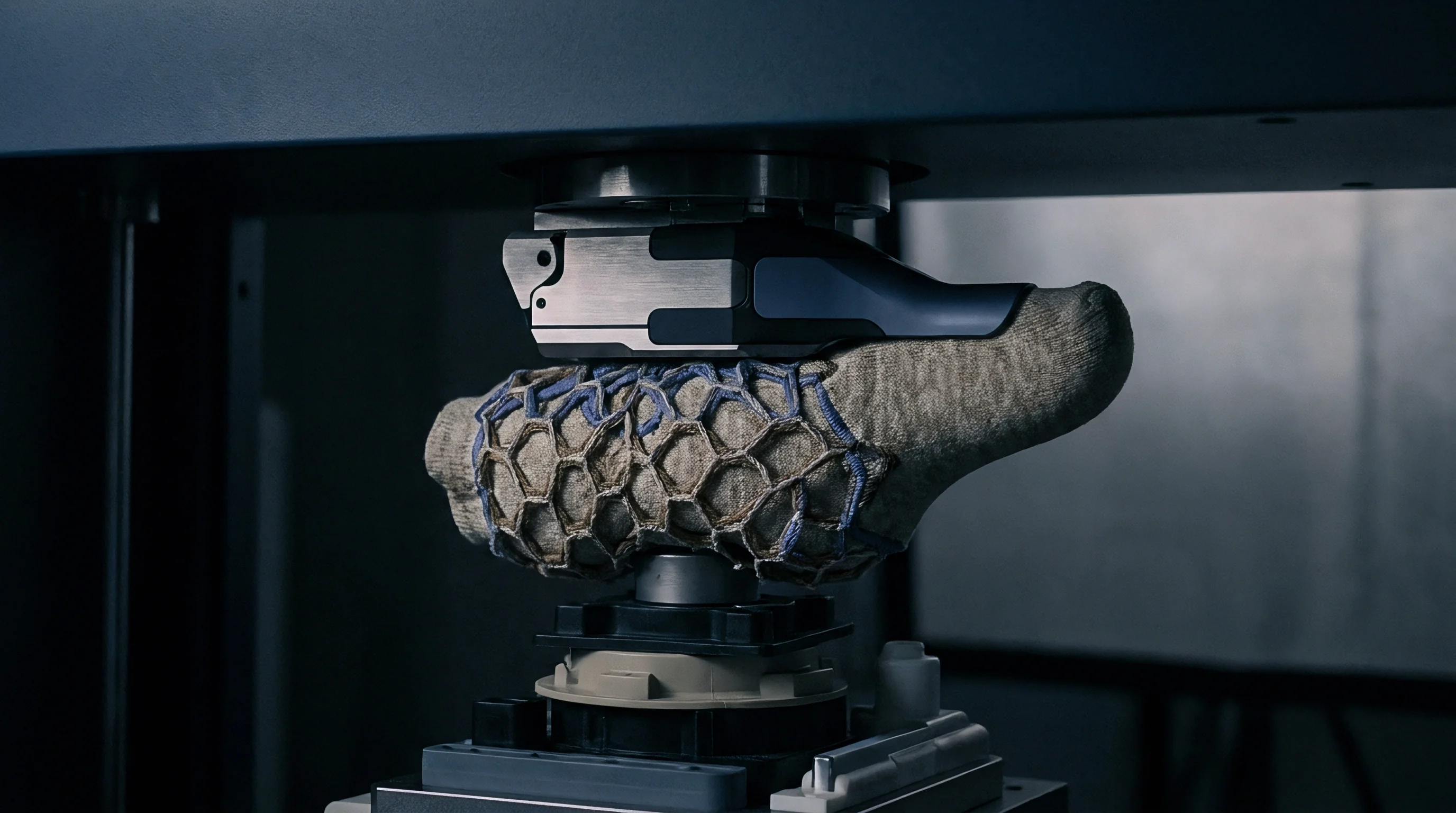
Mechanical Stress Driven Phase Separation
External clamping loads force solvent molecules out of polymer entanglements, accelerating migration toward outer boundaries. Continuous strain induces localized chain alignment, reducing available amorphous free volume while increasing local crystallinity. Crystallites exclude plasticizer molecules completely, forcing them into diminishing amorphous pockets.
The local concentration within these remaining amorphous regions rapidly crosses the spinodal decomposition threshold, causing immediate surface sweating under mechanical stress.
| Plasticizer Nomenclature | CAS Registry Number | Molecular Weight (g/mol) | Solubility Distance Ra | Saturation Limit in PVC (phr) | ISO 177 Mass Loss (%) |
|---|---|---|---|---|---|
| Di-2-ethylhexyl Phthalate (DEHP) | 117-81-7 | 390.56 | 2.8 | 55 | 0.42 |
| Diisononyl Phthalate (DINP) | 28553-12-0 | 418.61 | 3.1 | 52 | 0.28 |
| Di-2-ethylhexyl Terephthalate (DOTP) | 6422-86-2 | 390.56 | 3.4 | 48 | 0.31 |
| Acetyl Tributyl Citrate (ATBC) | 77-90-7 | 402.48 | 4.2 | 40 | 0.85 |
| Trioctyl Trimellitate (TOTM) | 3319-31-1 | 546.78 | 4.8 | 38 | 0.08 |
| Polymeric Polyadipate (Mn 3000) | 25101-03-5 | 3000.00 | 5.6 | 32 | 0.02 |
Formulating a flexible polymer compound beyond its thermodynamic solubility limit produces persistent surface exudation, resulting in rejected ocean shipments, expensive quarantine fees, and immediate contract termination by brand buyers.


Recipe
Engineers balancing flexibility, regulatory compliance, and long-term retention rely on multi-component ester combinations to suppress phase separation. Single-plasticizer systems rarely satisfy all performance criteria. Primary plasticizers deliver efficient glass transition depression, while secondary plasticizers provide thermal stabilization, flame retardancy, or cost reduction.
Epoxy oils provide secondary stabilization. The total plasticizer package must be engineered so that the combined chemical potential of all additives remains below the solubility limit of the host resin across the entire operating temperature window.

Synergistic Solvation with Secondary Esters
Epoxidized soybean oil acts as both a thermal stabilizer and an auxiliary solvation aid within flexible polyvinyl chloride systems. Incorporating epoxidized soybean oil at levels between 3 and 5 parts per hundred resin improves the overall interaction parameter χ of the plasticizer mixture. Epoxidized ester groups form weak hydrogen bonds with acidic hydrogen atoms on adjacent polyvinyl chloride chains, expanding the solubility sphere radius R_o.
This synergistic effect increases the saturation limit of primary terephthalates or citrates by up to 15 percent, suppressing cold-temperature exudation.
High-viscosity secondary additives modify diffusion kinetics without impairing flexibility. Blending monomeric esters with polymeric adipates creates a bimodal plasticizer size distribution. Small monomeric molecules plasticize rigid crystalline boundaries, while larger polymeric chains occupy expansive amorphous channels, physically blocking the migration pathways of smaller monomeric molecules.
Formulation changes alter migration kinetics.

Polymeric Adipate Compatibilization Mechanics
High-molecular-weight polyester plasticizers form extended physical entanglements with matrix chains, suppressing volatile migration. Polyesters synthesized from adipic acid and glycol monomers feature polar ester links along a long hydrocarbon spine. The balanced distribution of polar ester groups maintains cohesive energy matching with polyvinyl chloride, yielding Hansen distance Ra values between 4.5 and 5.8 MPa^0.5.
Although these distance values exceed those of monomeric phthalates, the high molecular weight prevents rapid phase separation by anchoring additives within polymer entanglements.
- Primary Plasticizer Selection anchors the base flexibility by targeting a Hansen relative energy difference value below 1.0.
- Secondary Stabilizer Ratio maintains epoxidized soybean oil content between 3 and 5 parts per hundred resin to prevent ester degradation.
- Polymeric Adipate Blending introduces high-viscosity polyester chains to lower overall migration kinetics under elevated ambient heat.
- Branching Structure Adjustment utilizes branched ester chains to hinder crystallite formation during low-temperature exposure cycles.
Consider a worked formulation calculation for a 10-tonne compounding batch of flexible polyvinyl chloride intended for high-clarity medical tubing. The compounding target specifies 35 parts per hundred resin of diisononyl cyclohexane-1,2-dicarboxylate and 5 parts per hundred resin of epoxidized soybean oil. At 23 degrees Celsius, the calculated Hansen solubility parameter distance Ra between the resin and primary ester measures 3.2 MPa^0.5, yielding a relative energy difference of 0.82.
When storage temperatures drop to -10 degrees Celsius, the interaction parameter χ increases from 0.41 to 0.53, crossing the thermodynamic stability limit of 0.50. Under these thermal conditions, the maximum stable solubility limit drops from 38 parts per hundred resin down to 31 parts per hundred resin. The excess 9 parts per hundred resin of ester undergoes phase separation within 72 hours, producing visible surface bloom and failing client specification limits.
Adjusting the formulation to 28 parts per hundred resin primary ester combined with 10 parts per hundred resin polymeric polyadipate lowers χ to 0.46 at -10 degrees Celsius, suppressing phase separation entirely.
Compliance under OEKO-TEX Standard 100 Annex 4 Class I restricts total banned phthalate concentrations below 0.1 percent by weight while requiring zero exudation under thermal storage.
Material suppliers frequently argue that surface film accumulation represents non-harmful processing aid blooming rather than plasticizer exudation, disclaiming liability for subsequent lamination failures.

Screening
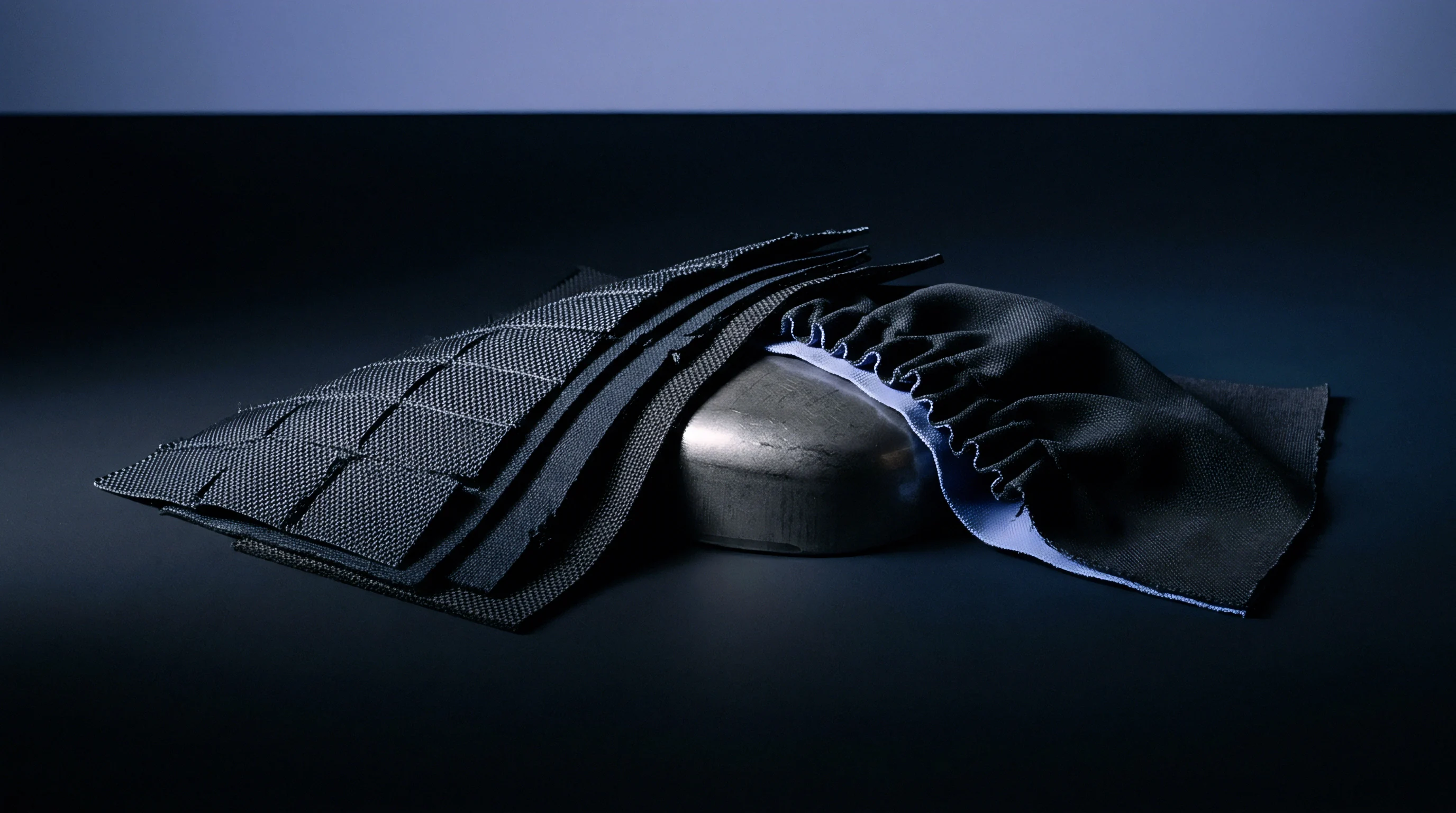
Analytical laboratories deploy gravimetric, spectroscopic, and chromatographic instruments to map plasticizer concentration gradients across polymer swatches. Unbacked testing claims invite detention. Qualification of flexible polymer compounds requires separating volatile weight loss from liquid migration loss.
Standard test methods expose swatches to elevated temperature, liquid extraction media, or absorbent contact sheets under controlled static loads to force equilibrium shifts.

Calorimetric and Gravimetric Boundary Mapping
Differential scanning calorimetry tracks depression of the glass transition temperature across incremented plasticizer loadings. A linear decrease in glass transition temperature indicates true thermodynamic solvation. Once plasticizer loading exceeds the saturation limit, the slope of the glass transition curve flattens completely, indicating that additional additive exists as a separated phase without contributing to matrix flexibility.
Differential scanning calorimetry thermograms also detect endothermic melting peaks corresponding to crystalline plasticizer domain formation within the compound bulk.
Thermogravimetric analysis complements calorimetry by determining thermal volatility loss kinetics. Heating swatches under inert nitrogen flow isolates volatile ester degradation temperatures from matrix resin pyrolysis. Migration testing isolates ester fractions.
Combining thermogravimetric analysis with ISO 177 absorbent solid contact testing allows precise accounting of plasticizer mass distribution between volatile evaporative loss, solid substrate absorption, and un-migrated matrix retention.

Spectroscopic Quantification of Surface Migration
Attenuated total reflectance Fourier-transform infrared spectroscopy measures ester carbonyl absorbance peaks directly at the sample surface. The carbonyl peak at 1720 cm^-1 serves as a quantitative marker for phthalate, adipate, and citrate plasticizers, while the carbon-hydrogen stretching peaks of polyvinyl chloride at 1425 cm^-1 and 615 cm^-1 serve as internal reference standards. Comparing the carbonyl-to-vinyl peak area ratio across aging intervals quantifies migration kinetics long before visible bloom appears to the naked eye.
- Condition test swatches of flexible compound in a climate chamber at 23 degrees Celsius and 50 percent relative humidity for 48 hours.
- Clamp the prepared swatch between solid absorbent sheets under a constant static weight of 5 kilograms according to ISO 177.
- Expose the clamped assembly to elevated temperature at 70 degrees Celsius inside a forced-air oven for 14 days.
- Extract residual surface exudate using HPLC-grade n-hexane and quantify total migrated mass via gas chromatography mass spectrometry.
| Standard Identifier | Test Methodology | Specimen Parameters | Environmental Conditions | Reporting Limit / Sensitivity | Regulatory Application |
|---|---|---|---|---|---|
| ISO 177 / EN ISO 177 | Absorbent solid contact mass loss | 50 mm disc, 2 mm thickness | 70 °C for 14 days under 5 kg static load | 0.01 % mass loss | General flexible polymer characterization |
| ASTM D1203 (Method A) | Activated carbon volatile loss | 50 mm disc, 0.5 mm thickness | 70 °C for 24 hours in sealed container | 0.1 % volatile loss | Volatile plasticizer content evaluation |
| CPSC-CH-C1001-09.4 | Solvent extraction GC-MS | 0.05 g milled compound powder | Tetrahydrofuran dissolution, hexane precipitation | 50 mg/kg (0.005 %) per phthalate | CPSIA Section 108 ban verification |
| EN 14372 | Soxhlet extraction GC-MS | 1.0 g cut compound swatches | Dichloromethane extraction for 6 hours | 100 mg/kg (0.01 %) combined ester limit | EU Child use and care articles compliance |
| EN 1186-5 | Volatiles and aqueous food simulant | 1 dm^2 coated fabric swatch | 40 °C for 10 days in liquid cell simulant | 1.0 mg/dm^2 overall migration limit | EU Regulation 10/2011 food contact release |
Whether short-term accelerated thermal extraction tests accurately predict twenty-year plasticizer migration behavior in buried flexible membrane liners remains an active debate among analytical chemists.


Conformity
Securing regulatory approval for plasticized polymer products demands rigorous verification linking factory batch test reports to finished goods shipments. Audit failure halts container release. Global chemical regulations, including REACH Annex XVII, California Proposition 65, and CPSIA Section 108, establish strict legal concentration caps of 0.1 percent by weight (1000 mg/kg) for restricted orthophthalates.
Because processing aids or recycled resin streams can inadvertently introduce restricted esters, compliance cannot be assumed based on formulation inputs alone; it must be proven through accredited laboratory test evidence on finished export lots.

Batch Verification and Scope Matching
Auditors examine analytical laboratory certificates of analysis to confirm that tested swatches represent the exact polymer lot in transit. Gas chromatography verifies phthalate levels. Scope certificates issued under schemes like OEKO-TEX Standard 100 or GOTS map chemical safety at the facility or material group level, but do not replace batch-level testing when transaction certificates are audited.
A scope certificate carrying an outdated testing date or covering a different plasticizer class than the physical compound invoice creates immediate non-compliance exposure during market surveillance audits.
Laboratory test reports must display an accredited scope of testing aligned with ISO/IEC 17025 standards. Test methods must be explicitly cited alongside detection limits. For restricted phthalates, gas chromatography-mass spectrometry (GC-MS) protocols operating with selective ion monitoring mode provide the necessary sensitivity to verify compliance down to 50 mg/kg reporting limits.
Reports relying solely on screening methods like X-ray fluorescence (XRF) lack legal standing for chemical quantification because XRF detects elemental chlorine or lead rather than specific organic ester molecular structures.

Traceability File Assembly for Border Audits
Customs authorities hold shipments when documentation fails to connect raw resin transaction certificates with finished roll manifests. Verification dossier assembly requires linking raw compounder batch numbers, intermediate extrusion roll IDs, finished goods part numbers, and laboratory test report numbers into a single chain of custody. Customs enforcement remains strictly enforced.
When border enforcement agencies select containers for compliance verification, missing chemical declarations trigger immediate detention. Importers must present a complete compliance dossier within specified administrative windows, typically 14 to 30 days. The dossier must contain the bill of materials, lot-specific test reports from ISO/IEC 17025 accredited laboratories, raw material safety data sheets, and a formal signed declaration of conformity referencing relevant standards.
A scope certificate issued for a raw plasticizer compound fails to protect the finished coated fabric during border inspection if the formulation ratio was altered during extrusion.
Importers of record protect commercial exposure by embedding mandatory retest provisions, lot-specific chemical declarations, and clear exudation thresholds into every purchase order prior to contract sign-off.