Volatile Organic Compound Screening in Technical Textile Coatings
Thermal desorption gas chromatography screens residual coating solvents to ensure batch compliance with international restricted substance limits.

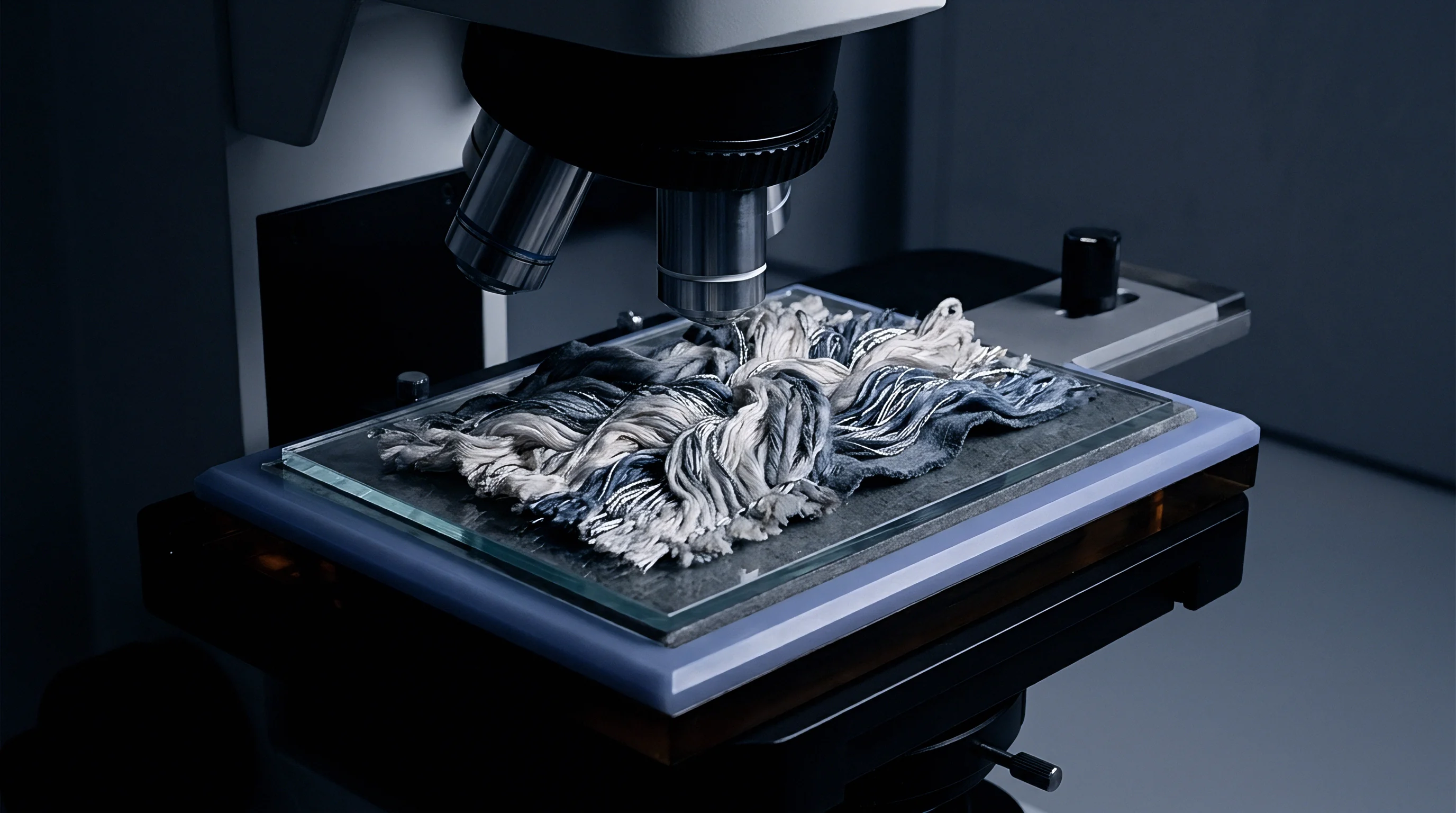
Matrix
A gas chromatograph peak appearing at retention time 14.2 minutes reveals dimethylformamide lingering in a polyurethane coating roll despite a clean solvent-free mill declaration. Coating formulations applied to industrial textiles rely on organic solvents, liquid crosslinking agents, and reactive monomers to deposit functional polymers onto woven or knitted substrates. Polyurethane, polyvinyl chloride, silicone, and polyacrylate systems each carry distinct volatile signatures dictated by their carrier liquids and curing reactions.
When solvent-borne polyurethane systems run through industrial stenter frames, carriers such as dimethylformamide, N-methyl-2-pyrrolidone, dimethylacetamide, and toluene evaporate during polymer film formation. Incomplete evaporation during rapid drying cycles leaves solvent molecules trapped within the elastomeric polymer structure.
Polyvinyl chloride coatings introduce separate volatile profiles dominated by low-molecular-weight plasticizer fraction outgassing, residual vinyl chloride monomers, and thermal degradation products from heat stabilizers. Phthalate plasticizers like diisononyl phthalate and aliphatic esters volatilize under thermal exposure, yielding visible fogging deposits on adjacent surfaces. Aqueous acrylic coatings eliminate heavy organic solvent carriers but generate emissions through residual butyl acrylate monomers, coalescing solvents like glycol ethers, and formaldehyde-releasing crosslinking agents.
Silicone elastomer coatings rely on platinum or rhodium catalyst complexes, yet unreacted cyclic siloxanes such as octamethylcyclotetrasiloxane volatilize continuously from cured coatings. Solvent residues linger.
The drying tunnel process creates physical conditions that promote chemical retention inside the functional film. As wet coating compound enters the first oven zone at ninety to one hundred twenty degrees Celsius, rapid surface evaporation forms a dense, semi-permeable polymer surface skin. This skinning phenomenon restricts the diffusion rate of remaining solvent molecules situated deeper inside the coating layer.
Subsequent high-temperature curing zones exceeding one hundred sixty degrees Celsius heat the trapped solvent above its boiling point, creating internal vapor pressure that either ruptures the membrane surface or locks volatile species within closed elastomeric cells. Coating weight plays a direct role. Heavy industrial coatings exceeding three hundred grams per square meter exhibit significantly higher solvent retention rates than light performance coatings below fifty grams per square meter under identical oven line speeds.
High drying tunnel temperatures form sealed surface skins that retain carrier solvents within dense elastomeric coating layers.
Chemical reactions during thermal curing yield secondary volatile compounds absent from raw liquid compounding recipes. Isocyanate crosslinkers like diphenylmethane diisocyanate undergo partial hydrolytic thermal breakdown when exposed to ambient moisture inside curing ovens, producing volatile aromatic amine fragments. Tertiary amine catalysts used to accelerate polyurethane gelation off-gas continuously from finished goods over extended storage periods.
Tightly wound master rolls store residual coating solvents until fabric unrolling during factory processing releases volatile vapors.
The mechanisms through which technical textile coatings release organic vapors fall into four primary structural categories:
- Solvent Skinning Entrapment Rapid flash-off in initial oven zones forms an impermeable outer polymer skin that traps high-boiling carrier liquids deep within the coating mass.
- Thermal Depolymerization Residuals Excessive curing temperatures break down polyisocyanate crosslinkers into volatile organic amine fragments and monomeric residues.
- Plasticizer Migratory Volatilization Low-molecular-weight phthalate and aliphatic esters migrate continuously to the surface interface under thermal stress, releasing fogging compounds.
- Catalyst Thermal Decomposition Organotin and amine catalysts used in silicone or polyurethane vulcanization off-gas tertiary amines and siloxane rings during storage.
Coating chemical vendors frequently explain away residual toluene on technical nylon by asserting that drying ovens operate at maximum exhaust blower capacity during the coating run.
Trap
Analytical extraction techniques for volatile organic compound screening depend on precise temperature control and dynamic gas sampling. Direct thermal desorption combined with gas chromatography and mass spectrometry provides the primary instrument configuration for isolating volatile organic fractions from coated fabrics. Sorbent tubes containing Tenax TA or carboxen media capture organic compounds as thermal desorption ovens heat textile specimens to target temperatures.
Direct thermal extraction methods heated between one hundred and one hundred twenty degrees Celsius desorb volatile compounds with boiling points up to two hundred sixty degrees Celsius. Higher thermal desorption parameters reaching two hundred eighty degrees Celsius isolate semi-volatile organic compounds and fogging agents like linear alkanes and plasticizers.
Micro-chamber testing vessels provide standardized emission sampling conditions for technical fabrics operating in enclosed environments. Test specimens sit inside stainless steel micro-chambers swept by high-purity nitrogen or synthetic air at regulated flow rates between fifty and two hundred milliliters per minute. Micro-chamber testing operates according to ISO 16000-9 and EN 16516 standards, collecting outgassed volatiles onto sorbent tubes over specified exposure intervals ranging from twenty minutes to twenty-four hours.
Temperature controls volatile release.
Gas chromatography isolates individual chemicals. Cryptographic mass spectrometry spectrum matching against NIST reference libraries quantifies individual volatile species down to sub-ppm detection thresholds. Static headspace gas chromatography heating sealed vials to ninety degrees Celsius for forty-five minutes offers a rapid screening alternative, though it fails to fully extract high-boiling semi-volatiles embedded inside dense polyvinyl chloride matrix layers.
Thermal extraction demands precise calibration.
- Cut a ten-square-centimeter disk specimen from the central section of the coated textile roll avoiding edge regions.
- Place the cut sample specimen into a clean stainless steel thermal desorption tube or micro-chamber vessel.
- Purge the sampling vessel with high-purity helium gas at sixty milliliters per minute to remove ambient atmospheric nitrogen.
- Thermalize the tube at one hundred twenty degrees Celsius for thirty minutes while trapping eluting analytes on a Tenax TA tube.
- Transfer the sorbent tube to the gas chromatograph inlet for cryofocusing and mass spectrometer detection.
Comparing analytical screening instruments establishes clear operational trade-offs between precision, speed, and target molecular weight ranges:
| Method Standard | Target Range | Thermal Extraction Condition | Sample Size | Limit of Detection |
|---|---|---|---|---|
| VDA 278 VOC | C6 to C16 Volatiles | 90 °C for 30 minutes | 10 to 30 mg mass | 1.0 μg/g |
| VDA 278 FOG | C16 to C32 Semi-Volatiles | 120 °C for 60 minutes | 10 to 30 mg mass | 1.0 μg/g |
| ISO 16000-6 / EN 16516 | C6 to C16 Chamber VOC | 23 °C to 60 °C chamber run | 100 cm² fabric area | 1.0 μg/m³ |
| Headspace GC-MS | Light volatile organics | 90 °C for 45 minutes static | 1.0 g mass | 0.5 mg/kg |
| Methods rely on Tenax TA sorbent trapping followed by thermal desorption cryofocusing gas chromatography mass spectrometry. | ||||
Sorbent tube loading rates must remain below breakthrough capacity to avoid losing light organic fractions into the gas chromatograph exhaust.

Threshold
Regulatory frameworks impose strict chemical concentration ceilings on coated textiles intended for automotive interiors, protective clothing, and indoor furnishings. Registration, Evaluation, Authorisation and Restriction of Chemicals regulations under REACH Annex XVII mandate maximum concentration limits for toxic processing solvents across European supply chains. N-methyl-2-pyrrolidone and dimethylformamide carry a restriction ceiling of three thousand milligrams per kilogram individually in coated textile articles.
Dimethylacetamide faces identical regulatory boundaries. California Proposition 65 enforces strict exposure warnings for volatile solvent off-gassing, establishing daily maximum allowable dose levels for toluene and benzene released from coated fabrics.
Exceeding the three thousand milligram per kilogram restriction for N-methyl-2-pyrrolidone under REACH Annex XVII triggers mandatory customs detention across European ports.
Voluntary certification standards apply narrower concentration boundaries than baseline legal regulations. OEKO-TEX STANDARD 100 Class I specifications for baby products prohibit extractable dimethylformamide concentrations above five hundred milligrams per kilogram while capping total organic emissions under micro-chamber testing. OEKO-TEX Class IV requirements for interior decorative fabrics permit higher residual solvent thresholds while enforcing limits on total volatile organic compounds.
Automotive original equipment manufacturer specifications mandate compliance with VDA 278 test criteria, capping total volatile organic emissions at one hundred micrograms per gram and condensable fogging emissions at two hundred fifty micrograms per gram.
Bound plasticizers migration causes fogging. German AgBB criteria for indoor air evaluation establish health-related evaluation values for individual volatile organic substances released from coated wall coverings and acoustic textiles over twenty-eight-day chamber trials.
| Chemical Compound | REACH Annex XVII Limit | OEKO-TEX Class I Limit | VDA 278 OEM Target | Primary Instrument |
|---|---|---|---|---|
| Dimethylformamide (DMF) | 3000 mg/kg | 500 mg/kg | 50 μg/g VOC equivalent | TD-GC-MS / ISO 16516 |
| N-Methyl-2-pyrrolidone (NMP) | 3000 mg/kg | 500 mg/kg | 50 μg/g VOC equivalent | TD-GC-MS / Static HS |
| Toluene | 1000 mg/kg restriction | 100 mg/kg | 10 μg/g VOC equivalent | Headspace GC-MS |
| Cyclic Siloxanes (D4/D5/D6) | 1000 mg/kg wash-off | 1000 mg/kg total sum | 100 μg/g FOG equivalent | Direct Thermal Extraction |
Analytical laboratories continue to debate whether total volatile emissions measured at room temperature correlate predictably with long-term low-level exposure inside sealed high-temperature automotive cabins.

Shed
Determining volatile emission rates from technical textiles requires area-specific emission rate calculations derived from micro-chamber mass balance equations. Area-specific emission rate, designated as SER-a and expressed in micrograms per square meter per hour, measures volatile chemical mass off-gassing from a unit area of fabric per unit time. Calculate SER-a using the formula:
SER-a = (C-chamber N V) / A
In this equation, C-chamber represents analyte concentration inside the micro-chamber in micrograms per cubic meter, N represents the hourly air exchange rate, V represents total chamber volume in cubic meters, and A represents exposed textile sample surface area in square meters. Chamber airflow dictates emission concentration. Sorbent tubes capture fugitive vapors.
Consider a worked calculation for a polyurethane coated architectural fabric lot weighing five hundred grams per square meter. Take a test specimen measuring zero point zero one square meters placed inside a zero point zero0 three cubic meter micro-chamber vessel operating at an air exchange rate of zero point five exchanges per hour at twenty-three degrees Celsius. Gas chromatography quantification reveals a stable dimethylformamide chamber concentration of one hundred twenty micrograms per cubic meter after twenty-four hours of testing.
Substituting these operational parameters into the emission model yields:
SER-a = (120 μg/m³ 0.5 h⁻¹ 0.003 m³) / 0.01 m² = 18 μg/(m²·h)
To evaluate decay kinetics across extended installation periods, measure the specimen at twenty-four hours, seventy-two hours, and six hundred seventy-two hours equivalent to twenty-eight days. Assume the initial twenty-four-hour reading yields an SER-a of eighteen micrograms per square meter per hour. High initial diffusion rates decay exponentially as surface-adjacent solvent pools deplete.
A twenty-four hour micro-chamber test at sixty degrees Celsius isolates residual solvent concentrations down to one microgram per cubic meter of air.
The table below models the area-specific emission decay rate and cumulative solvent loss for the sample polyurethane coated lot over a twenty-eight-day chamber trial:
| Timepoint (Hours) | Chamber Concentration (μg/m³) | Calculated SER-a (μg/m²·h) | Cumulative Loss (mg/m²) | Compliance Status |
|---|---|---|---|---|
| 24 Hours | 120.0 | 18.00 | 0.432 | Exceeds AgBB 3-Day Target |
| 72 Hours | 45.0 | 6.75 | 0.972 | Approaching Interim Threshold |
| 168 Hours | 12.0 | 1.80 | 1.325 | Complies Interior Standard |
| 672 Hours | 1.5 | 0.225 | 1.618 | Passes Final AgBB Benchmark |
Underestimating volatile emission decay rates in technical structural membranes results in immediate site rejection, air quality remediation fines, and contract default liability.

Dispute
False positive findings during volatile organic compound screening create major commercial friction between textile converters and third-party testing laboratories. Gas chromatography mass spectrometry spectral overlap between silicone coating degradation products and hydrocarbon solvents represents a frequent failure mode. Thermal breakdown of dimethyl siloxane polymer chains during high-temperature thermal desorption produces cyclic siloxane peaks like hexamethylcyclotrisiloxane.
These siloxane peaks elute at retention times matching aliphatic hydrocarbons, leading automated library search algorithms to report elevated solvent contamination incorrectly. Siloxane peaks mimic coating additives. Laboratory blanks prevent false positives.
Sample age and storage atmosphere alter screening results dramatically between mill dispatch and port arrival. Technical fabrics packaged in polyethylene film off-gas residual volatile solvents into the enclosed headspace within the protective film during transit. When testing laboratories open roll core centers, localized solvent accumulation generates peak spikes unrepresentative of average roll concentrations.
Conversely, swatches exposed to ambient ambient laboratory air for forty-eight hours prior to extraction lose light volatile fractions, yielding artificially compliant test reports that fail subsequent brand audits.
Improper storage traps residual solvents. Dual-testing arbitration procedures resolve discrepancies through systematic verification steps:
- Chain Of Custody Thermal Logs Verify that swatch containers remained sealed in aluminum laminate bags at ambient temperatures below twenty-five degrees Celsius prior to extraction.
- Background Laboratory Blanks Inspect GC-MS blank runs for ambient laboratory siloxanes and plasticizers that distort sample emission peaks.
- Quantification Standard Recovery Check surrogate spike recovery percentages within ninety to one hundred ten percent tolerances across all target compound classes.
- Matrix Thermal Stability Range Confirm that desorption oven temperatures remained below the thermal degradation threshold of the base coating elastomer.
Solvent purity determines chemical safety. Incorporating ISO 17025 accredited dual-sampling arbitration clauses into supply contracts obligates mills to cover retesting expense whenever third-party validation reveals non-compliant solvent residues.

Contract
Commercial purchase specifications must define batch-level chemical evidence requirements rather than relying on static facility certificates. Standard OEKO-TEX scope certificates or ZDHC Level 3 declarations prove factory processing capability, but they do not prove that a specific shipment roll cleared residual solvent thresholds. Transaction certificates linked directly to purchase order numbers and mill roll serial numbers confirm that chemical testing occurred on the actual production lot entering the shipping container.
Third party testing confirms compliance. Customs holds non-compliant shipments. Batch evidence protects supply chains.
Verification clauses in international procurement agreements specify sampling frequency, accredited test methods, and financial liability for non-compliant goods. Buyers mandate testing on every five thousand meters of coated production run, specifying VDA 278 or EN 16516 micro-chamber extraction depending on end-use application. When customs authorities detain containers for REACH Annex XVII solvent non-compliance, indemnification terms dictate the immediate release of buyer purchase order obligations and transfer customs demurrage fees directly to the mill.
Importers securing compliance documentation prior to container release maintain complete legal protection against regulatory customs seizures and costly supply chain delays.