Who Pays the Retest When a Bulk Batch Fails
When a bulk batch fails primary testing, the mill pays for accredited retests if counter-sample analysis confirms non-compliance under contract terms.

Liability
Commercial contracts in international textile procurement assign financial responsibility for compliance testing through explicit allocation clauses or default legal rules governing seller warranties. When primary testing of a bulk woven or knitted shipment reveals non-compliance with statutory standards such as REACH Annex XVII, California Proposition 65, or brand-specific Restricted Substance Lists (RSL), the immediate commercial question turns on who absorbs the cost of secondary retesting. In standard master purchasing agreements, initial verification sits with the buyer as part of incoming quality control or with the seller as a condition of delivering certified goods.
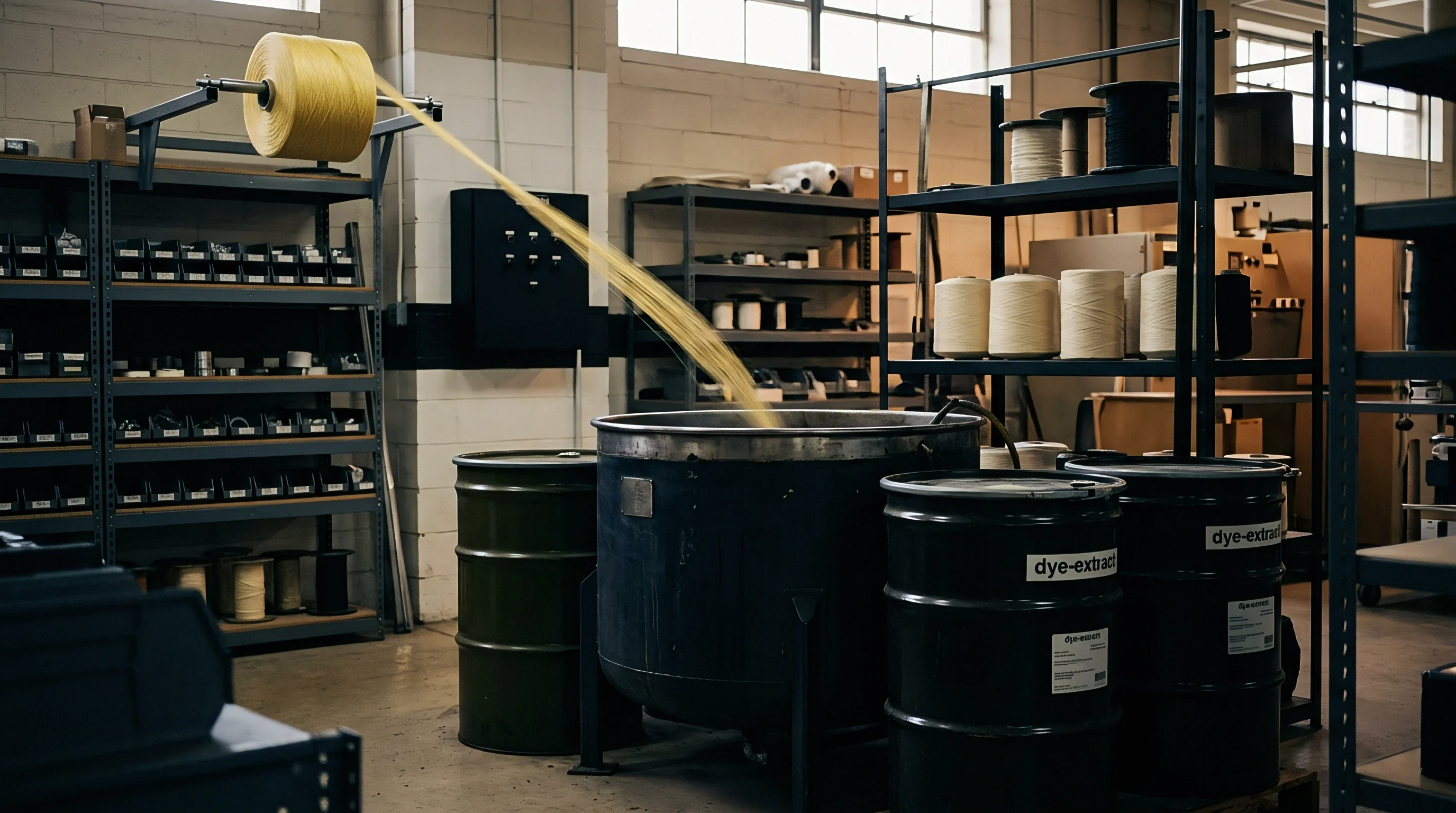
That obligation shifts entirely to the supplier the moment an accredited third-party laboratory issues a formal failure report for the batch. The shift covers both the invoice price of the follow-up analytical run and collateral expenses like sample extraction, secure courier transport, and port storage incurred while the batch awaits re-analysis.
Where purchasing documentation lacks explicit retest language, international sales law relies on the principle of non-conforming delivery. Under United Nations Convention on Contracts for the International Sale of Goods (CISG) Article 35, a seller must deliver goods of the quantity, quality, and description required by contract. A bulk batch exceeding restricted substance thresholds ~ such as 20 milligrams per kilogram for carcinogenic aromatic amines derived from azo colorants under EN 14362-1 ~ constitutes a fundamental breach.
Determining whether a failure reflects systemic lot contamination or an isolated laboratory testing artifact falls under consequential damages, allowing the buyer to recover retesting expenditures that flow directly from the delivery of non-compliant material.

Allocation Models in Master Buying Agreements
Sourcing practices construct purchase order terms around three distinct financial allocation models, each dictating how testing bills are routed between converter, brand, and mill during a chemical or physical compliance dispute.
Under the seller-absorbed baseline model, the mill warrants that every production lot satisfies the defined RSL before leaving the dyehouse, providing primary certificates of analysis within the shipping dossier. If the buyer’s destination verification testing at an ISO 17025 accredited laboratory uncovers a failure, the mill automatically assumes financial responsibility for all retests, secondary sampling, and independent arbitration testing. The model rests on absolute seller liability: the supplier guarantees chemical purity and carries every fee required to resolve ambiguities in the testing record.
Under the shared-tier model, financial responsibility depends on how far the initial result strays from the target limit. If the initial test report shows a result within a recognized tolerance window or analytical uncertainty band, typically plus or minus fifteen percent of the regulatory threshold, the buyer pays for the secondary retest to confirm whether the batch passes or fails. If that retest confirms concentration exceeding the statutory maximum, the supplier reimburses the buyer for both primary verification and secondary retest fees.
Conversely, if the retest demonstrates that the primary result was a false positive, the buyer absorbs both laboratory charges and accepts the batch into production.
Clause 14.2 of the international standard buying agreement transfers all secondary laboratory fees to the weaver once primary non-compliance is verified by an ISO 17025 accredited facility.
Under the buyer-risk model, common in low-margin commodity gray goods transactions, the mill agrees only to replace physical yardage that fails agreed specifications. The buyer carries all laboratory testing expenses, including preliminary screening, secondary confirmation, and counter-sample retesting. Mills using this baseline explicitly disclaim liability for third-party laboratory costs, container detention fees, and garment line shutdown losses.
Buyers operating under this framework must calculate testing overhead as a fixed component of their landed material margins.

Failure Triggers and Retest Obligations
Specific chemical and physical test parameters trigger different financial outcomes when a bulk batch undergoes re-examination. The table below details common compliance failure scenarios, associated analytical test methods, primary test costs, and resulting cost allocations under standard commercial terms.
| Parameter | Test Method | Primary Cost (EUR) | Retest Bearer | Collateral Cost Assignment | Threshold Standard |
|---|---|---|---|---|---|
| Azo Dyes (Arylamines) | EN ISO 14362-1 | 180 – 240 | Mill / Dyehouse | Demurrage and Freight | 20 mg/kg (REACH) |
| Free Formaldehyde | EN ISO 14184-1 | 60 – 90 | Mill / Dyehouse | Warehouse Storage | 16 mg/kg (Class I) |
| Extractable Heavy Metals | EN ISO 16711-2 | 120 – 160 | Shared / Buyer | Local Courier Fees | OEKO-TEX Class II Limits |
| Alkylphenol Ethoxylates | EN ISO 18254-1 | 150 – 210 | Mill / Dyehouse | Full Container Storage | 100 mg/kg Total Limit |
| Phthalates Content | EN ISO 14389 | 130 – 170 | Mill / Dyehouse | Customs Bond Fees | 0.1% Mass Fraction |
| Dimensional Stability | EN ISO 6330 / 5077 | 45 – 75 | Mill / Dyehouse | Cutting Room Downtime | +/- 3.0 Percent Max |
Financial liability depends heavily on the contractual standing of the testing facility. Primary reports from an unaccredited in-house mill laboratory hold no evidentiary weight during commercial disputes. When a buyer submits a batch sample to an accredited commercial facility holding ISO 17025 scope for specific textile standards, that result creates a presumption of non-compliance.
A mill cannot avoid retest payment obligations simply by presenting an opposing internal test sheet. To overturn the accredited laboratory result, the supplier must fund an independent retest conducted under a joint sampling protocol at a second accredited facility agreed upon by both parties.
Contractual agreements must account for specific non-compliance scenarios that arise during bulk batch processing:
- Systemic Dyestuff Contamination where unrefined raw colorant lots introduce heavy metal impurities across multiple production runs, placing all secondary retest costs on the mill.
- Subcontracted Wet Finishing Failures resulting from unauthorized softeners containing banned alkylphenol ethoxylates, where the primary mill remains fully liable to the buyer regardless of subcontractor fault.
- Analytical Laboratory Anomalies caused by matrix interferences or reagent contamination during primary testing, where joint counter-sample analysis clears the batch and assigns secondary costs to the buyer.
- Sampling Protocol Violations where swatches cut from exposed roll ends absorb ambient environmental contaminants during transport, triggering a mandatory retest paid by the party that performed the initial improper sampling.
When a bulk lot fails primary testing, written notice must reach the supplier within five business days. The notification contains the accredited test report, specific lot numbers involved, roll identification tags, and a formal demand for instructions regarding split-sample retesting. Missing this notification window can waive the buyer’s right to claim reimbursement for secondary retest fees, as the supplier loses the opportunity to witness counter-sample extraction or challenge analytical procedures before fabric enters production.
Under Clause 18.3 of standard global textile purchasing conditions, if a secondary retest confirms primary non-compliance, the seller reimburses all retest charges within fifteen business days of invoice presentation.
Scale
Batch volume and sampling density determine the financial impact of secondary compliance testing. Testing a single five-hundred-meter sample roll presents limited financial exposure, but verifying a fifty-thousand-meter bulk order involving multiple dye lots creates complex cost allocation questions. When an initial composite sample representing ten distinct rolls fails an RSL screen, the entire shipment faces rejection.
In this situation, retesting the whole batch as one unit is rarely definitive. Instead, testing individual rolls becomes necessary to separate compliant lots from contaminated ones, driving total laboratory costs up exponentially.
Analytical chemistry standards dictate strict limits of detection and quantification. Equipment such as Gas Chromatography-Mass Spectrometry (GC-MS) or Inductively Coupled Plasma Mass Spectrometry (ICP-MS) detects trace contaminants down to parts per million or parts per billion. At these sensitive levels, sampling errors during batch re-examination easily skew results.
Oil on a mill-floor cutting table, uncleaned handling equipment, or improper plastic swatch packaging can introduce phthalates or organotin compounds into a perfectly clean fabric sample. If retesting fails to account for sampling table contamination, the buyer risks rejecting compliant fabric while demanding retest reimbursements that the mill can successfully contest in arbitration.

Sampling Error and Compositing Risk
Compositing involves combining swatches from multiple fabric rolls into a single laboratory sample to reduce routine screening costs. While cost-effective for initial screening, compositing introduces dilution effects that complicate retest liability. If one roll in a ten-roll composite contains 300 mg/kg of a banned phthalate while nine rolls contain zero, the composite sample yields a tested result of 30 mg/kg.
If the regulatory action limit is 100 mg/kg, the composite test passes, allowing contaminated material to enter production. Conversely, if the regulatory threshold sits at 10 mg/kg, the composite fails, exposing all ten rolls to retest protocols and potential rejection.
Resolving composite failure costs requires de-compositing the batch, running separate analytical tests on each roll from the original composite to isolate contamination.
- The buyer issues a formal halt-work notice on the affected shipment lot upon receipt of the initial composite failure report from the accredited testing facility.
- The mill and buyer jointly review roll-packing lists to verify that swatches originate from distinct dye vats and production shifts.
- An independent sampler extracts individual swatches from every roll represented in the failed composite, following ISO 5089 guidelines for fabric sample preparation.
- The accredited laboratory runs individual chemical analyses on each swatch to identify specific non-compliant rolls while clearing compliant inventory for production release.
- The mill absorbs individual testing fees for all non-compliant rolls, while costs for compliant rolls fall to the buyer or mill based on pre-negotiated contract provisions.
De-compositing shows how quickly laboratory fees multiply in batch disputes. The table below traces cost escalation from initial screening through individual roll testing for a 20,000-meter batch divided into four production dye lots.
| Testing Stage | Sample Type | Number of Tests | Unit Cost (EUR) | Total Cost (EUR) | Cost Allocation |
|---|---|---|---|---|---|
| Primary Screen | 4-Lot Composite | 1 | 220 | 220 | Buyer QC Budget |
| De-composite Stage 1 | Individual Dye Lots | 4 | 220 | 880 | Mill (if failure holds) |
| De-composite Stage 2 | Individual Rolls (Lot C) | 20 | 180 | 3,600 | Mill (for failed rolls) |
| Confirmation Retest | Split Counter-Samples | 5 | 250 | 1,250 | Losing Party |
| Total Retest Dossier | Full Batch Isolation | 29 | Var. | 5,950 | Reimbursed on Breach |
When batch volume increases, financial exposure shifts from laboratory invoices to collateral inventory costs. A held container sitting in a port yard incurs demurrage charges ranging from 150 to 450 EUR per day. If a dispute over retest protocols delays container release for thirty days, demurrage charges far exceed the cost of the chemical testing itself.
Commercial agreements must specify that the party held liable for the batch failure carries all accrued demurrage, port storage, and secondary freight charges.
A second-stage composite retest increases laboratory expenditure by 1,450 EUR while narrowing the confidence interval below the five percent detection threshold.
Laboratory testing methodology establishes precise analytical limits that dictate whether a retest result confirms a failure or falls within allowable measurement uncertainty. Under EN ISO 17025 regulations, laboratories calculate and report measurement uncertainty for every chemical test. For instance, a test result of 22 mg/kg for an azo dye with an expanded measurement uncertainty of plus or minus 3 mg/kg leaves the true concentration between 19 mg/kg and 25 mg/kg.
Because 19 mg/kg falls below the 20 mg/kg statutory REACH limit, a mill can argue that the batch has not been conclusively proven non-compliant beyond reasonable analytical doubt.
In high-volume contracts, clear contractual definitions of action thresholds eliminate over eighty percent of disputes concerning measurement uncertainty. The contract must state whether pass/fail determinations rely on simple acceptance (the measured value must strictly sit below the limit regardless of uncertainty) or guarded acceptance (the measured value plus the expanded uncertainty must remain below the limit). Guarded acceptance protects buyers from regulatory non-compliance, but increases the probability that mills will challenge retest results when values border statutory limits.
Swatches cut from roll exteriors do not always reflect the chemical state of inner fabric layers.

Protocol
Systematic sampling procedures eliminate evidentiary gaps when a bulk shipment fails compliance verification. The integrity of a retest claim depends entirely on maintaining a secure chain of custody from the moment a swatch leaves the fabric roll until extraction and chromatographic analysis begin. If a buyer cuts swatches without mill representation, packages them in unsealed polybags, and sends them to a local laboratory, the supplier can easily challenge the validity of any failure report.
Establishing an enforceable retest protocol requires split-sampling routines, certified samplers, and standardized sample preservation methods that survive legal scrutiny during arbitration.
Split-sampling involves extracting a single, unified fabric sample from a designated roll and immediately dividing it into three identical swatches in the presence of both parties or an independent third-party inspector. The first swatch goes to the primary testing laboratory. The second swatch remains with the mill as an evidence control swatch.
The third swatch is placed in a tamper-evident packaging envelope, signed across the seal by both representatives, and sent to a neutral holding facility or nominated primary laboratory as the arbitration reserve swatch. If the primary laboratory reports a failure and the mill contests the outcome, only the sealed third swatch may undergo official retesting.

What Triggers Supplier Liability for Retest Expenses?
Financial liability for retest fees attaches when specific procedural conditions are satisfied during the verification process. The list below outlines the decision parameters required to lock in supplier responsibility for secondary testing invoices.
- Primary Laboratory Accreditation requires that initial testing occurred at a facility holding active ISO 17025 accreditation with explicit scope covering the specific chemical test standard.
- Chain of Custody Documentation demands complete, unbroken sample logs including tamper-evident seal serial numbers, extraction dates, and signed chain-of-custody transfer forms.
- Statutory or RSL Limit Breach mandates that the reported value exceeds contractual RSL thresholds beyond the agreed analytical tolerance window.
- Timely Breach Notice requires written notification delivered to the seller within the contractual dispute window, accompanied by complete raw laboratory data packages.
- Counter-Sample Verification establishes that secondary testing performed on the sealed arbitration swatch confirms the primary failure within acceptable analytical variance limits.
In disputes involving volatile organic compounds, such as residual solvents or free formaldehyde, sample collection techniques directly govern retest accuracy. Swatches exposed to open ambient air rapidly lose volatile compounds, causing a retest performed two weeks later to yield artificially low results. Conversely, sealed swatches stored under high ambient heat inside shipping containers can experience thermal degradation that releases bound formaldehyde, generating false positive spikes during secondary retesting.
Standardized protocols specify that retest samples must be wrapped in inert aluminum foil, heat-sealed inside glass-barrier bags, and maintained between two and eight degrees Celsius during transit.
Selecting a laboratory during retesting requires strict adherence to neutral selection rules. Buying agreements should explicitly list three mutually pre-approved international testing houses. When a primary failure occurs, the retest automatically routes to the second pre-approved laboratory on the list, preventing delays caused by post-failure negotiation over testing venues.
When an initial retest fails to align with primary findings, cost assignment depends on the variance between laboratories. If Laboratory A detects 45 mg/kg of extractable lead and Laboratory B reports 5 mg/kg on the split swatch, the discrepancy suggests procedural error, matrix heterogeneity, or equipment calibration failure at one facility. In such cases, the contract mandates sending the third sealed swatch to Laboratory C for definitive arbitration testing.
The party whose laboratory result strays furthest from Laboratory C’s final determination pays for both the secondary retest and the arbitration analysis.
A supplier who refuses to sign a split-sample retention protocol forfeits the right to challenge laboratory findings.
Standardizing retest communications prevents administrative delays that expose shipments to port storage penalties. The operational communication workflow follows a rigid sequence of formal milestones across the dispute timeline:
- The buyer transmits a standardized Notice of Chemical Non-Compliance to the supplier within 48 hours of primary lab report issuance, attaching the complete analytical report.
- The mill responds within three business days, confirming acceptance of the report or issuing a formal Request for Counter-Sample Retesting.
- If a retest is requested, the neutral holding facility releases the sealed third swatch to the designated secondary ISO 17025 laboratory within two business days.
- The secondary laboratory executes testing under accelerated protocol schedules, issuing the final certificate of analysis simultaneously to both buyer and seller.
- Financial settlement occurs automatically within ten business days based on the secondary laboratory’s conclusive pass or fail determination.
A buyer absorbed a twelve-thousand-euro demurrage penalty during a dispute in Rotterdam after allowing a dyehouse fifteen days to select an arbitration laboratory while a five-container shipment sat on the pier. That delay led to automatic laboratory assignment clauses becoming standard in subsequent purchasing contracts. Under current practice, if a supplier fails to designate a retest laboratory within three business days of notification, the buyer holds the unilateral right to select any accredited facility, binding the supplier to the resulting analysis.
Secondary retests sometimes require larger swatch dimensions to account for uneven dye penetration across the fabric width.


Remedy
Resolving a confirmed batch failure extends beyond paying laboratory bills. When retesting validates an RSL breach, the buyer must calculate total landed financial damages and execute appropriate commercial remedies. Options include direct chargebacks against open mill invoices, full batch rejection, forced batch re-processing at the mill’s expense, or negotiated price downgrades for non-critical end uses.
Chargeback calculations must capture every direct, indirect, and administrative expense incurred from the moment the primary test failed until non-compliant material is fully replaced or remediated.
Deductions taken against outstanding invoices represent the most direct recovery mechanism for buyers holding ongoing commercial accounts with a mill. However, unilateral invoice deductions taken without clear contractual backing frequently trigger legal disputes and risk supply chain disruption. Master purchase agreements must state that confirmed retest fees, container detention charges, and testing administrative fees constitute liquidated debt that the buyer can offset against any pending payments across any purchase order issued to the same corporate parent.

Chargeback Arithmetic and Landed Cost Recovery
Calculating the true cost of a failed bulk batch requires aggregating direct laboratory charges, logistics penalties, administrative overhead, and lost production capacity. The financial breakdown below models the chargeback claim for a 10,000-meter bulk fabric shipment that failed primary and secondary compliance retesting for alkylphenol ethoxylates.
Primary Laboratory Verification Fee: 210 EUR Secondary Split-Sample Retest Fee: 250 EUR Arbitration Laboratory Fee (if required): 380 EUR Independent Inspector Swatch Sampling Fee: 180 EUR Port Demurrage and Container Storage (12 Days at 220 EUR/Day): 2,640 EUR Inland Freight for Rejected Material Return: 1,100 EUR Administrative Dispute Resolution Fee (Contracted Flat Rate): 500 EUR Total Non-Material Retest & Handling Cost: 5,260 EUR
If material value sits at 6.50 EUR per meter, the base fabric purchase price equals 65,000 EUR. Adding total retest and handling costs brings full buyer exposure to 70,260 EUR. The mill must refund any advanced deposits, cancel pending invoices for the 65,000 EUR material value, and pay the 5,260 EUR chargeback balance within thirty calendar days of final retest confirmation.
The table below provides a full financial breakdown of chargeback recovery scenarios based on the ultimate disposition of the non-compliant material.
| Remedial Action | Material Fate | Mill Recovery (%) | Retest Fee Bearer | Logistics Liability | Administrative Fee |
|---|---|---|---|---|---|
| Full Batch Rejection | Returned / Destroyed | 0 % | Mill 100% | Full Mill Liability | Full Flat Chargeback |
| Mill Re-washing / Re-dye | Re-processed Lot | 100 % (Post-Pass) | Mill 100% + Secondary | Mill Pays Re-handling | Reduced Chargeback |
| Downgraded Off-Spec Sale | Non-Regulated Market | 40 – 60 % | Split by Agreement | Shared Freight Cost | Waived by Negotiation |
| Local Chemical Remediation | Stripped & Re-finished | 80 – 90 % | Mill 100% + Verification | Local Transit Only | Standard Chargeback |
When mills elect to remediate non-compliant fabric through local re-washing or chemical stripping, retest protocols apply with double intensity. Re-washing fabric to remove excess free formaldehyde or alkylphenol ethoxylates alters physical performance parameters such as dimensional stability, tearing strength, and color fastness. Consequently, the re-processed batch must undergo full retesting for both chemical compliance and physical specification integrity.
The mill bears the complete financial burden for all post-remediation testing suites, regardless of whether the fabric ultimately passes or fails.
Chargeback documentation requires absolute clarity to survive commercial audit and legal challenges. A complete retest chargeback dossier submitted to a mill must contain the following evidence components:
- Master Purchase Order Copy containing explicit RSL compliance covenants, retest allocation terms, and liquidated damage schedules.
- Primary accredited laboratory report showing full chemical analysis, sample identification, and non-compliant testing values.
- Secondary retest report performed on split arbitration samples confirming the primary failure.
- Itemized accounting ledger listing courier receipts, port storage invoices, inspector day-rates, and internal administrative chargeback line items.
- Signed chain-of-custody transfer records proving sample integrity from the dock to the laboratory bench.
When a buyer accepts a price downgrade in lieu of full rejection, retest costs must still be deducted from the adjusted invoice price. The downgrade agreement should explicitly state that accepting off-spec material for a less stringent product class (such as shifting fabric from OEKO-TEX Class I babywear to Class IV decoration materials) does not waive the buyer’s right to recover initial and secondary testing fees incurred during discovery.
A buyer who fails to deduct verified retest costs from active invoices within ninety days usually finds international debt recovery expensive and unworkable.

Settlement
Establishing binding commercial terms before issuing purchase orders protects buyers from long legal battles when bulk textile batches fail compliance testing. Sourcing practices must draft unambiguous compliance covenants into purchase order annexes, master buying agreements, and supplier quality manuals. These terms transform informal testing disputes into predictable administrative settlements driven by objective laboratory data.
By specifying testing standards, accredited laboratory panels, split-sample protocols, and chargeback timelines upfront, companies ensure that retest costs route automatically to the responsible party without stalling supply chain execution.
Effective contract clauses explicitly define what constitutes an accredited testing facility, rejecting unaccredited mill certificates of analysis as binding evidence. Contracts should require all compliance testing to follow specified international standard methods, such as ISO, EN, AATCC, or ASTM rules. Furthermore, the contract must establish clear timeline windows for every step of dispute resolution, setting hard cutoffs for retest requests, sample transfers, and invoice reimbursements.

Purchase Order Compliance Annex Template Clauses
Incorporating direct, enforceable wording into international purchase orders eliminates ambiguity regarding retest fee obligations. Sourcing agreements should integrate clauses structured around the following terms:
Clause A: Chemical and Physical Compliance Warranty. The Seller warrants that all goods delivered under this Purchase Order strictly conform to the Buyer’s RSL and applicable statutory regulations, including REACH Annex XVII and CPSIA standards. Certification of analysis provided by the Seller does not restrict the Buyer’s right to execute independent verification testing at an ISO 17025 accredited laboratory.
Clause B: Retest Cost Assignment. Should primary testing of any bulk batch yield a non-compliant result under applicable testing standards, the Buyer shall notify the Seller in writing. If the Seller requests a counter-test, such retest shall be performed by a mutually agreed secondary ISO 17025 accredited laboratory using the sealed split sample retained under certified chain-of-custody protocols.
If the retest confirms non-compliance, the Seller shall pay all primary testing fees, secondary retest charges, sample transportation costs, and accrued logistics liabilities within fifteen calendar days of invoice receipt.
Clause C: Right of Offset and Chargeback. The Buyer holds the absolute right to offset any confirmed retest fees, port storage expenses, demurrage charges, and administrative expenses resulting from a verified batch failure against any outstanding invoices owed to the Seller, regardless of whether such invoices relate to the affected purchase order or separate commercial contracts.
Cross-border enforcement of chargeback claims relies on strategic account management. When sourcing from overseas dyehouses, buyers often face jurisdictional hurdles if a supplier refuses to pay retest claims or honor offset notices. To manage this risk, experienced sourcing practices structure payment milestones to retain leverage until primary testing clears.
Holding a five-to-ten percent quality retainage or utilizing letter of credit terms that require an accredited pass test report as a required payment document ensures that the buyer retains financial control throughout the testing window.
Maintaining complete compliance dossiers ensures readiness for both brand audits and customs authority inquiries. When border enforcement agencies inspect incoming shipments for restricted substances, presenting a verified testing chain containing primary reports, split-sample extraction logs, and secondary retest certificates proves due diligence. This documentation prevents permanent container seizure, minimizes regulatory fines, and confirms that the buyer operates a disciplined, verifiable quality assurance framework across its global supply chain.
Textile mills that incorporate standard retest liability clauses into their operating budgets maintain cleaner dyehouse chemistry, report fewer batch rejections, and resolve commercial disputes within days rather than months.