Isotopic Fractional Drift Limits for Chemically Recycled Polyethylene Terephthalate Batch Certification Integrity
Isotopic drift limits verify chemical recycling integrity by detecting permil shifts in stable carbon and oxygen ratios, stopping virgin PET dilution.


Signature
Stable isotope analysis provides an empirical basis for distinguishing chemically recycled polyethylene terephthalate from virgin fossil resins and mechanically processed flake. While chemical depolymerization breaks PET down into intermediate monomers ~ bis(2-hydroxyethyl) terephthalate, dimethyl terephthalate, or purified terephthalic acid and monoethylene glycol ~ the underlying atomic nuclei retain isotopic records of their synthesis and processing history. Natural abundances of stable carbon isotopes (carbon-13 to carbon-12) and oxygen isotopes (oxygen-18 to oxygen-16) differ noticeably between petrochemical feedstocks, plant-derived bio-ethylene glycol, and post-consumer recycled packaging.
When PET undergoes solvolysis, glycolysis, methanolysis, or enzymatic hydrolysis, kinetic isotope effects produce subtle but measurable shifts in these ratios. Establishing isotopic fractional drift limits sets clear boundaries around expected feedstock values, offering an objective baseline for batch certification.

Thermodynamic Principles of Isotopic Fractionation
Carbon and oxygen isotopes distribute unevenly during depolymerization because lighter and heavier atomic nuclei carry different zero-point vibrational energies. Bonds formed by lighter isotopes, such as carbon-12 or oxygen-16, have higher zero-point energy and lower activation thresholds than those involving carbon-13 or oxygen-18. During partial depolymerization or incomplete ester cleavage, lighter bonds break more readily.
This kinetic isotope effect leaves the resulting monomer pool depleted or enriched in heavier isotopes compared to the parent polymer matrix. A closed system running to 100 percent yield conserves the overall isotopic balance, but continuous industrial lines operate under steady-state conditions where conversion rates, reflux ratios, and distillation cuts introduce systematic isotopic drift.
This drift is expressed in delta notation as parts per thousand (permil) against international reference standards, specifically Vienna Pee Dee Belemnite for carbon and Vienna Standard Mean Ocean Water for oxygen. Virgin fossil-derived terephthalic acid typically displays delta carbon-13 values between minus twenty-six point five permil and minus twenty-eight point five permil. Bio-based ethylene glycol carries distinct signatures tied to the C3 or C4 photosynthetic pathways of source crops, falling between minus twelve permil and minus thirty-one permil.
When post-consumer PET bottle scrap enters chemical recycling, depolymerization and subsequent purification push these baseline numbers across predictable fractional margins.
Chemically recycled monomers exhibit isotope fractionation patterns that distinguish them from both virgin oil feeds and mechanical bottle flake.

Baseline Deviation Thresholds for Polyester Certification
Verifying commercial batches requires measuring delta carbon-13 and delta oxygen-18 against verified reference standards. Establishing deviation thresholds involves profiling both the raw incoming waste and the finished recycled resin or filament yarn. Any batch claiming 100 percent chemical recycling credit must fit within an isotopic envelope specific to the depolymerization route used.
Mechanical recycling produces negligible fractionation, keeping shifts below zero point one permil, whereas chemical recycling routes alter isotope ratios through bond cleavage, vacuum distillation, and melt re-polymerization.
| Production Route | Feedstock Origin | Delta Carbon-13 Range (permil) | Delta Oxygen-18 Range (permil) | Typical Process Drift (permil) |
|---|---|---|---|---|
| Virgin Petrochemical PET | Crude Oil / Naphtha | -28.5 to -26.5 | +18.0 to +22.0 | N/A (Reference Baseline) |
| Mechanical Recycled (rPET) | Post-Consumer Bottle Flake | -27.8 to -26.2 | +17.5 to +21.5 | < 0.10 |
| Glycolysis Chemical Recycled | Mixed Waste Polyester | -29.0 to -27.0 | +15.0 to +19.0 | 0.30 to 0.85 |
| Methanolysis Chemical Recycled | Post-Industrial / Post-Consumer Textile | -29.5 to -27.2 | +14.5 to +18.5 | 0.45 to 1.10 |
| Enzymatic Depolymerization | Unsorted Waste Polyester / Cotton Blends | -28.2 to -26.0 | +12.0 to +16.0 | 0.60 to 1.40 |
A delta carbon-13 drift greater than one point two permil from the accredited baseline indicates blending with uncertified virgin resin or off-spec material. Certification programs establish drift envelopes wide enough to accommodate ordinary plant operating variance without opening the door to adulteration. Defining those envelopes requires continuous monitoring across variable operating temperatures, residence times, and catalyst charges.
Without rigorous drift baselines in place, importers face substantial exposure during customs audits under green claims rules.

Melt
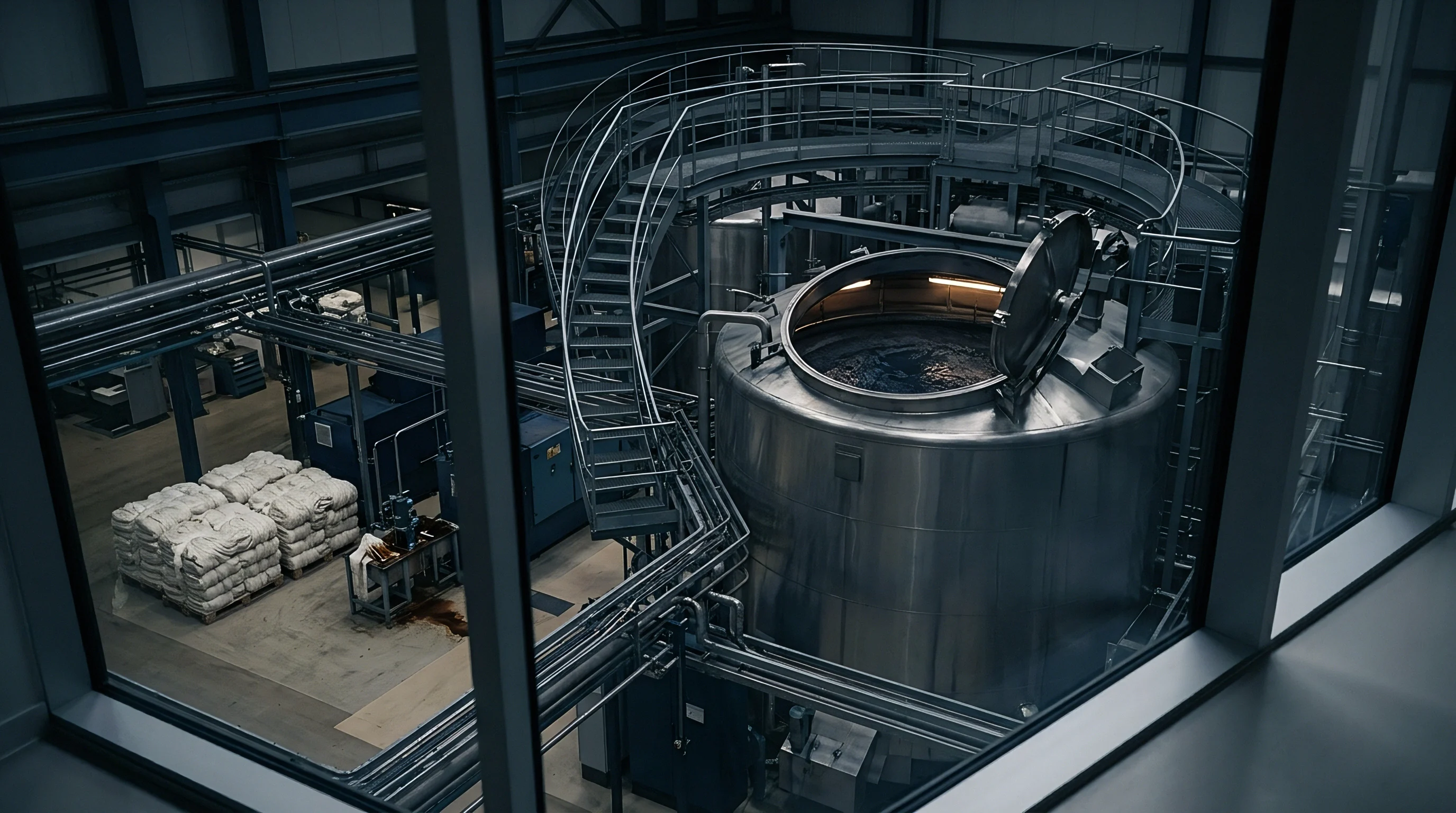
Thermal ester cleavage during glycolysis and methanolysis redistributes stable isotopes according to reaction kinetics. Operating conditions chosen to maximize monomer yield ~ temperature, pressure, and solvent ratios ~ directly affect the finished batch’s isotopic profile. In glycolysis, post-consumer PET reacts with excess monoethylene glycol between 190 and 240 degrees Celsius using transesterification catalysts like zinc acetate or ionic liquids.
Ester cleavage in the polymer chain favors carbon-12 and oxygen-16 bonds, enriching early monomer yields in lighter isotopes while heavier isotopes accumulate in unreacted oligomers.

Chemical Kinetics during Glycolytic Depolymerization
The synthesis of bis(2-hydroxyethyl) terephthalate involves selective carbon-oxygen bond cleavage, with lighter carbon-12 molecules reacting at higher rates. This kinetic preference steadily shifts the monomer stream’s isotopic composition as conversion advances. Monomer generated at low conversion rates shows the greatest carbon-13 depletion, whereas near-complete conversion brings the cumulative monomer composition back toward that of the raw PET waste.
Continuous industrial processes that tap off monomer before reaching full conversion yield resin with distinct, altered isotopic signatures. Holding kinetic drift within tight tolerances requires maintaining steady conversion rates across consecutive production runs. Any variation in reactor residence time translates directly into lot-to-lot isotopic scatter, complicating certification downstream at spinning mills.
Higher reaction temperatures and incomplete depolymerization yields amplify kinetic isotope fractionation across ester cleavage reactions.
Refinement and Distillation Drift Controls
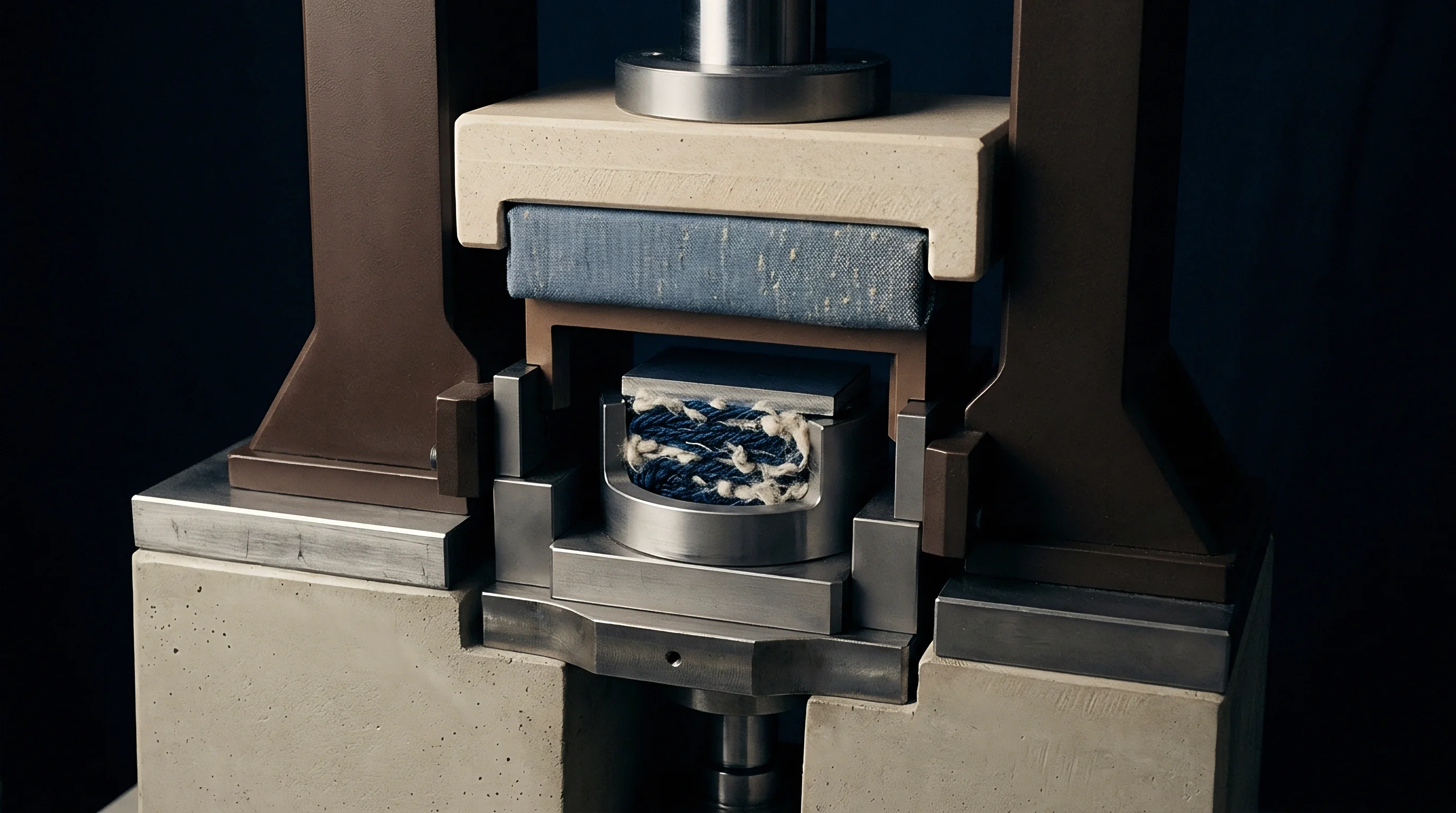
Purifying dimethyl terephthalate by vacuum distillation or terephthalic acid by recrystallization exploits slight differences in volatility and solubility. Lighter isotopic species vaporize at marginally lower temperatures, concentrating carbon-12 and oxygen-16 in overhead fractions while heavy isotopes stay in distillation bottoms. These purification stages represent primary points of operational variance:
- Reflux Ratio Fluctuation alters monomer isotope ratios during fractional distillation, causing permil shifts between early and late distillation cuts.
- Recrystallization Solvent Loss leaves heavy isotopes preferentially concentrated in the solid crystal matrix, driving delta oxygen-18 shifts up to zero point six permil.
- Char and Oligomer Residue Accumulation captures heavy carbon isotopes, resulting in depleted purified monomer streams relative to raw input waste.
- Melt Polymerization Residence Time drives secondary oxygen exchange with ambient water vapor during polycondensation, shifting delta oxygen-18 signatures toward industrial process water values.
Process control systems must track distillation parameters by lot number to maintain analytical traceability. Tweaking reflux ratios to push throughput can push a terephthalic acid batch’s isotopic signature outside its certified envelope. Converters frequently attribute these shifts to raw scrap variability rather than tuning inconsistencies on the line.


Gauge
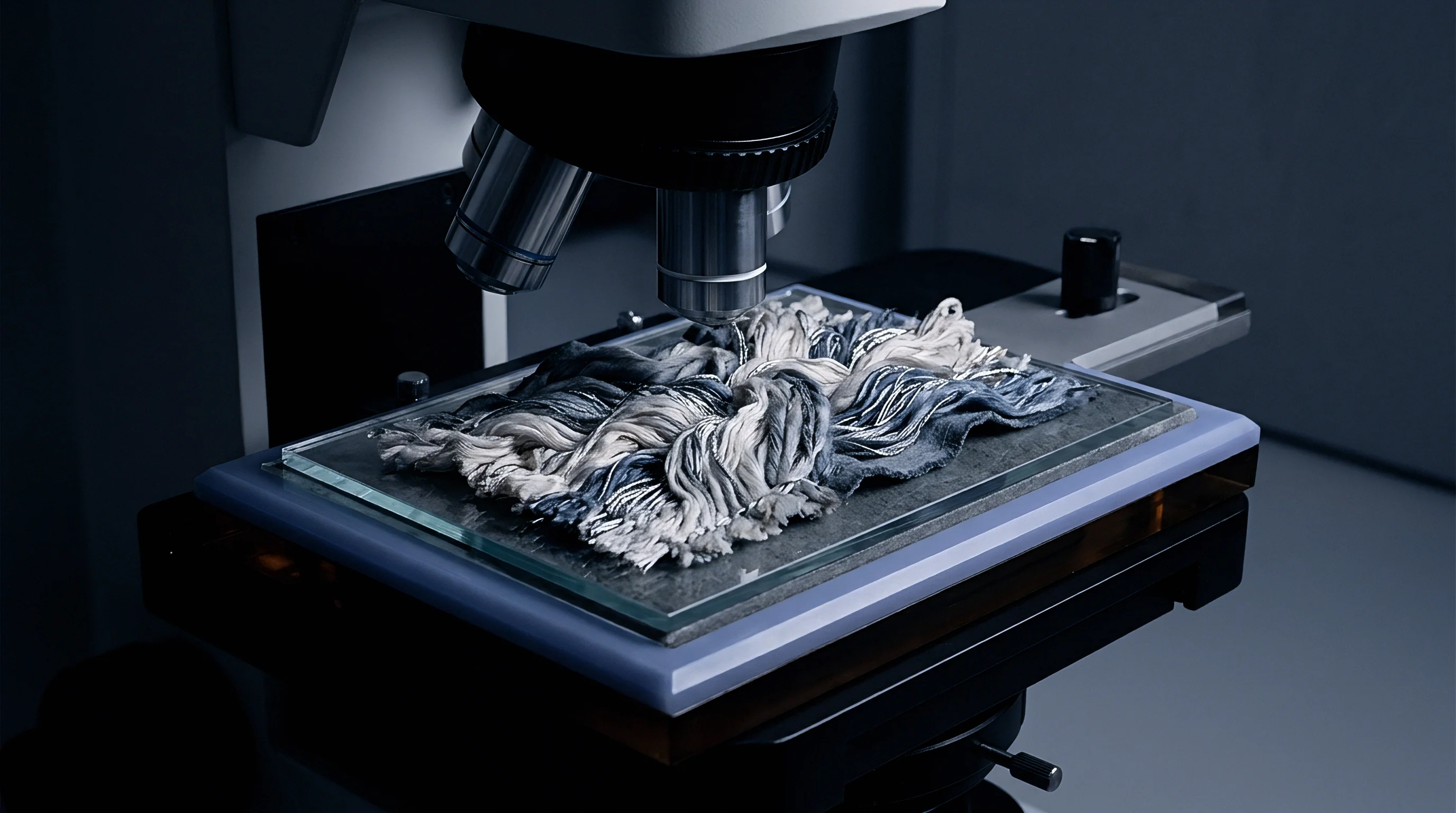
Elemental analysis coupled with continuous-flow isotope ratio mass spectrometry provides the analytical precision needed to resolve sub-permil isotopic shifts. Verifying chemical recycling claims requires instrumentation that clearly separates kinetic fractionation from background system noise. Testing laboratories burn samples in elemental analyzers linked to mass spectrometers via continuous-flow interfaces to evaluate carbon ratios, while high-temperature pyrolysis units running above 1400 degrees Celsius reduce oxygen to carbon monoxide for oxygen ratio analysis.
Analytical Instrumentation and Calibration Standards
High-temperature pyrolysis and combustion interfaces convert solid polymer into carbon dioxide and carbon monoxide streams without isotope discrimination. Sample preparation requires removing all spin finishes, dyes, delusterants, and moisture, as extraneous carbon and oxygen distort the analytical stream. Even a single percent of residual finish can skew delta carbon-13 by zero point eight permil, invalidating the test.
| Instrument Configuration | Target Isotope Ratio | Primary Reference Material | Measurement Precision (permil) | Minimum Sample Weight (mg) |
|---|---|---|---|---|
| EA-IRMS (Combustion) | Carbon-13 / Carbon-12 | IAEA-CH-6 (Cellulose) | ± 0.08 | 0.20 to 0.50 |
| TC/EA-IRMS (Pyrolysis) | Oxygen-18 / Oxygen-16 | IAEA-601 (Benzoic Acid) | ± 0.15 | 0.30 to 0.80 |
| GC-C-IRMS (Monomer Specific) | Carbon-13 / Carbon-12 | USGS40 (L-Glutamic Acid) | ± 0.12 | 1.00 to 5.00 |
Calibration depends on secondary reference materials traceable to primary standards from the International Atomic Energy Agency. Unknown polymer samples are bracketed between matrix-matched reference materials during automated runs to correct for gradual drift in ion source efficiency.
Dual-isotope analysis achieves a detection threshold of three percent virgin PET contamination when measured by continuous-flow combustion isotope ratio mass spectrometry.

Can Isotopic Depletion Prove Undisclosed Virgin Polymer Blending?
Blending virgin petrochemical resin into recycled lots pulls the delta carbon-13 signature back toward fossil reference baselines, revealing uncertified dilution in finished yarns. Verifying batch authenticity involves a defined preparation and analysis sequence prior to commercial release:
- Solvent extraction removes topical oil finishes and surface contaminants using spectroscopic-grade dichloromethane in a Soxhlet apparatus for six hours.
- Drying the extracted polymer fiber in a vacuum oven at 80 degrees Celsius for twelve hours removes trace volatile organic compounds.
- Cryogenic milling converts purified polymer chips or yarn swatches into a homogeneous powder passing through a 250-micrometer sieve.
- Weighing zero point three milligrams of powdered sample into tin capsules ensures complete combustion inside the elemental analyzer oxidation tube.
- Combustion at 1020 degrees Celsius in an oxygen-enriched helium stream yields pure carbon dioxide gas.
- Cryogenic gas chromatography separates carbon dioxide from residual combustion gases prior to injection into the mass spectrometer ion source.
- Isotope ratio calculation compares ion beam currents at mass-to-charge ratios 44, 45, and 46 against calibrated working reference gas pulses.
Supply agreements incorporating ISO 17025 accredited laboratory clauses allow buyers to reject shipments whenever delta carbon-13 diverges by more than zero point six permil from established baseline limits.


Ledger
Pairing physical testing with transaction certificates closes documentation loopholes across international textile supply lines. Conventional chain of custody models rely on book-and-claim mass balance accounting, which lets facilities assign recycled credits across product lines without physically segregating materials. Isotopic verification introduces empirical checks into this record-keeping framework by comparing paperwork against the actual isotopic composition of the delivered resin.

Reconciling Mass Balance Records with Physical Isotope Tests
Mass balance systems allow plants to allocate recycled attributes to shipments without guaranteeing identical physical content. While ISO 22095 sets out mass balance frameworks, administrative allocation remains vulnerable to bookkeeping errors, misallocated credits, and double counting across regions. Binding transaction certificates directly to physical isotopic drift testing bridges this gap.
Under scope certification protocols, transaction certificates must cite specific laboratory test numbers matched to the melt batch codes on the shipping containers. Any mismatch between declared mass balance credits and measured isotopic depletion indicates material substitution between monomer synthesis and final spinning.

Batch Sampling Frameworks for Border Clearance Dossiers
Representative testing requires core sampling across multiple rolls per container to ensure statistical validity. Verification dossiers compiled for customs authorities and brand audit teams center on several core records:
- Scope Certificate Validity confirming the manufacturing facility holds accredited authorization for chemical depolymerization under defined chemical recycling standards.
- Transaction Certificate Alignment showing exact matching of batch identifiers, net weights, and delivery dates from monomer supplier to spinner.
- Analytical Isotope Certificate providing EA-IRMS test results for delta carbon-13 and delta oxygen-18 issued by an ISO 17025 accredited laboratory dated within thirty days of production.
- Process Drift Log Summary stating the facility baseline isotopic values and demonstrating the shipped lot falls within certified fractional drift boundaries.
- Chain of Custody Transfer Receipts validating physical transit security seals and lot numbering across each intermediate processing facility.
Whether future trade regulations will continue accepting paper mass balance allocations without empirical isotope verification remains an open operational question for synthetic textile supply chains.


Margin
Commercial contracts for high-grade recycled polyester must account for testing expenses and potential customs delays. Chemically recycled PET carries a notable price premium over virgin resin, and an unexpected reclassification by customs authorities as conventional polyester creates immediate financial losses. Structuring agreements around verified origin standards protects buyers from absorbing downstream legal and commercial liability.

Contractual Risk Allocation for Non-Conforming Shipments
Purchase orders with clear isotope drift boundaries protect buyers against fraudulent claims from monomer suppliers. Effective purchase terms establish baseline ranges for delta carbon-13 and delta oxygen-18 alongside defined re-testing protocols for disputed lots.
Stipulating that failure under ISO 17025 isotope ratio testing triggers full financial indemnification places direct responsibility on the seller. This liability covers import duties, terminal storage charges, return freight, and replacement resin costs. Explicit drift limits turn subjective debates over recycling claims into straightforward pass-fail analytical checks.
Inclusion of ISO 20921 isotopic verification criteria within supply agreements shifts detention liability directly to the chemical recycler upon batch failure.

Financial Impact of Customs Interventions and Retesting
Container holds at import hubs generate daily demurrage while third-party laboratories run confirmatory mass spectrometry. Port holds caused by incomplete paperwork or conflicting origin claims can eliminate the operating margins of a recycled apparel program within days.
| Intervention Event | Cost Driver / Fee Category | Typical Financial Impact (USD) | Primary Responsible Party |
|---|---|---|---|
| Port Container Detention | Demurrage & Terminal Storage | $150 – $450 per container / day | Importer of Record |
| Confirmatory EA-IRMS Retest | Accredited Lab Express Testing | $800 – $1,500 per sample lot | Challenging Party |
| Customs Classification Audit | Administrative Legal Representation | $5,000 – $25,000 per docket | Importer of Record |
| Green Claim Fraud Penalty | Regulatory Fine & Market Withdrawal | Up to 4% of annual regional turnover | Brand / Seller |
| Batch Re-export / Destruction | Freight, Duty Forfeiture, Disposal | $12,000 – $35,000 per container | Supplier / Seller |
Mitigating financial exposure in recycled polyester sourcing requires weighing routine testing costs against potential customs penalties. A single mass spectrometry run costing under one thousand dollars protects against substantial demurrage fees and regulatory fines. Clear contractual terms governing test fee allocation and detention liability prevent protracted disputes when shipments face scrutiny at the port of entry.