Fabric Classification
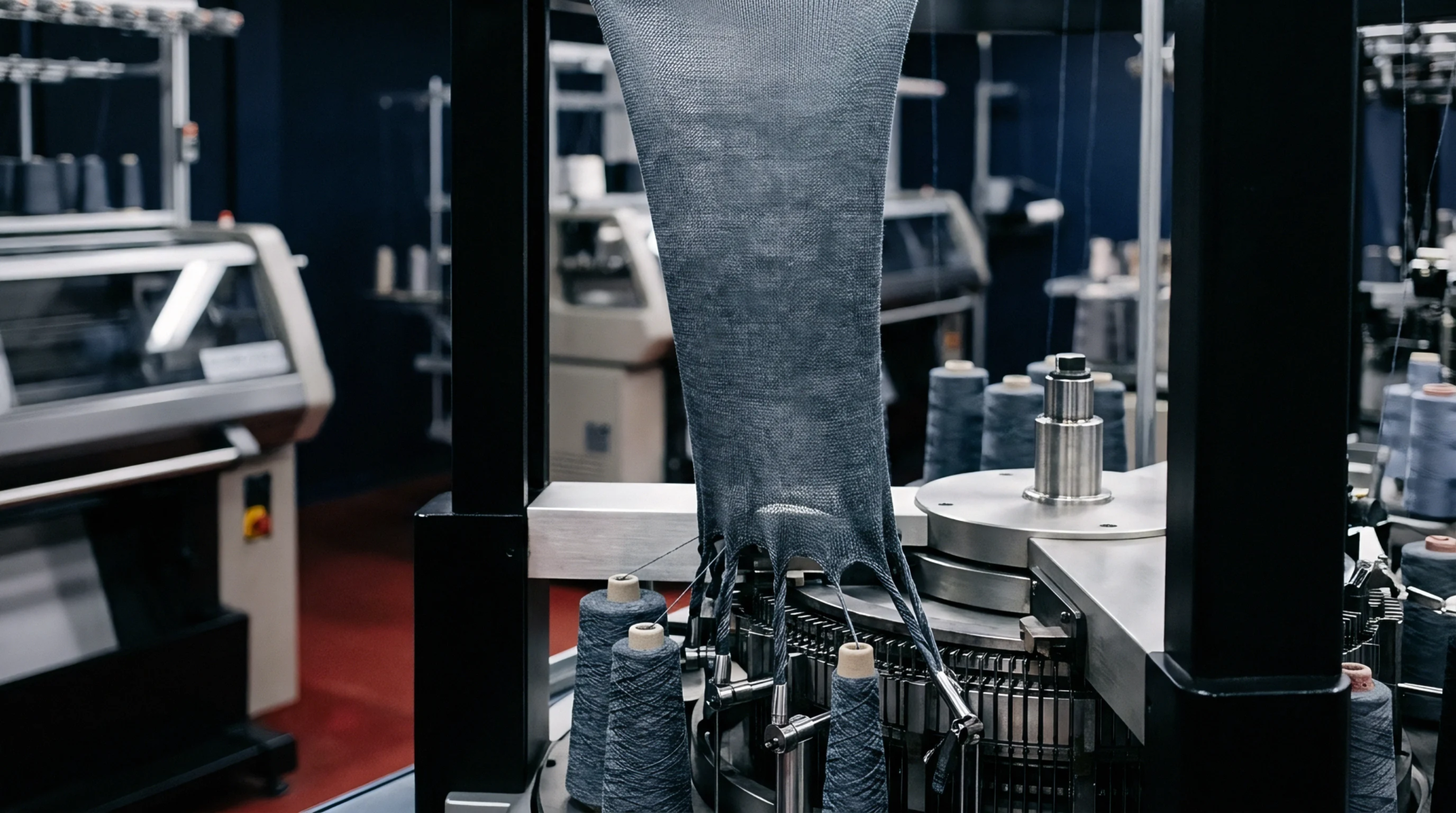
Double knit fabric construction characterized by an alternating arrangement of knit and purl stitches. This 1×1 rib creates a reversible surface where vertical columns of loops appear identical on both sides. The structure provides substantial lateral stretch and recovery.
Ribbing Architecture
Mechanical elasticity results from the accordion like compression of the alternating wales. When 1×1 rib is pulled widthwise, the hidden purl loops reveal themselves. This geometry allows the fabric to grip the wearer without the use of elastomer fibres in many instances.
Commercial Utility
Garment factories select this knit for collars and cuffs where a snug fit is required. Because 1×1 rib does not curl at the edges, it simplifies the cutting and sewing process for trims. It remains a standard choice for lightweight base layers and childrenswear.
Dimensional Limit
Shrinkage control becomes more complex in rib constructions due to the high volume of yarn tucked into the stitch density. Heavy wet processing can distort the wales if tension is not managed at the mill. The fabric tends to narrow and lengthen during finishing unless it is dried on a relaxed conveyor.
Mechanical compaction helps to stabilize the structure before it reaches the cutting table. This ensures the final product maintains its intended shape through repeated laundry cycles at the consumer level.