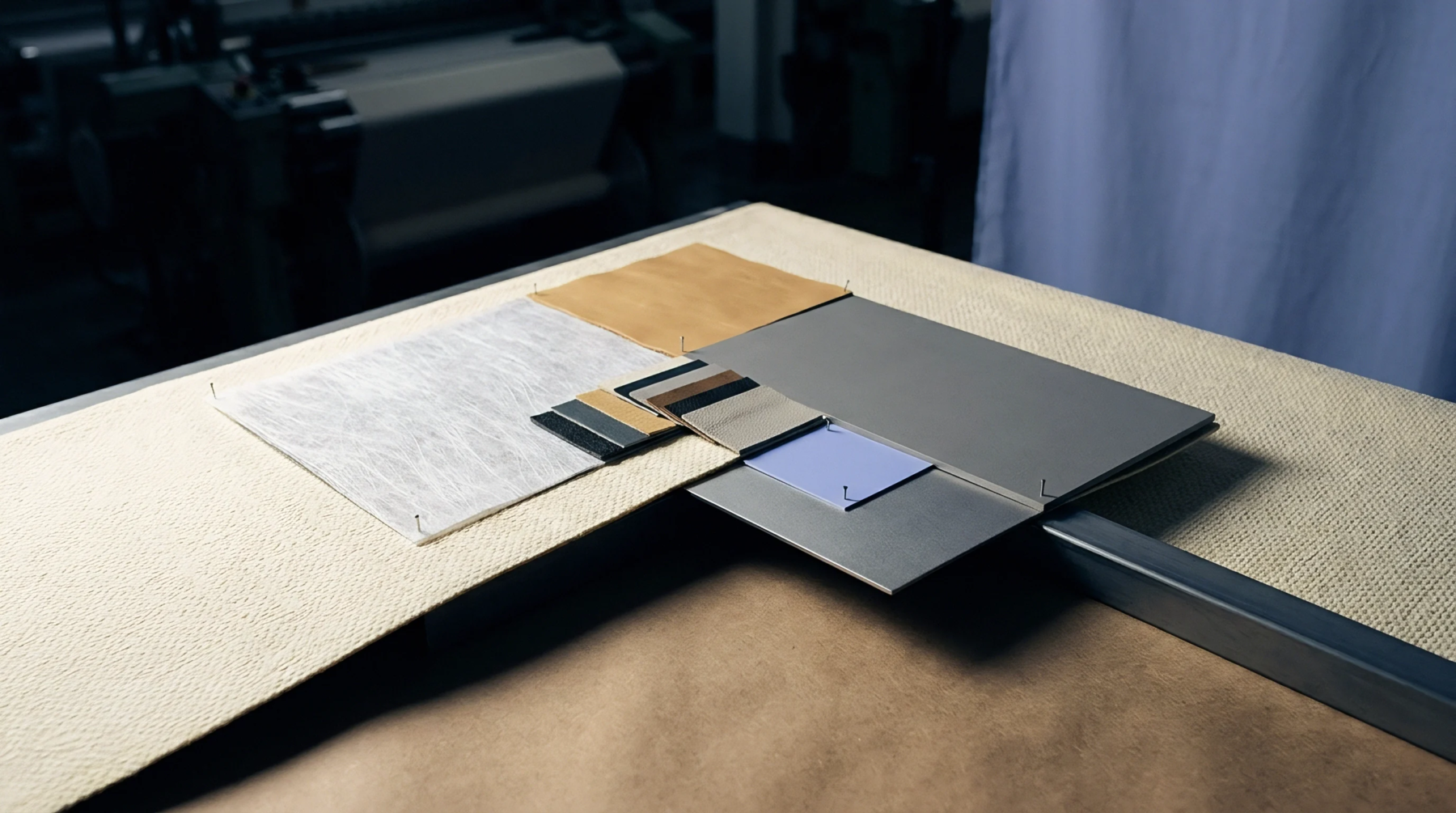
Interface Breakdown
Mechanical separation occurs when the structural bond between a primer layer and a top polymer coating undergoes total failure. In industrial textile coating, adhesive tie-coat delamination breaks the continuity of the laminate and leaves the base fabric exposed to environmental damage. Separation typically begins at high-stress fold lines where the mismatch in modulus between two layers is most severe.
Failure Mechanism
Stress concentrations at the boundary between different chemistries cause the primary cause of functional failure. When the tie-coat fails to wet the substrate during the initial dwell time, the resulting bond strength remains below the required commercial threshold for heavy usage. This lack of initial adhesion leads to localized void formation.
Inspection Point
Physical evidence appears as a distinct bubble or clear peeling between the layers during an ASTM D751 adhesion test. Technicians verify adhesive tie-coat delamination by examining the backside of the peeled film to see if residue remains attached or if the break is perfectly clean.
Loss Management
Poor surface preparation often compromises the integrity of the secondary application. Ensuring proper solvent evaporation before applying the second pass prevents trapped volatiles from weakening the interface. Strong bonds result from optimized flash temperatures.