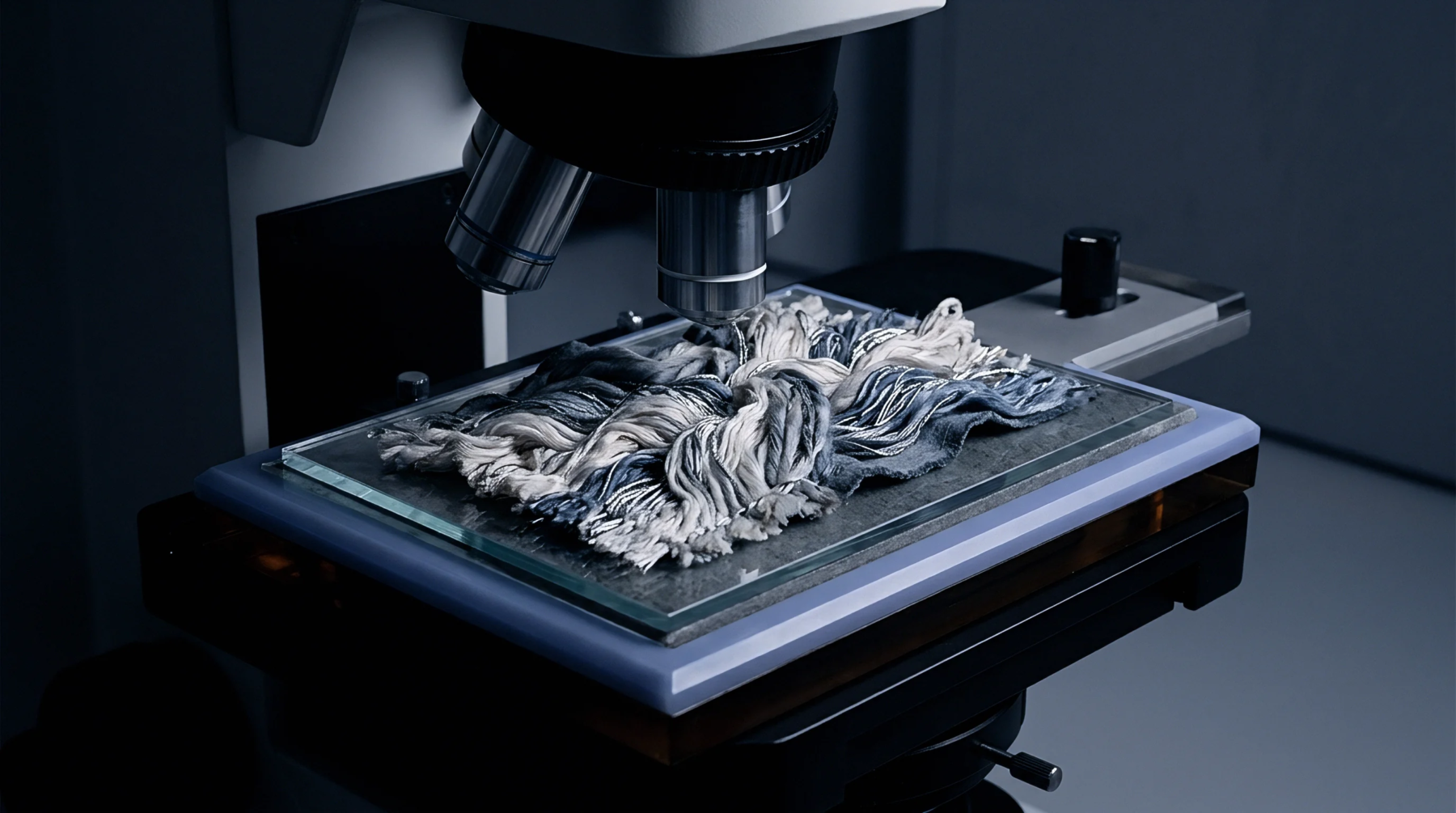
Verification Protocol
Quality assurance protocols evaluate the consistency between laboratory results and industrial bulk production. Such back-to-back testing ensures that the specific shade and durability metrics achieved during sampling are repeatable at scale. Lab dips often show higher precision than large dye vats, making this comparison a checkpoint for commercial viability.
Evaluation Method
Comparison procedures align a small scale swatch with a randomly selected piece from the main lot. Technicians use back-to-back testing to verify that the delta E values remain within tolerance during the transition from glass beakers to pressurized jet dyeing machines. Discrepancies between these stages indicate a failure in the recipe translation or machine calibration.
The process involves identical testing conditions for both samples, including light source and viewing angle, to isolate production variables from measurement error. Precise records of temperature and liquor ratios during the original lab dip must match the bulk machine settings for a valid comparison.
Contractual Impact
Contractual obligations rely on these results to approve final shipment. If the back-to-back testing fails, the buyer may reject the entire lot or demand a re-processing step. Verification occurs before the fabric leaves the mill to prevent costly returns of finished garments.
Risk Mitigation
Failure to perform these checks leads to inconsistent garment appearance. Consistent back-to-back testing protects the brand from variation in handfeel and colour across multiple production cycles.