Peak Counterforce
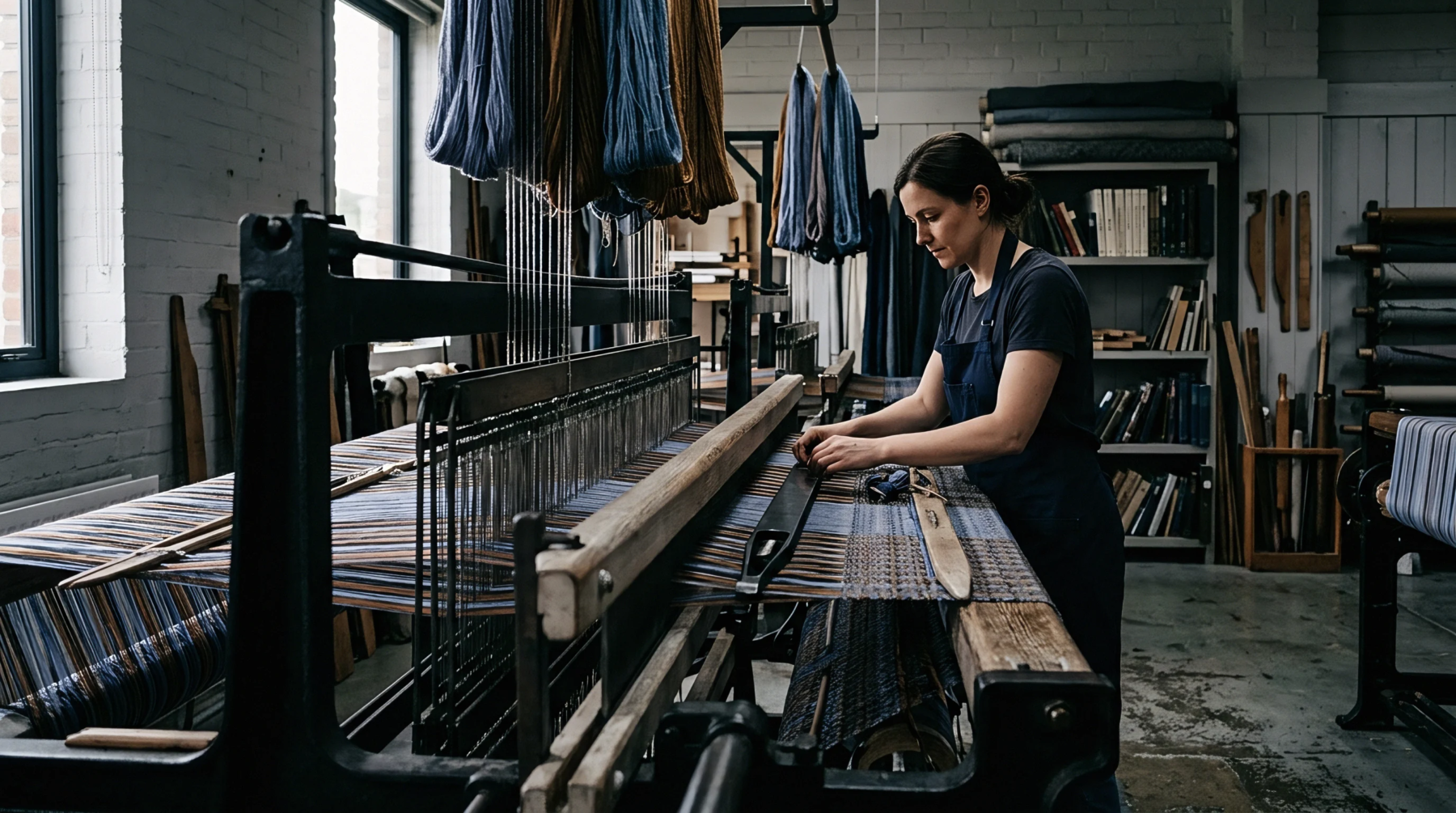
Opposing mechanical force generated when the moving reed pushes a newly inserted filling yarn against the cloth fell defines the primary impediment to increasing pick density. This physical opposition, known as beat-up resistance, arises from frictional contact, yarn bending stiffness, yarn compression, and dynamic crimp exchange between intersecting yarn systems. The phenomenon governs the limit of attainable fabric tightness during manufacturing, ceasing to act once the reed withdraws from the fell line.
It applies strictly to the dynamic collision zone at the fell and does not describe general warp drag along the machine path.
Structural Influence
Geometric yarn packing and crimp interchange dictate the magnitude of the counterforce during each machine cycle. Low yarn counts and high cover factors amplify beat-up resistance because adjacent yarn segments must undergo severe cross-sectional deformation to seat properly into the interlacing grid. When fine cotton or synthetic yarns are interlaced at high pick counts, frictional sliding between overlapping yarns requires escalating kinetic energy from the reed drive.
Multi-layer structures generate higher opposing forces than loose twill or satin arrangements because of the frequent bending intervals required per unit length. If the opposing force surpasses the available loom drive capacity, warp breakage rises sharply and individual ends abrade against the reed dents. Machine technicians monitor this dynamic interaction to prevent premature wear on crank arms and sley swords.
Fell Displacement
Cyclic impact pushes the cloth fell forward before elastic warp recovery pulls it rearward. High beat-up resistance magnifies this reciprocating excursion, causing structural instability that disrupts uniform pick placement. Extreme displacement yields prominent reed marks and start-up lines across the grey textile roll.
Machine Reaction
Loom sley components absorb the kinetic shocks produced during the forward stroke. Excessive beat-up resistance causes vibration throughout the beat-up mechanism, loosening harness connections and altering shed geometry over prolonged production runs. Modern industrial looms counter this load by stiffening sley assemblies and employing double beat-up motions or timing adjustments to split the yarn crossing point.
Processing audits check pick density consistency across whole fabric pieces to verify that mechanical resistance remained within established engineering limits.