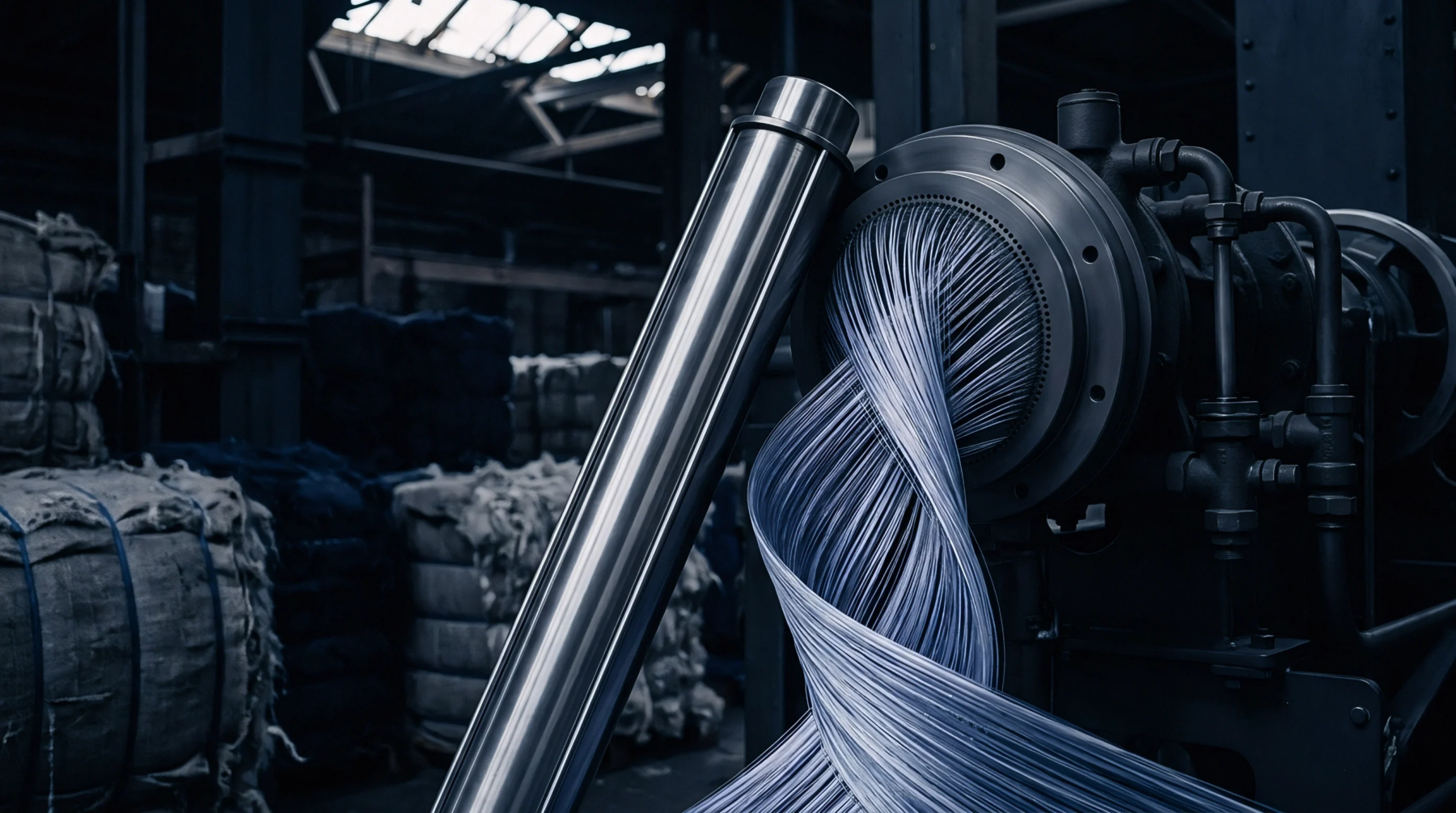
Purge Mechanism
Diverted polymer flow through auxiliary channels clears stagnant melt from extrusion hardware before contamination reaches the spinneret. Synthetic yarn plants use capillary die bleed to vent degraded resins, additives, and micro-gels during continuous melt spinning. Flow redirection stops thermal degradation products from choking miniature capillary orifices during production transitions.
The action governs polymer mass transfer strictly within the die body, ending where the clean stream enters the spinneret distribution pack.
Degradation Control
Molten polymers held at elevated process temperatures suffer chain scission, branching, and thermal cross-linking inside dead zones. Capillary die bleed flushes these degraded fractions out through narrow bypass capillaries, isolating the primary spin stream from oxidized matter. Polyethylene terephthalate, polyamide, and polypropylene runs benefit when colorant shifts or recipe variations demand rapid clearing of the melt chamber.
Opening bleed valves purges trapped carbonaceous residues without disassembling the spin head. Left unmanaged, these degraded polymer fractions drift toward filament exits, inducing filament breaks and denier variations.
Operational Verification
Technical inspectors examine bleed purges during lot changeovers and line qualifications. Visual inspection confirms whether purged resin contains discoloration, charred particles, or gelled agglomerates. Rheological testing on purged samples determines whether melt viscosity has stabilized to specification before spinning resumes.
Differential scanning calorimetry traces thermal purity across the purged material, confirming the absence of decomposed additive deposits. Inline melt pressure sensors register drops when bleed ports open, recovering stability once valves close for steady production.
Filtration Economy
Directing fouled melt away from spinneret pack assemblies extends the working life of woven wire screens and sintered metal powder filters. Frequent spinneret pack changes disrupt thermal equilibrium, generating waste yardage and requiring labor-intensive pack rebuilds. Diverting degraded fractions preserves pack life while preventing filament spinneret bore fouling that generates dog-leg extrusions.
Uneven capillary flow generates diameter variances across the filament bundle, causing variable dye uptake in downstream fabrics. Capillary die bleed maintains extrusion stability across multi-hole spinnerets during long operational campaigns.