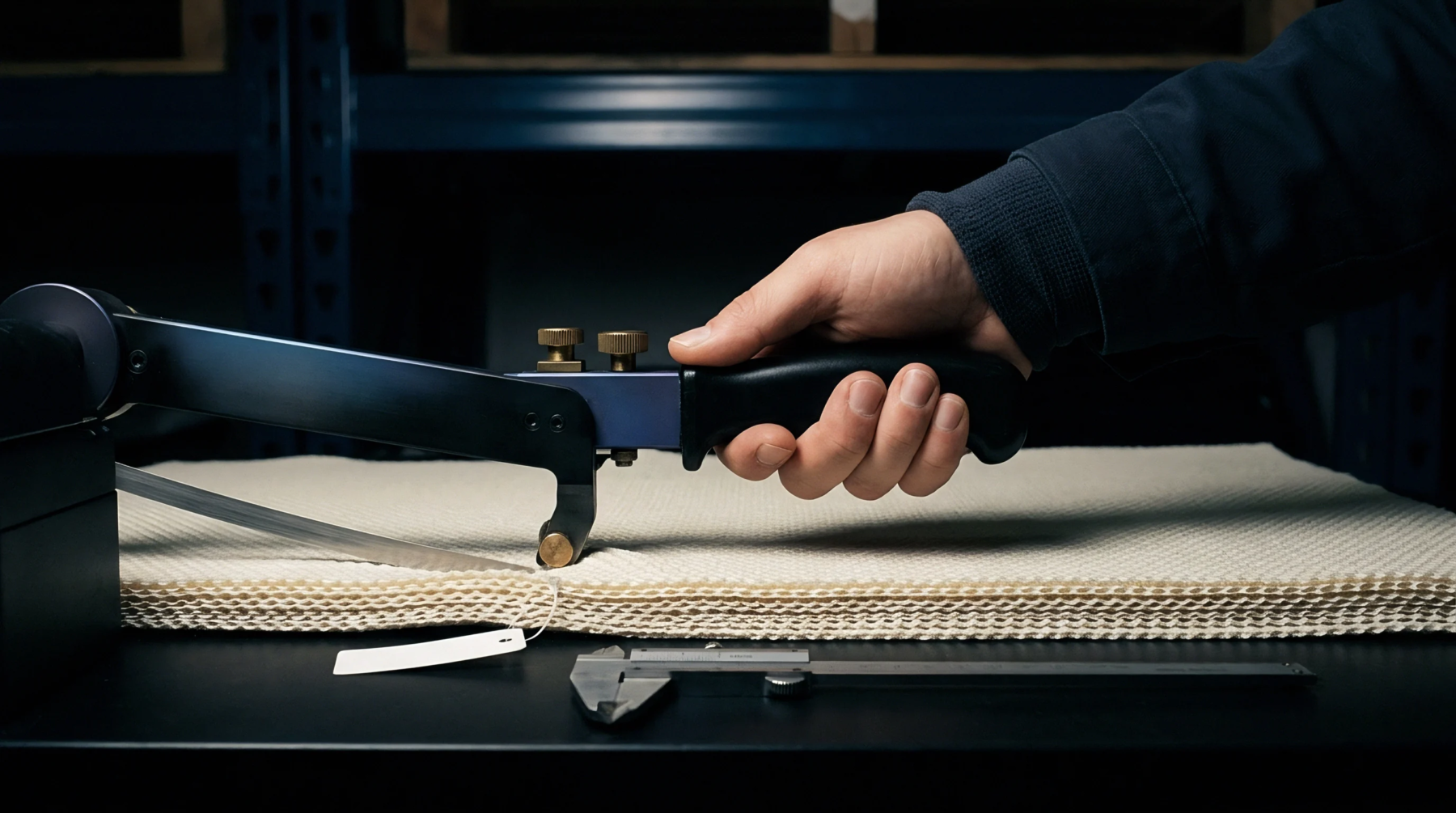
Swatch Sampling Position Deciding Whether a Batch Passes
Physical swatch position across fabric width and length determines chemical compliance, requiring three-point cross-web sampling to validate batch pass status.
Assessment of shade consistency across multiple fabric pieces requires a systematic comparison of individual sample swatches against a master production standard to ensure visual uniformity. Because composite swatch bias introduces systematic variance into the evaluation process, technicians must isolate specific dye lots to verify colorimetric stability. This discrepancy arises when a collection of disparate samples gets grouped for simultaneous spectrophotometric reading.
If the aggregate measurement incorporates slight variations from different fabric roles, the machine output averages these differences into a single numerical result. That process masks individual swatch failures that would otherwise trigger a rejection during quality control. Production facilities apply this metric when batch processing large fabric orders across various dye vats to identify the precise moment color drift exceeds allowable tolerances.
Manufacturers utilize narrow-width cutting tools to minimize the surface area variance that contributes to the measurement error. Each individual swatch undergoes separate laser scanning rather than grouping them into a single test tray. When data collection occurs in isolation, the software tracks the spectral data for each unit of material.
Technicians map these readings against the target reference to confirm every component within the shipment meets the specified shade requirements. By limiting the input to a single layer of fabric, the measurement excludes shadows or structural distortions caused by thickness disparities in bundled swatches. This refinement produces a reliable profile of the dye penetration across the entire width of the loom output.
Textile laboratories execute this verification at the final inspection gate before rolls leave the dye house for garment construction. A master standard card remains the primary authority for color acceptance throughout the lifecycle of the order. Any deviation detected during this stage forces a mandatory recheck of the original dye formulation and the immersion temperature records.
Lab managers review the spectral curves to determine if the issue stems from chemical imbalance or incorrect dwell time in the finishing machine. They reject shipments if the deviation prevents a precise match with secondary trims like zippers or buttons.
The validity of this evaluation ends where the physical properties of the fabric undergo irreversible chemical treatment. Once a printer adds finish or surface coating to the material, the spectrophotometer cannot distinguish between the underlying dye variance and the optical impact of the topical application. This restriction prevents the application of the metric to finished technical fabrics with multi-layer membranes.
Data reliability relies on the consistency of the substrate itself. The measurement effectively identifies batch drift in undyed or solid-dyed textiles before the final assembly phase creates irreversible production errors.
Physical swatch position across fabric width and length determines chemical compliance, requiring three-point cross-web sampling to validate batch pass status.
Expertise is a utility, not a secret. sentiention™ publishes its working knowledge as open reference: intelligence layer covering the materials it sources, the markets it enters, and the reference that serves both.