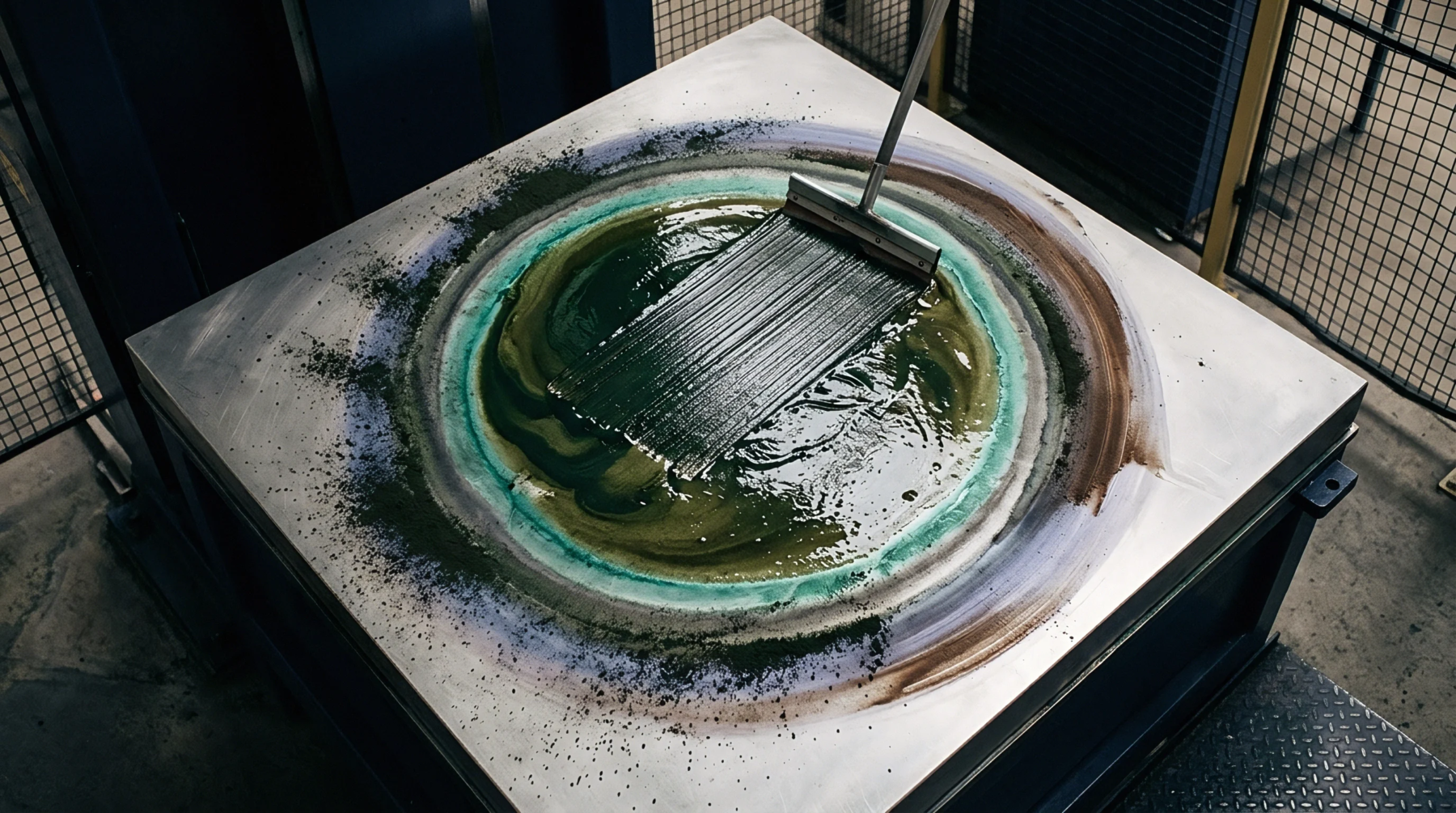
Residue Carryover
Unintended transfer of chemical cleansing agents across successive processing vessels compromises downstream textile bath chemistry and fabric performance. In continuous scour and wash lines, detergent cross-contamination occurs when bath liquid adhering to moving fabric webs carries active surfactant molecules into subsequent rinsing or dyeing troughs. This unwanted migration alters bath surface tension and neutralizes ionic dye fixatives.
Technical inspections track liquor carryover percentages at squeeze rolls to stop surfactant accumulation in sensitive wet processing stages.
Bath Dragout
Mechanical nip rollers squeeze saturated webs to restrict residual liquid volume between liquor boxes. When rubber nip rollers exhibit surface wear or uneven pressure distribution, high volumes of wash liquor remain trapped inside the fiber matrix. The resulting liquor carryover pollutes fresh water troughs and accelerates surfactant concentration build-up in neutral bath solutions.
Dyeing Interference
Chemical interactions between residual cleaning agents and dyestuffs alter color shade consistency across continuous dye ranges. Non-ionic surfactants carried into acid or reactive dye baths form complex molecular aggregates that hinder dye molecule exhaustion onto target fibers. This interference produces pale shade streaks along fabric selvages.
Fastness Degradation
Residual surfactants remaining on finished goods lower wash fastness and water repellency ratings during lab testing. Detergent cross-contamination disrupts water-repellent fluorocarbon coatings by lowering critical surface energy.