Standardized Chemical Extraction Retest Parameters for Cross Border Textile Audits
Cross border chemical retests demand exact matching of solvent polarities, extraction temperatures, and specimen shred sizes to resolve audit discrepancies.


Divergence
Cross-border textile audits often hit a wall when port laboratories use quick screening tools while referee facilities rely on full wet chemical extractions. Primary customs inspections depend on fast surface scanners to clear incoming freight without backing up logistics. Because these initial passes check for total elemental presence or surface volatile organic compounds rather than extractable chemical fractions, an elevated reading will cause authorities to detain the shipment for formal retesting.
Resolving these disputes comes down to knowing why the screening tool flagged a false signal in the first place and how thorough liquid extraction isolates the actual target analyte from the fabric.

Initial Audit Screening Verses Definitive Retest Methods
Port inspectors rely on semi-quantitative tools to clear containers quickly. Energy-dispersive X-ray fluorescence spectrometry screens total heavy metals ~ like chromium, lead, or cadmium ~ directly on fabric swatches in seconds. However, XRF cannot distinguish benign trivalent chromium bound in synthetic dyes from regulated hexavalent chromium salts.
Automated headspace gas chromatography has similar limitations: by heating a dry sample in a sealed vial, it catches volatile manufacturing carriers that evaporate easily while missing tightly bound residues like alkylphenol ethoxylates or halogenated carriers. Standard retests swap rapid thermal desorption for solvent reflux, Soxhlet extraction, or temperature-controlled ultrasonic baths to isolate and measure specific restricted molecules.
Solvent purity directly impacts the total extraction yield.
| Chemical Class | Port Screening Method | Definitive Standard Method | Extraction Medium | Primary Mechanism Difference |
|---|---|---|---|---|
| Thermal Headspace GC-MS | EN ISO 14362-1 | Citrate Buffer (pH 6) / Sodium Dithionite | Reductive cleavage of azo bonds to extract free aromatic amines | |
| Surface XRF Spectrometry | EN ISO 17075-1 | Phosphate Buffer (pH 7.0 to 8.0) | Selective extraction of soluble Cr(VI) vs total elemental Cr count | |
| Direct Pyrolysis GC-MS | ISO 18218-1 | Methanol / Methanolic KOH | Exhaustive solvent extraction of ethoxylate oligomers from fiber core | |
| Acid Digestion ICP-OES | EN 16711-2 | Acidic Artificial Perspiration Solution | Simulated human sweat leachable fraction vs total destruction matrix |

Primary Chemical Discrepancies in Cross Border Testing
Discrepancies between initial compliance screenings and secondary audit results usually boil down to chemical stability. Thermal screening exposes dry fabric samples to intense heat, which frequently breaks down dye auxiliaries, polyurethanes, flame retardants, and cross-linking agents. This thermal breakdown generates synthetic amine peaks that were never present in the fabric itself.
Standardized extraction methods avoid this by using mild aqueous buffers, controlled organic solvents, and strict temperature limits. They also enforce precise liquid-to-solid ratios, fixed agitation speeds, and fine filtration steps to cleanly isolate target molecules without creating artifacts.
Uncontrolled temperatures alter the analytical baseline during testing.
Residual chlorobenzene detected during destination testing can stem from airborne contamination inside ocean shipping containers rather than unwashed dye bath fixatives.

Solvent
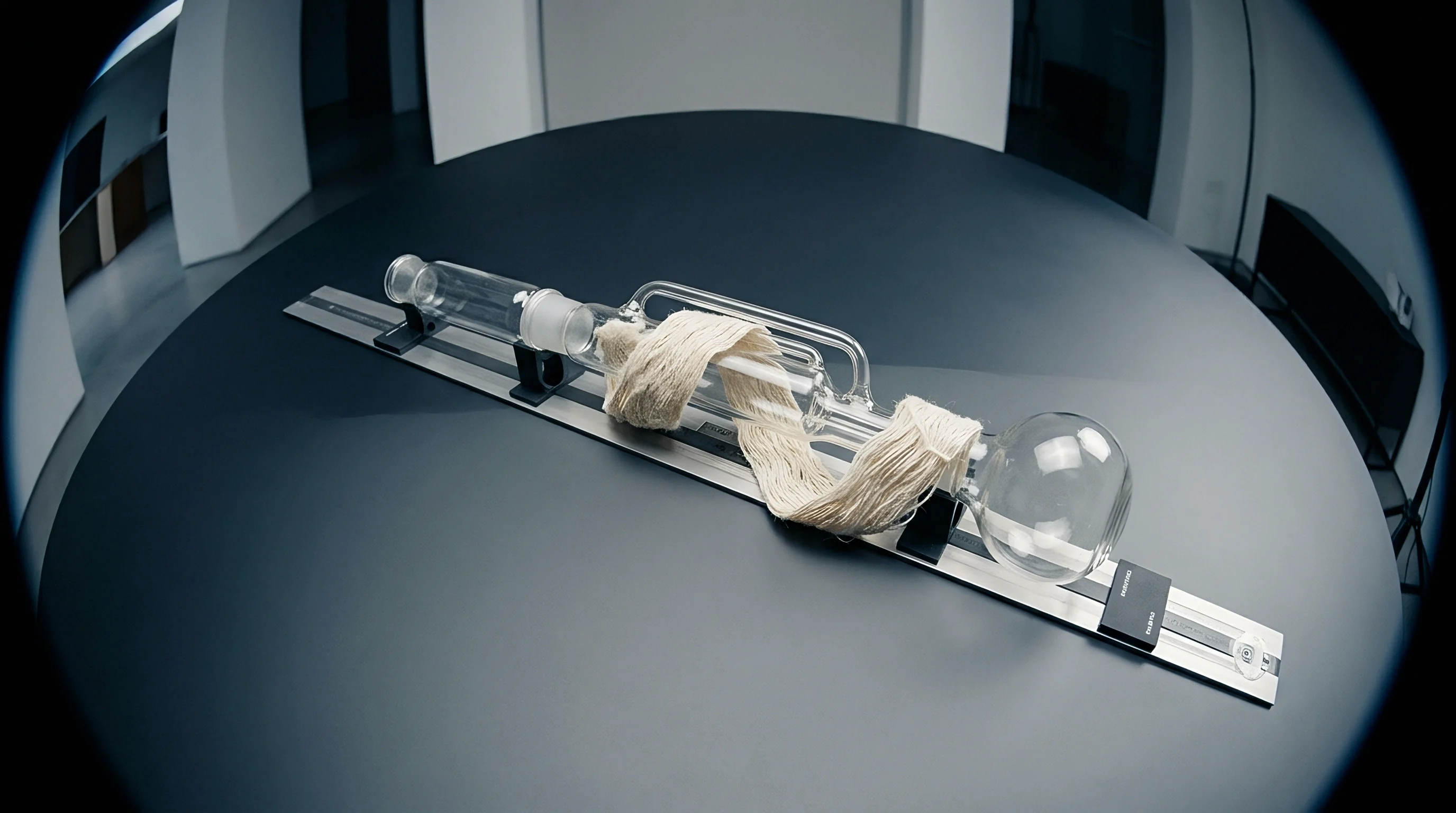
Target analytes bind to textile fibers in different ways. Cotton cellulose holds hydrophilic dyes through hydrogen bonds, whereas synthetic polyesters trap hydrophobic additives inside crystalline polymer chains. Stripping out a restricted substance requires choosing an organic solvent with a matching polarity that leaves the underlying fabric intact.
Using the wrong solvent or drifting off the required bath temperature can shift recovery rates by orders of magnitude, turning a compliant shipment into a border seizure or letting real contamination slip through unnoticed.
Extraction Media Selection and Thermal Degradation Risks
Selecting a solvent for laboratory reflux comes down to polarity. Methanol strips polar alkylphenol ethoxylates and short-chain perfluoroalkyl substances from cellulosic fibers efficiently. Non-polar compounds like chlorinated paraffins and phthalate plasticizers require aromatic solvents like xylene or tetrahydrofuran, which swell synthetic fibers to release trapped molecules.
Dichloromethane dissolves organotin catalysts effectively, but it degrades elastomeric yarns if left beyond specified time limits. Laboratories must strictly use high-purity solvents, as technical-grade options introduce trace impurities that register as false hydrocarbon peaks on gas chromatography.
The underlying dye chemistry dictates which solvent must be selected.
Extracting recycled polyester at temperatures exceeding 70 degrees Celsius in tetrahydrofuran degrades polyurethane binders and releases bound aromatic amines into the analyte stream.
Systematic failures during chemical extraction retests stem from specific physical and procedural operational errors on the bench:
- Thermal Polyurethane Decomposition ~ Exceeding 70°C during tetrahydrofuran reflux hydrolyzes polyurethane elastomeric coatings, releasing synthetic 4,4′-methylenedianiline into the analyte stream.
- Evaporative Analyte Loss ~ Concentrating volatile extracts under vacuum without micro-column reflux causes low-boiling organotin and chlorobenzene targets to evaporate.
- Reductive Buffer Invalidation ~ Allowing sodium dithionite citrate buffers to drift above pH 6.2 prevents complete reduction of azo colorants, producing false negative compliance reports.
- Incomplete Fiber Swelling ~ Cutting xylene extraction short of 45 minutes on dense polyamide leaves hydrophobic phthalates trapped inside crystalline polymer domains.
Which Extraction Temperature Triggers False Alkylphenol Positives?
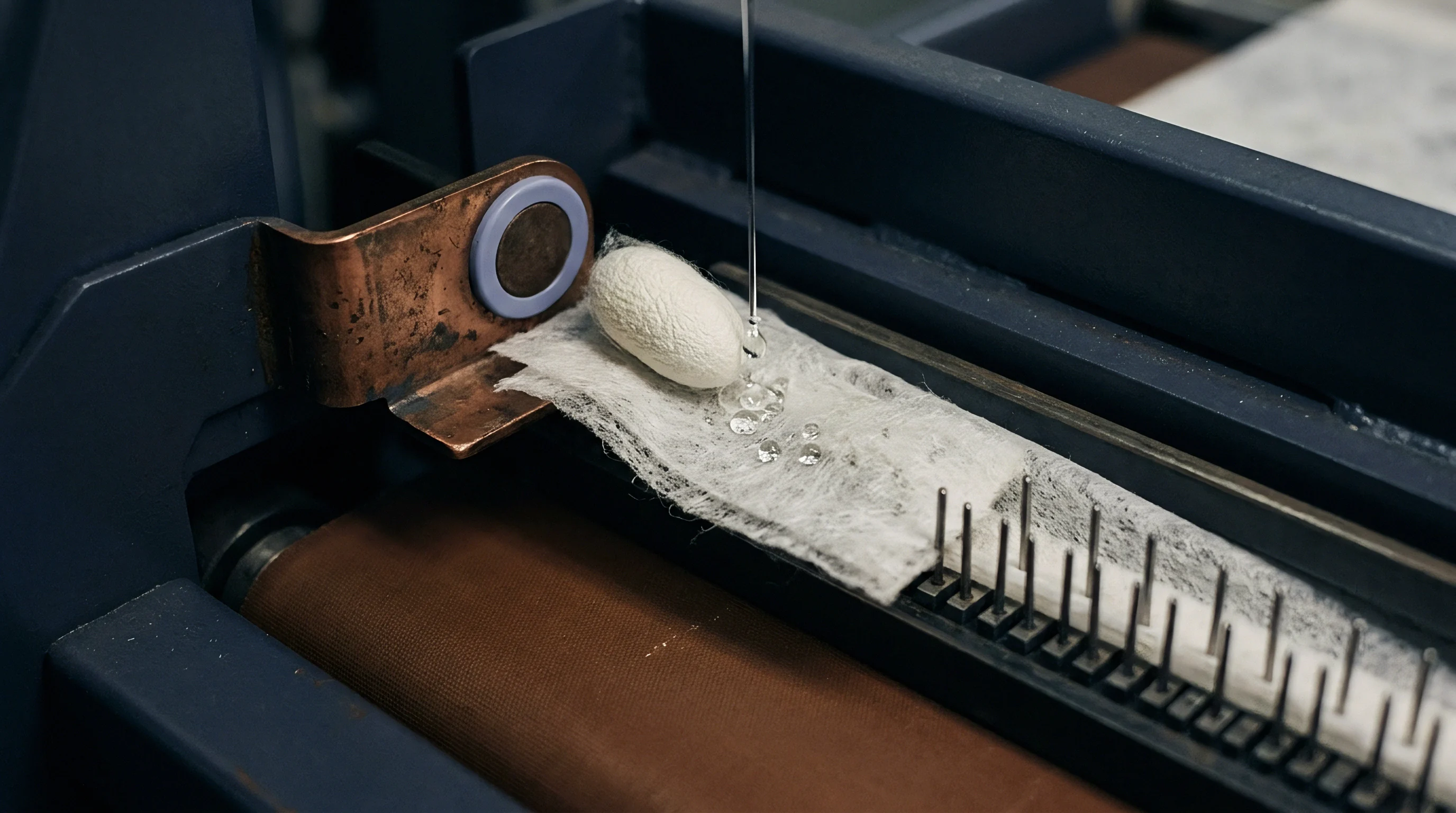
High processing temperatures can cleave non-ionic surfactant chains during testing. Stripping finishes above 80°C in methanolic potassium hydroxide speeds up the chemical hydrolysis of long-chain alkylphenol ethoxylates into free nonylphenols. This lab-created breakdown artificially inflates alkylphenol readings past legal limits.
Standard ISO 18218-1 procedures call for keeping methanol extraction baths at exactly 60°C under ultrasonic agitation for 60 minutes. Staying below this thermal threshold stops surfactants from breaking down while still pulling free target molecules entirely out of the matrix.
Exhaustive extraction depends on precise timing.
Deviating from prescribed extraction temperatures during secondary testing produces conflicting analytical reports, triggers mandatory cargo seizures, and forfeits customs entry bonds.


Spool
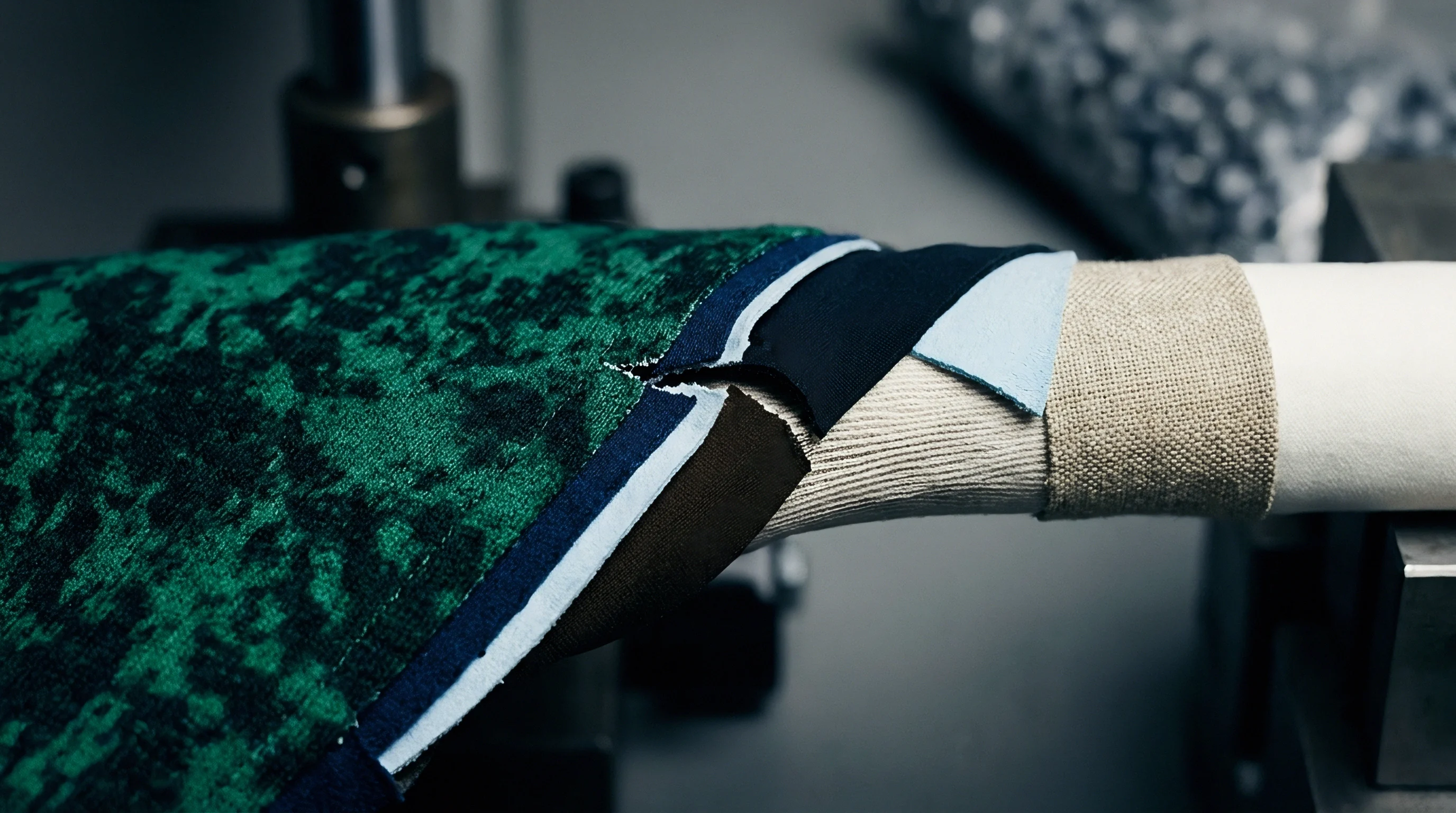
Fabric samples sent for laboratory testing require careful preparation if they are to yield consistent data. Auxiliary chemicals, dyes, and finishes are rarely distributed evenly across a shipment. They tend to migrate during industrial tentering, settling along fabric selvedges or concentrating on the outer layers of a roll.
Testing standards establish exact sampling patterns, shredding sizes, and moisture conditioning rules so that a 2-gram specimen truly represents a multi-tonne production lot.
Physical Sample Preparation and Particle Dimensions
Shredding converts solid fabric into uniform fragments, and particle size directly controls the available surface area during extraction. Cutting swatches into 2 millimeter by 2 millimeter squares maximizes solvent contact and helps pull target analytes out of synthetic fibers. Coarser 10 millimeter by 10 millimeter pieces impede solvent penetration, leading to incomplete extraction and falsely low readings.
Precision also matters at the scale: specimens must be weighed to within 0.1 milligrams right after conditioning under ISO 139 parameters (20°C, 65% relative humidity) so moisture fluctuations don’t warp final calculations in milligrams per kilogram.
Particle size directly governs reaction kinetics.
| Fiber Composition | Target Analyte Class | Particle Size (mm) | Conditioning State | Extraction Yield Delta (%) | Standard Reference |
|---|---|---|---|---|---|
| 100% Woven Cotton | Extractable Heavy Metals | 2 x 2 | Standard ISO 139 | Baseline (100%) | EN 16711-2 |
| 100% Woven Cotton | Extractable Heavy Metals | 10 x 10 | Unconditioned (Dry) | – 18.4% | EN 16711-2 |
| 100% Recycled Polyester | Organotin Compounds | 2 x 2 | Standard ISO 139 | Baseline (100%) | ISO 17353 |
| 100% Recycled Polyester | Organotin Compounds | Full Swatch (50×50) | Standard ISO 139 | – 42.1% | ISO 17353 |
| Polyamide Elastane Blend | Phthalate Plasticizers | 2 x 2 | High Humidity (85% RH) | + 8.7% (Mass Error) | EN ISO 14389 |

Composite Sampling Hazards across Batch Densities
Combining swatches from multiple rolls can dilute chemical concentrations below detection limits. If an auditor pools swatches from ten distinct colorways into one composite sample, heavy contamination in a single dye bath gets diluted tenfold. That drops the measured concentration below reporting limits, allowing a non-compliant lot to pass only to fail later during individual port surveillance.
Retest standards explicitly ban composite sampling across different dye lots or print patterns when testing for localized restricted substances like banned azo dyes or fluorinated stain repellents.
Varying moisture content distorts dry mass measurements.
ISO 14362-1 Annex B specifies that composite sampling across distinct colorways voids accredited test validity during customs disputes.
Correct sampling for audit retesting follows a strict physical protocol at the warehouse bench:
- Cut representative swatches across the full usable width of the selected roll, excluding the outer 50 millimeters of selvedge material.
- Discard the outermost two full wraps of cloth from the roll core to eliminate surface dust and transit packaging contamination.
- Shred the isolated swatch using a calibrated mechanical rotary cutter set to produce uniform square particles under 3 millimeters.
- Mix the shredded fiber particles thoroughly inside a sealed stainless steel container to homogenize the physical sample.
- Place open weighing bottles containing the shredded material inside a climate chamber at 20°C and 65% relative humidity for 24 hours.
- Weigh exactly 1.000 gram of conditioned fiber specimen directly into the glass extraction thimble using an analytical balance.
A specimen taken from the outer wrap of a textile roll never mirrors the chemical equilibrium of the inner core.


Tolerance
Quantitation limits vary from lab to lab depending on instrument calibration and background noise. Compliance standards set hard concentration caps ~ like 20 milligrams per kilogram for carcinogenic aromatic amines under REACH Annex XVII or 0.1 percent by weight for phthalates under Consumer Product Safety Improvement Act regulations. When a test result falls right near the limit, deciding compliance requires formal measurement uncertainty calculations.
Ignoring lab uncertainty leads to improper cargo rejections or mistaken compliance claims during trade disputes.

Measurement Uncertainty and Borderline Analytical Thresholds
Results that hover near legal action limits create real headaches for importers. Lab testing always involves variability from balance calibration, volumetric glassware, instrument drift, and technician technique. ISO/IEC 17025 accredited facilities calculate expanded measurement uncertainty using a coverage factor of k=2, which gives a 95 percent confidence interval.
If an accredited lab reports an aromatic amine level of 22 milligrams per kilogram with an expanded uncertainty of 20 percent, the true concentration sits between 17.6 and 26.4 milligrams per kilogram. Applying ILAC-G8 decision rules determines whether that figure counts as a definitive failure or a conditional pass based on agreed risk thresholds.
Customs laboratories strictly enforce statutory action limits.
Customs authorities reject chemical retest reports that omit the laboratory expanded measurement uncertainty statement.

Regulatory Limits across Market Product Classes
Destination markets set concentration caps based on skin contact exposure. OEKO-TEX STANDARD 100 divides thresholds into four product classes, setting the tightest limits on Class I items for infants. A fabric with 15 milligrams per kilogram of extractable lead easily clears Class IV decorative furnishings, but fails immediately under Class I. Retest standards require detection limits to sit at least ten times lower than the legal threshold to ensure accuracy near decision boundaries.
Measurement uncertainty margins can alter final pass decisions.
Take a 5,000-meter lot of dyed cotton fabric detained at customs with a legal limit of 20.0 milligrams per kilogram for 4-aminobiphenyl under EN ISO 14362-1. Initial port tests show 23.4 milligrams per kilogram. The importer requests an accredited retest under the same parameters, and the second lab reports a mean concentration of 18.2 milligrams per kilogram with an expanded uncertainty of 15 percent (k=2).
That puts the confidence interval between 15.47 and 20.93 milligrams per kilogram. Under strict acceptance rules, the upper bound exceeds 20.0, blocking full clearance. Under a binary decision rule with guard bands per ILAC-G8:2019, the 18.2 mean falls below the limit, allowing conditional entry if the importer accepts the remaining commercial risk.
Standard procurement addendum ISO-17025-MU dictates that test findings falling within the expanded uncertainty band trigger an immediate secondary extraction at a mutually agreed referee laboratory.

Recalibration
Dispute resolution starts when an importer formalizes an appeal against a port failure. Retesting is not an informal second look; it follows a legal and technical appeal protocol. Re-running an existing vial extract only checks instrument calibration ~ it misses extraction errors or sample degradation in the first test.
Re-evaluating an audit result requires pulling duplicate archive specimens, verifying lab accreditation scopes, and tracing the document trail back to yarn synthesis and container sealing.
Chain of Custody Verification and Accreditation Scope Checks
Tracking the physical movement of sealed samples maintains test integrity. Appeal protocols require confirming that tamper-evident seals on reserve swatches stayed intact during transit to the referee facility. Importers also need to inspect the laboratory’s ISO/IEC 17025 scope of accreditation.
A lab certified for general organic chemistry cannot issue binding retest reports for textile azo dyes unless EN ISO 14362-1 is explicitly listed on its schedule. Finally, test reports must tie back to valid Transaction Certificates and Scope Certificates matching the exact fiber composition, mill, and production dates of the detained cargo.
Scope certificates remain valid for twelve months.
A scope certificate issued three months after fabric extrusion cannot validate chemical compliance for goods already shipped.

Audit Dispute Workflow Protocols
Formal retesting requests operate on tight contractual timelines once customs issues a notice. Importers choose a mutually agreed referee laboratory independent of both the original lab and the mill. Retest conditions must mirror the original extraction parameters ~ solvent, bath temperature, and duration ~ while adding matrix spikes to verify recovery rates.
If the referee lab recovers less than 80 percent of a spiked standard, the extraction protocol is invalidated and adjusted until recovery falls between 80 and 120 percent.
Dispute protocols mandate pulling duplicate archive specimens.
Initiating a formal chemical retest dispute requires submitting a structured documentation packet to the auditing authority:
- Chain of Custody Dossier ~ Complete shipping logs, tamper-evident seal serial numbers, and warehouse temperature logs covering reserve sample storage.
- Laboratory Accreditation Audit ~ Current ISO/IEC 17025 scope documentation confirming specific test method accreditation for the target analyte and matrix.
- Comparative Method Protocol ~ Side-by-side technical parameters detailing extraction solvents, temperatures, ratios, and detection limits used across both laboratories.
- Matrix Spike Recovery Data ~ Analytical quality control charts proving that referee extraction methods achieve 80 to 120 percent surrogate analyte recovery on the target substrate.
Whether port authorities will recognize digital cryptographic accreditation tokens in lieu of physical laboratory reports during customs appeals remains unresolved across international trade desks.
Settlement
Demurrage fees and blocked inventory quickly create financial pressure during border holds. When a compliance failure stops cargo, daily storage charges mount at the port while delivery windows slip away. Defining clear contract terms for retest costs, liability, and tie-breaker testing turns compliance from an unpredictable risk into a managed operational process.

Commercial Liability Distribution and Retest Arithmetic
Sourcing contracts typically assign testing costs based on the final result. Standard terms require whichever party calls for a retest to pay the secondary lab upfront. If the referee laboratory confirms the initial failure, the mill covers all retest fees, loses payment for the lot, and pays for container demurrage and cargo destruction.
If the referee lab finds the batch compliant, the party that issued the failure notice reimburses those costs and releases the held cargo bonds.
Border detentions halt commercial distribution across supply chains.
| Dispute Scenario | Primary Test Result | Referee Test Result | Direct Retest Cost (USD) | Port Demurrage (14 Days) | Final Liability Allocation |
|---|---|---|---|---|---|
| Confirmed Failure | 28 mg/kg Azo (Fail) | 26 mg/kg Azo (Fail) | $1,200 | $4,200 | 100% Mill Liability (Cargo Destroyed) |
| False Positive Overturn | 24 mg/kg Azo (Fail) | 12 mg/kg Azo (Pass) | $1,200 | $4,200 | 100% Primary Lab / Buyer Reimbursement |
| Uncertainty Band Split | 21 mg/kg Azo (Fail) | 19 mg/kg Azo (Pass) | $1,200 | $4,200 | 50/50 Split (Conditional Entry Granted) |
| Assumptions: 40-foot container held at US/EU port; demurrage rate calculated at $300 per day after 5 free days; standard referee panel fee $1,200. | |||||

Contractual Risk Transfer in Cross Border Disputes
Supply chain contracts spell out indemnity responsibilities when imported goods fail compliance screening. Purchase orders should include clear warranties linking payment release to verified test reports. Adding binding arbitration clauses for single-stage tie-breaker testing at accredited labs prevents drawn-out disputes.
In the end, well-drafted contract terms turn chemical compliance into a predictable operational process backed by standardized testing.
Linear calibration curves establish reliable instrument quantitation.
Importers and suppliers settle final detention accounts by dividing laboratory fees and port demurrage charges according to the binding outcome of the referee analysis.