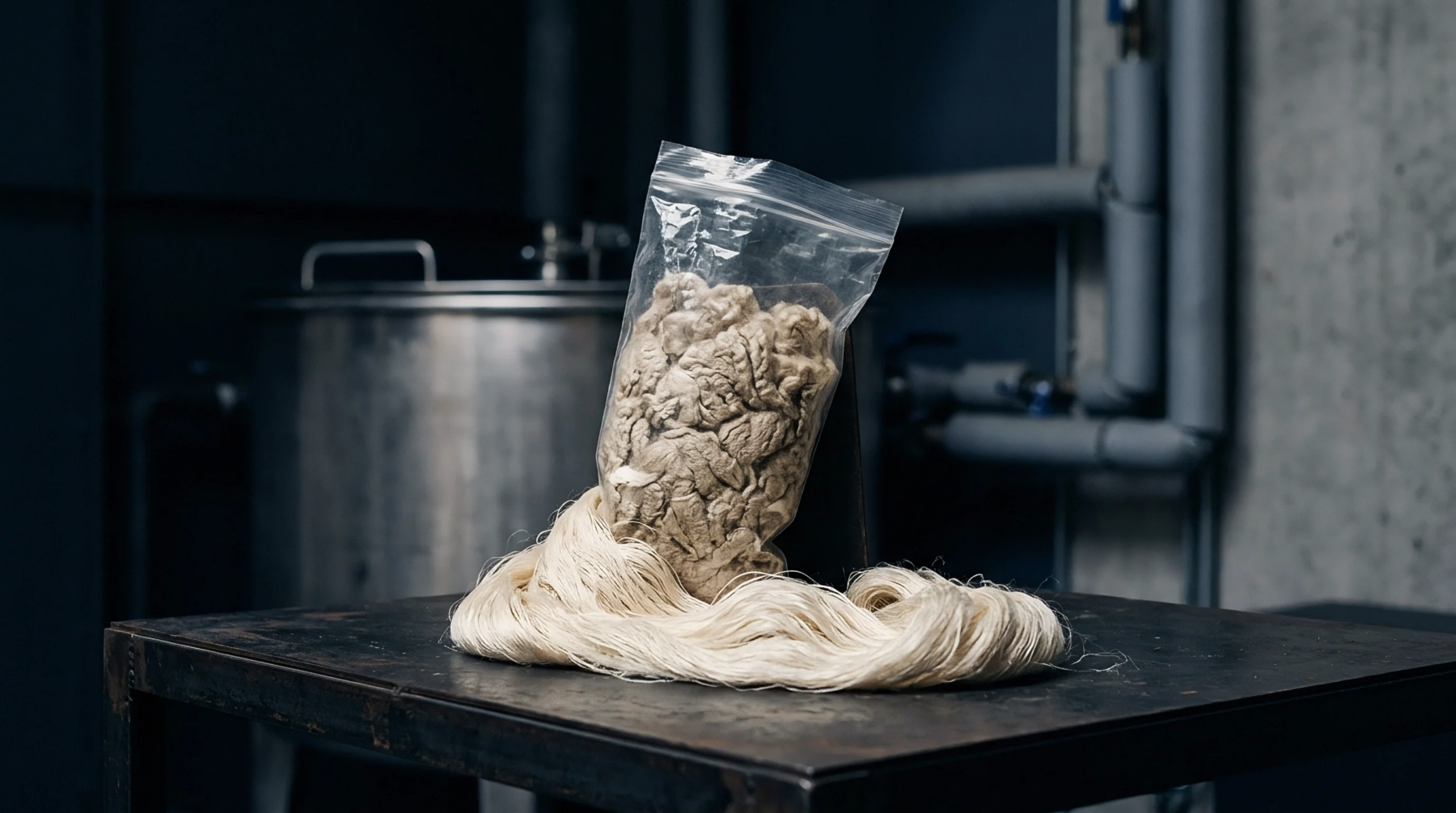
Determining Commercial Mass from Oven Dry Fibre Weights
Commercial mass equals oven-dry mass multiplied by standard regain allowances, establishing an immutable billable weight independent of transit moisture shifts.
Gravimetric analysis of textile chemical baths quantifies the non-volatile solids remaining after a standard thermal procedure to determine the precise loading of finishing agents and chemical additives present within a treatment solution. Analytical laboratories employ dry residue weight to ascertain the actual concentration of active components versus the solvent fraction applied during fabric padding or coating operations. Technicians measure a baseline mass of the liquid sample, subject the material to prolonged heating at an oven temperature calibrated to strip water and organic solvents without degrading the solutes, and then record the final mass of the dried solids.
The subtraction of the initial container mass from the final dried mass provides the absolute dry mass of the residual solids. This calculation informs mill operators whether the chemical concentration inside the application bath aligns with the technical specifications required for the intended fibre hand or performance coating. Production teams use these findings to adjust batch make-ups, preventing the accumulation of excess reagents that causes blotchy dyeing or stiff fabric handle.
Accurate determination of the solid content ensures that the liquor ratio remains within a narrow operational window during continuous high speed production. When a technician calculates the dry residue weight, the laboratory gains a quantitative verification of whether the dosing pumps delivered the correct dosage of softening agents or crosslinkers from the supply tanks. Overfeeding creates significant waste through expensive chemical loss, while underfeeding leads to fabric failure in standard wash and wear durability tests.
Consistency in the solids level allows a manufacturing site to predict how much chemistry the fabric picks up through the rollers. Variations indicate either pump failure or improper mixing in the preparation station. Managers monitor this data point to maintain uniform quality across large fabric lots, reducing the number of off-shade or substandard rolls that require expensive re-processing.
A porcelain dish receives a measured quantity of the industrial liquid before entering a drying oven at a constant temperature for a set duration. The weighing process requires a precision analytical balance capable of detecting milligram differences in the sample mass. Cooling occurs inside a desiccator to prevent moisture re-absorption from the ambient air, which otherwise introduces error into the final mass reading.
Practitioners verify the constant mass through repeated heating and cooling cycles until the weight change falls below a predefined threshold. This rigorous practice isolates the solid components from the liquid carrier, providing a reliable count of the material deposited on the textiles.
Reliable data regarding the dried content separates controlled production from experimental trial runs. Frequent testing of the bath liquid protects the downstream finishing machines from clogging or uneven deposition. Standardisation of this weight allows mills to enforce supplier contracts for chemical purity levels.
Excessive volatile content in a raw finish suggests an improperly diluted product from the chemical vendor. Quality systems rely on the recorded weight to validate the efficiency of the chemical delivery system. Strict adherence to this measurement provides the only verifiable baseline for long term quality control.
Commercial mass equals oven-dry mass multiplied by standard regain allowances, establishing an immutable billable weight independent of transit moisture shifts.
Expertise is a utility, not a secret. sentiention™ publishes its working knowledge as open reference: intelligence layer covering the materials it sources, the markets it enters, and the reference that serves both.