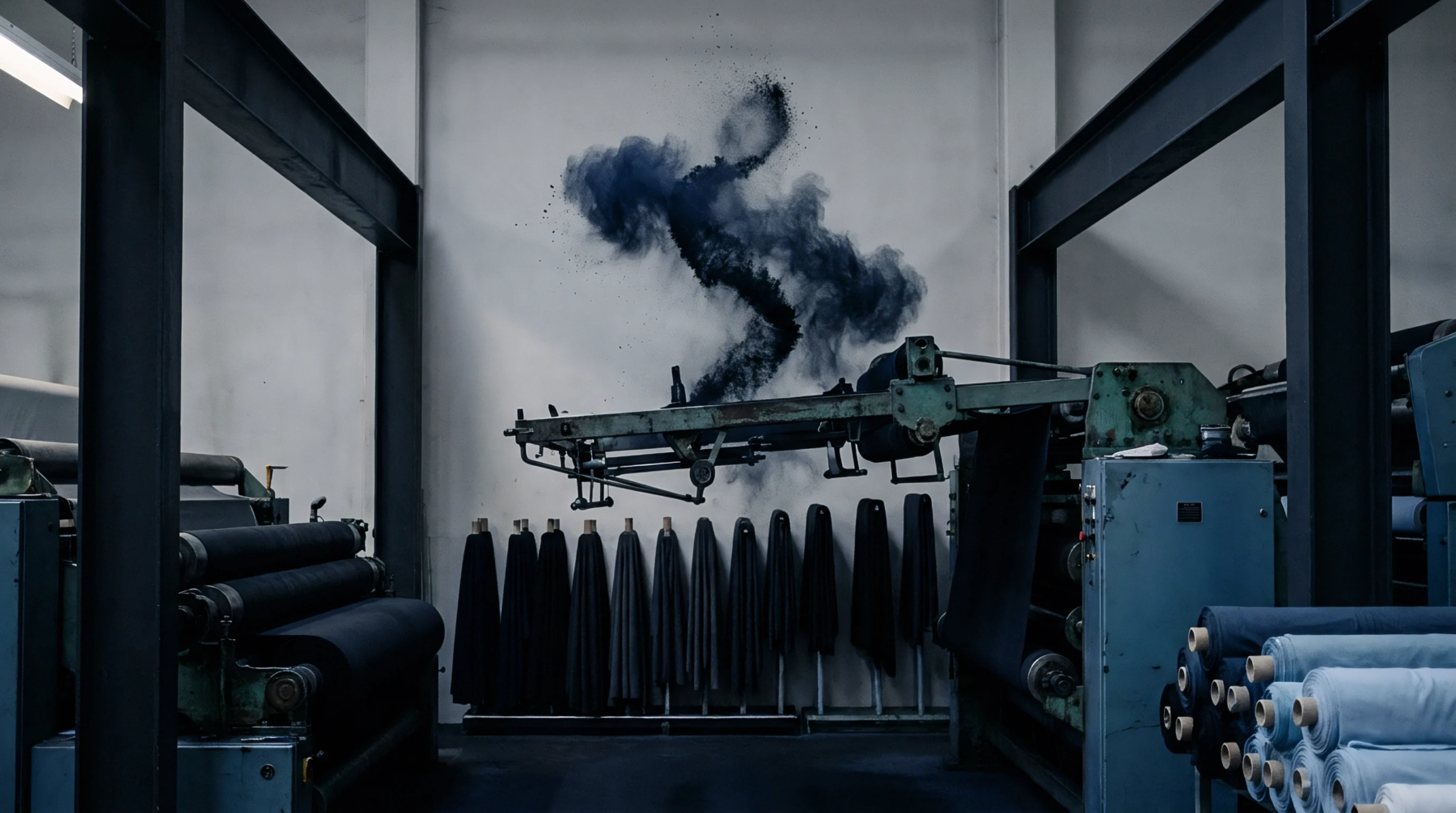
Test Protocol
Mechanical friction testing measures the resistance of color transfer from a textile surface onto an un-dyed cotton test cloth under standard pressure. Laboratory technicians evaluate dry rubbing fastness using a standardized crockmeter to simulate wear during garment end use. The test moves a specified cotton lawn peg back and forth across a dry fabric specimen for a set number of cycles.
Results govern fabric compliance for apparel lining and dark-dyed denim fabrics. The evaluation applies to all dyed or printed textiles and stops applying when moisture is introduced to the rubbing interface.
Mechanical Interaction
Physical movement of the crockmeter finger generates surface friction that abrades loose pigment particles or unfixed dye from prominent yarn crowns. When dry rubbing fastness is tested on coarse woven fabrics or heavy denim, mechanical shearing lifts surface fibres and transfers color to the white rubbing cloth. Smooth continuous filament fabrics show minimal staining because low surface roughness reduces abrasive fibre detachment.
Surface Friction
Coarse yarn structures intensify mechanical shear during testing. High friction raises stain transfers across heavy canvas constructions.
Performance Rating
Stained test cloths are assessed against a standardized grey scale to assign a fastness rating between grade one and grade five. Lower ratings force mills to re-wash fabrics or apply surface lubricants before garment assembly.