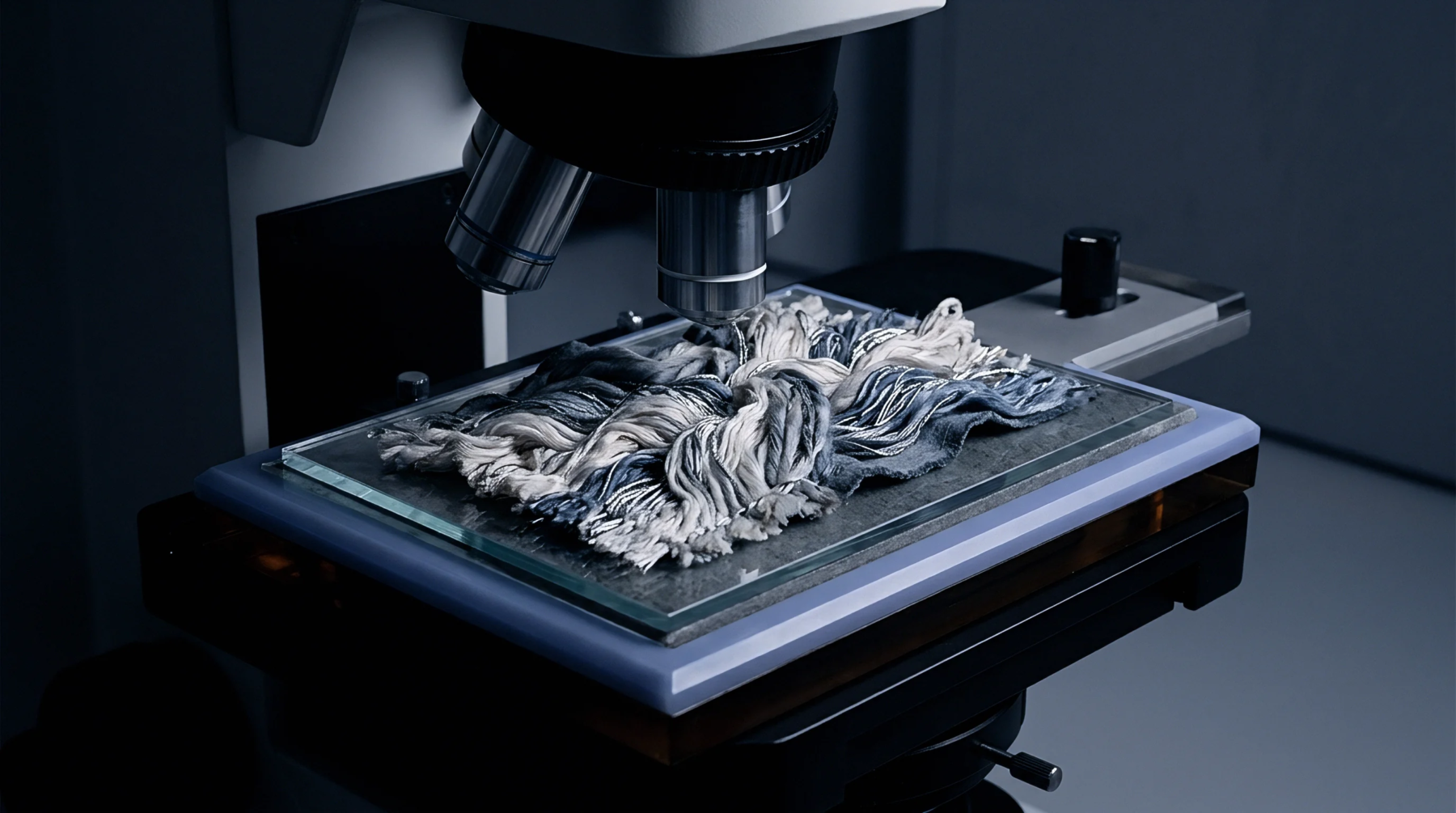
Defect Profile
Localized surface imperfections that refuse to accept colorants during wet processing result in unevenly colored fabric areas. These flaws, known as dye resist spots, occur when hydrophobic contaminants prevent the dyestuff from bonding with the textile fibres. In most cases, the contamination occurs during spinning or weaving, where mineral oils or paraffin waxes settle on the yarn.
The spots become visible only after the fabric has passed through the dye bath and entered the drying stage.
Chemical Origin
Chemical residue analysis often locates the source of these spots in the spinning lubricants or knitting needle oils. When a mill fails to completely scour the fabric before dyeing, the occurrence of dye resist spots increases dramatically. Silicone-based lubricants are particularly problematic because they are highly resistant to standard aqueous scouring treatments.
This chemical barrier prevents the aqueous dye liquor from contacting the polymer surface.
Prevention Strategy
To eliminate these flaws, textile mills must implement rigorous preparation protocols. The occurrence of dye resist spots is minimized by adding specialized emulsifiers and high-temperature scouring agents during the pre-treatment cycle. Continuous monitoring of washing water temperatures ensures that waxes are melted and completely removed from the goods.
This preparation step guarantees that the dye liquor penetrates uniformly.
Quality Assessment
Quality control inspectors classify the resulting flaws during final fabric grading. Severe dye resist spots lead to the rejection of the entire roll of fabric, as they cannot be repaired without stripping and re-dyeing.