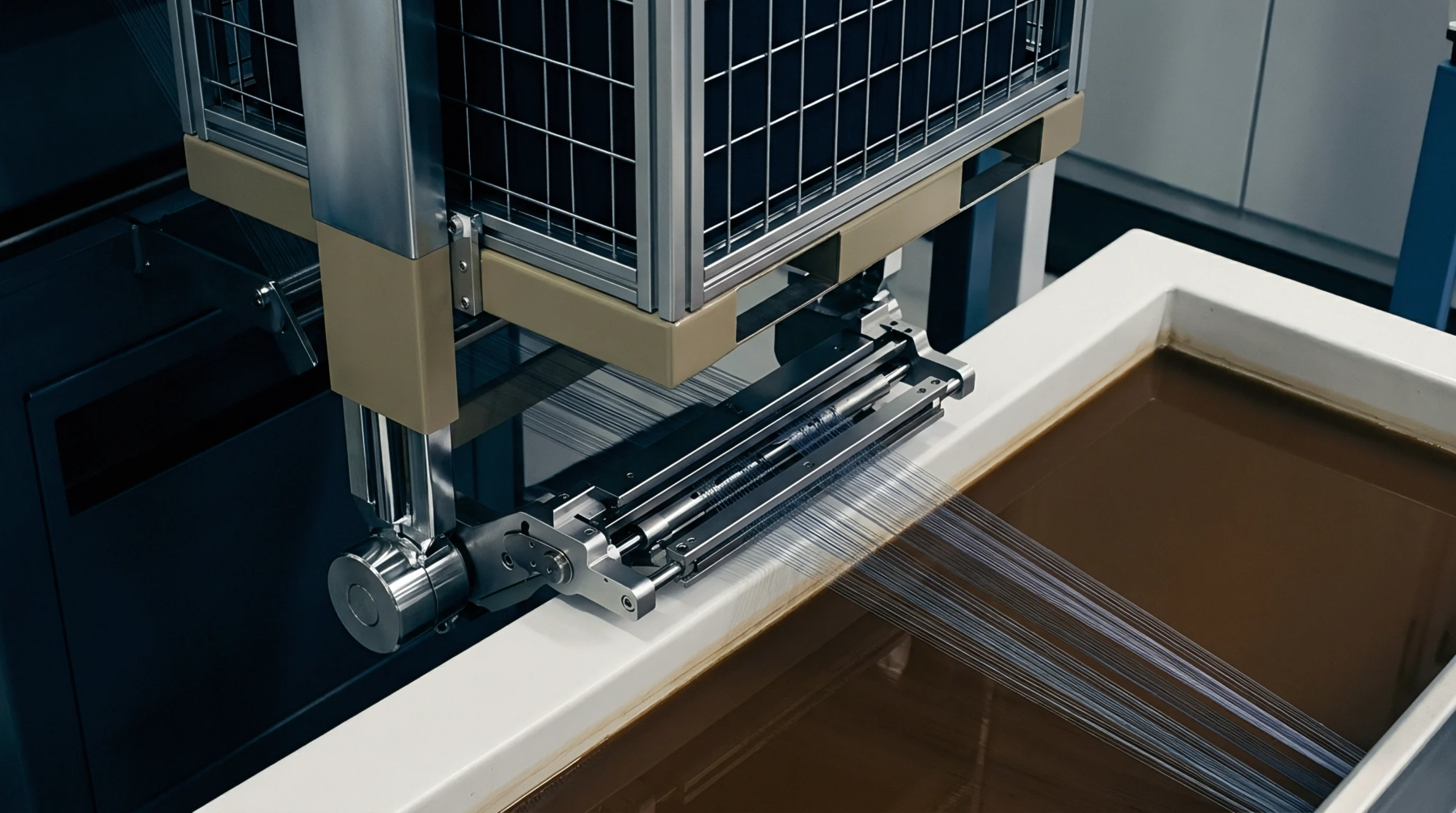
Widthwise Gradient
Systematic physical or aesthetic gradients measured across the usable width of a textile roll indicate uneven processing conditions during dyeing and finishing operations. Magnitude of edge-to-center roll variance determines whether cut panels from different lateral positions can be assembled into single garment units without shade matching or dimensional defects. Finishing mills monitor properties such as mass per unit area and residual shrinkage across five equidistant points spanning from selvedge to selvedge.
Exceeding established tolerance boundaries causes panel mismatch during garment assembly.
Processing Asymmetry
Uneven liquor application in padding mangles or differential nip pressure across mangle rolls generate lateral physical discrepancies. When wet fabric passes through squeeze rollers with worn center crowns, moisture retention remains higher in the middle than at the edges. Subsequent drying accentuates color depth differences and mass variations across the width.
Spectrophotometric measurement across the roll width quantifies color difference values, identifying subtle shade bands that escape visual inspection under standard light booths. Laboratory technicians plot delta E readings to map color uniformity across the entire roll width.
Shading Consequence
Visual discrepancy between adjacent pattern pieces cut from different roll locations creates unwearable garments. Garment factories enforce strict shading grouping protocols to isolate center cuts from selvedge cuts during marker planning.
Inspection Boundary
Quality assurance standards set strict limits on physical variance, permitting maximum mass differences of two percent between center and edge swatches. Roll audits that detect physical or shade variations exceeding allowable limits require markdown reclassification or reject consignment status. Commercial contracts link payment release to passing full-width inspection reports certified prior to shipment.