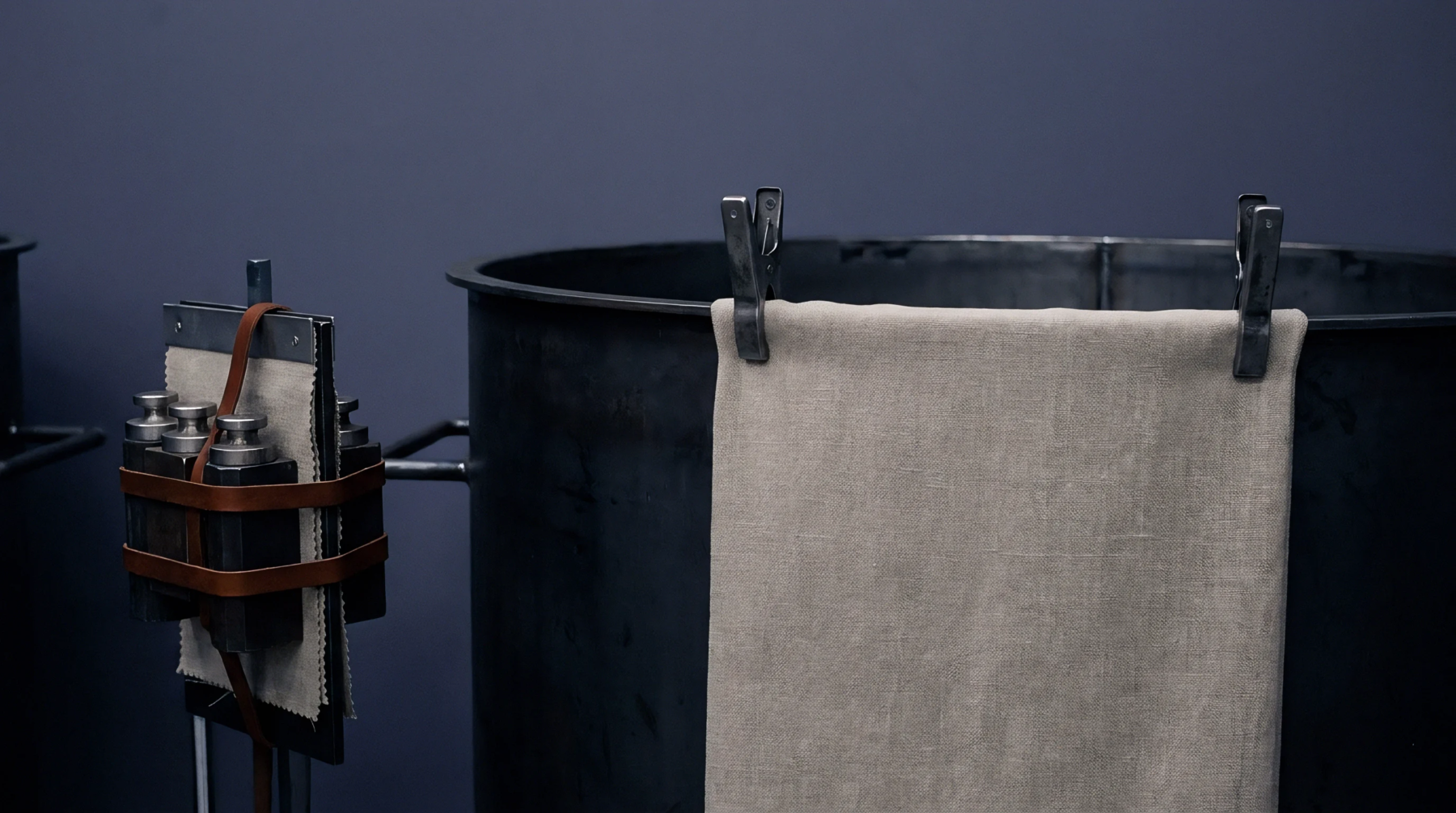
Dimensional Stabilization
Stress reduction in textile structures known as fabric relaxation allows the interlaced yarns to return to their natural geometry after being stretched during weaving or knitting cycles. The process of fabric relaxation involves the dissipation of internal kinetic energy that was stored when the material was wound under tension onto rolls. Without this step, the material would shrink significantly during later cutting or laundering cycles as it attempts to shorten itself to its original size.
Manufacturers often utilize steam or mechanical vibration to speed up this restoration phase before any pattern pieces are marked. It applies to both greige goods arriving from the mill and finished fabrics ready for the sewing line.
Mechanical Reset
Internal tensions build up during the high speed manufacturing process as feed rollers pull the cloth through multiple chemical baths. The mechanism of fabric relaxation allows the loop density of knits or the crimp of woven threads to equalize across the entire width. If the goods are cut immediately after being unrolled, they will experience a sudden contraction as the friction of the roll no longer holds them in a distended state.
Spreading the fabric onto a long table and leaving it for twenty four hours provides sufficient time for the majority of this movement to occur naturally. Some facilities use tensionless relaxers which are machines that vibrate the cloth while it floats on a cushion of air. This mechanical agitation shakes the structure loose, facilitating the reach of an equilibrium state in minutes rather than hours.
Proper resting ensures that the dimensions recorded in the lab align with what occurs on the factory floor. Consistency in garment sizing depends entirely on allowing this shrinkage to happen before the scissors touch the cloth.
Production Logic
Control over these variables begins at the mill where finishing parameters are set to match the desired end dimensions. During fabric relaxation, the weight per square metre increases slightly as the threads crowd together in the shorter length. Accurate measurement of this change informs the shrinkage percentage listed on the technical specification sheet.
Buyers expect clear data on how much the material will move after its first home wash. If the relaxation is incomplete during the garment production phase, the finished sizes will drift beyond the allowable tolerances. Workers must verify the width at the start and end of the resting period to ensure stability has been reached.
Documentation of these time periods forms part of the standard operating procedures in modern garment factories. Successful management of this phase prevents costly consumer returns due to fit issues.
Verification Point
Limits to the effectiveness of the process arise when the mechanical stretch applied during finishing is so high that the fibres have passed their elastic limit. While fabric relaxation fixes many issues, it cannot undo permanent damage caused by overstretching synthetic heat set materials. Testing the rest rate involves measuring marked squares before and after the rest period to check for stability.
If movement exceeds two percent after the designated resting time, additional cycles may be required to reach a safe baseline. Final checks are performed by auditing the cutting room logs to see if panel sizes have remained constant overnight.